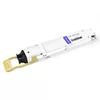
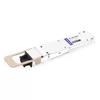
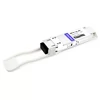
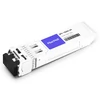
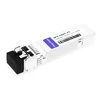
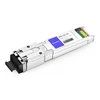
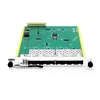
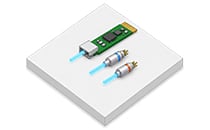
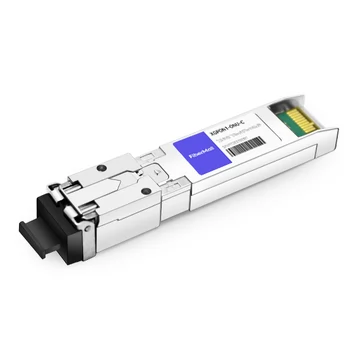
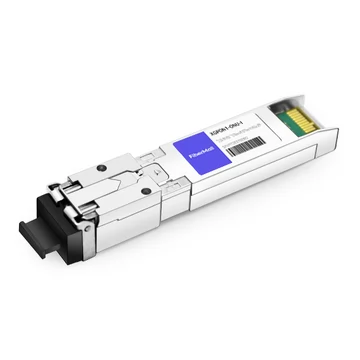
XGPON OLT/ONU Transceivers
The need for super-fast internet is becoming more pressing, driving strong demand for advanced fiber-optic solutions that support rapid data transmission. One such technology is XGPON, also known as 10G Passive Optical Network, which meets today’s high-bandwidth requirements.
Introduction to XGPON Technology
XGPON, or 10-Gigabit Passive Optical Network, is an advanced fiber-optic communication standard. It delivers up to 10 Gbps downstream and 2.5 Gbps upstream—four times the downstream and twice the upstream speed of standard GPON. This increased bandwidth meets the needs of consumers and small/enterprise users. It supports high-definition video, cloud computing, and IoT connectivity through a point-to-multipoint architecture, where a single optical fiber is shared among multiple end users while maintaining high-speed service.
Key features and advantages of XGPON
XGPON technology stands out for its speed, delivering up to 10 Gbps downstream and 2.5 Gbps upstream—essential for today’s high-bandwidth applications. Its point-to-multipoint topology enables efficient sharing of fiber resources without speed loss. It is fully compatible with existing GPON infrastructure, allowing operators to upgrade quickly and cost-effectively. The technology supports multiple users on the same fiber line with no significant performance degradation, making it ideal for next-generation services such as high-definition video, cloud applications, and IoT, while preparing networks for future growth.
Understanding XGPON ONU Transceivers
XGPON ONU transceivers are specialized units that enable efficient communication. They convert incoming optical signals from the passive optical network into electrical signals for end-user devices, and vice versa. These transceivers support data rates of 10 Gbps downstream and 2.5 Gbps upstream, handling demanding applications with ease. Compliant with ITU-T recommendations, they ensure high reliability, interoperability, and seamless integration into existing network systems. They play a vital role in modern broadband networks.
Definition and role of an ONU in XGPON systems
The Optical Network Unit (ONU) is a key component in XGPON (10-Gigabit-Capable Passive Optical Network) systems. It works alongside the Optical Line Terminal (OLT) located at the service provider’s central office. The ONU converts optical signals received from the OLT into electrical signals for customer equipment and converts outgoing electrical signals back into optical signals for upstream transmission. It performs traffic management, QoS enforcement, and protocol adaptation to allocate bandwidth efficiently. XGPON-compliant ONUs deliver high-speed voice, video, and data services, addressing the growing bandwidth demands in residential and business environments.
XGPON OLT Transceivers - Enabling Centralized Management
In centralized networks, XGPON OLT transceivers are essential components that manage data across extensive fiber-optic links. Installed in the Optical Line Terminal (OLT), they convert electrical signals to optical signals and vice versa. They support high-speed, low-latency networks for internet, video, and telephony services. Designed to XGPON standards, these transceivers provide secure, scalable connectivity and enable easy configuration, monitoring, and maintenance for optimal network performance.
Functionality and importance of OLT transceivers in XGPON networks
XGPON OLT transceivers serve as the optical interface in the OLT, aggregating user data and connecting to the optical distribution network. They provide high-speed bidirectional optical transport using wavelength division multiplexing (WDM) for efficient upstream and downstream transmission. This enables high-capacity applications with minimal latency. OLT transceivers support dynamic bandwidth allocation (DBA), enhanced security, and ITU-T G.987 compliance. They reliably deliver voice, video, and data services while supporting IoT and cloud computing, helping operators overcome coverage and traffic challenges.
XGPON ONU vs. GPON ONU - A Comparative Analysis
The main difference between XGPON ONU and GPON ONU lies in speed and bandwidth capacity. XGPON ONU supports up to 10 Gbps downstream and 2.5 Gbps upstream, meeting the demands of HD streaming, VR, and cloud-based business applications. GPON ONU provides 2.5 Gbps downstream and 1.25 Gbps upstream, which is sufficient for most home users and small businesses. XGPON ONU offers greater long-term scalability, while initial GPON deployment is generally more cost-effective. Both adhere to ITU-T standards for seamless integration, but XGPON ONU is better suited for environments with rapidly growing and complex data needs.
Performance benchmarks (throughput, latency, etc.)
Key performance metrics for GPON ONU and XGPON ONU include throughput and latency. GPON ONU achieves up to 2.5 Gbps downstream and 1.25 Gbps upstream under ideal conditions, with typical latency of 1–5 ms, suitable for home use and non-critical applications. XGPON ONU delivers superior performance with 10 Gbps downstream and 2.5 Gbps upstream, and latency that is comparable or slightly better (typically under 1–3 ms). This supports ultra-HD content, low-latency gaming, and high-density traffic environments with improved capacity and response times.
Applications of XGPON OLT/ONU Transceivers in Modern Networks
XGPON OLT and ONU transceivers are widely used in fiber-optic networks. Common applications include residential broadband, enterprise high-speed internet, and multi-dwelling unit connectivity. They also support smart cities and 5G backhaul networks that require low latency and high capacity. These transceivers ensure reliable data transmission in demanding environments and provide future-proof network scalability.
Residential and business broadband solutions
XGPON-based broadband delivers high-speed connectivity tailored to residential and business needs. For households, it provides uninterrupted internet for streaming, remote work, online learning, and smart home devices. For businesses, it offers reliable high-speed access with consistent performance, supporting Ethernet, point-to-point links, and other enterprise-grade services essential for operations, branch connectivity, and digital transformation.
Frequently Asked Questions (FAQs)
In what situations could I use XGPON OLT/ONU transceivers?
XGPON OLT/ONU transceivers are used in fiber-optic communication systems to transmit high-bandwidth data in both directions between the Optical Line Terminal (OLT) at the service provider’s central office and the Optical Network Unit (ONU) at the user’s premises. They enable high-speed internet, voice, and video services.
What is the input loss value for XGPON OLT/ONU transceivers?
XGPON transceivers operate at 10 Gbps downstream and 2.5 Gbps upstream. They comply with ITU-T G.987 standards for multi-vendor interoperability. They use a single fiber with dual wavelengths (1270 nm upstream and 1577 nm downstream) and support transmission distances up to 20 km with an adequate optical power budget.
Why is there a surge in production of XGPON transceivers in the market?
Rising global demand for higher bandwidth, driven by streaming, cloud services, IoT, and 5G backhaul, has increased the need for XGPON transceivers. Their advanced features—including high-speed transmission, low latency, and compatibility with existing infrastructure—make them essential for future-proof networks without data loss or performance degradation.