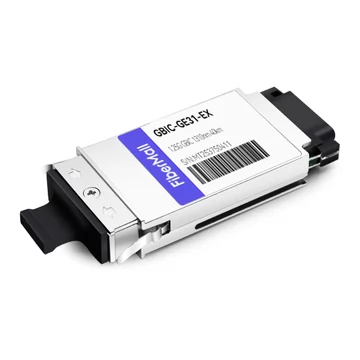
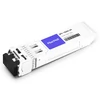
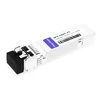
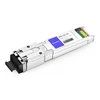
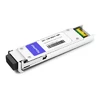
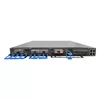
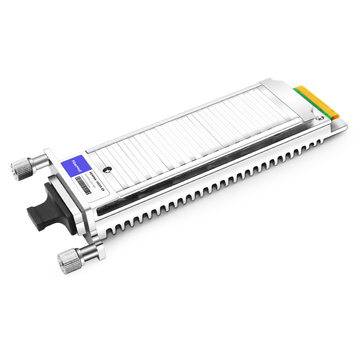
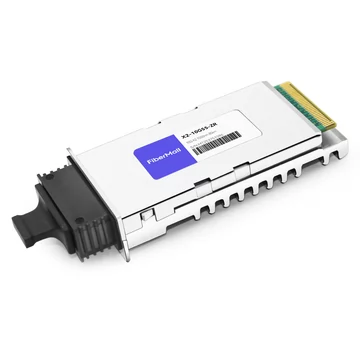
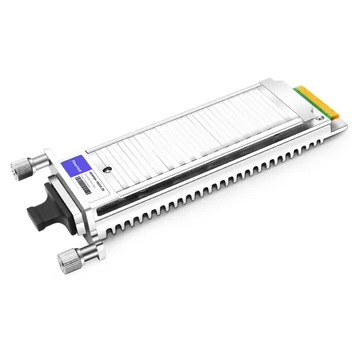
10G XENPAK/X2 Transceivers
10G XENPAK and X2 transceivers are critical components in high-speed networking, enabling reliable data transmission over 10 Gigabit Ethernet networks. These modules provide scalable and efficient connectivity solutions for modern businesses.
Introduction to 10G XENPAK/X2 Transceivers
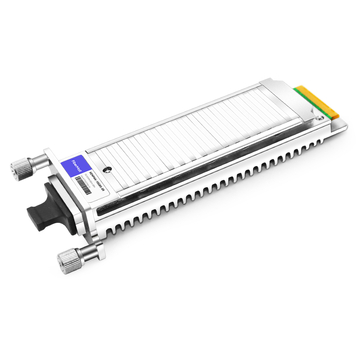
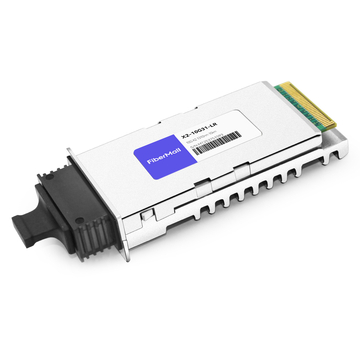
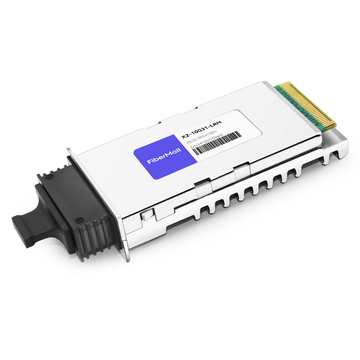
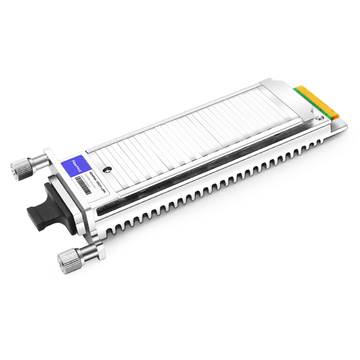
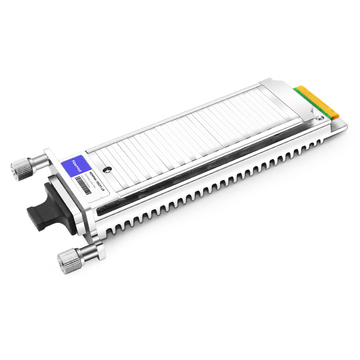
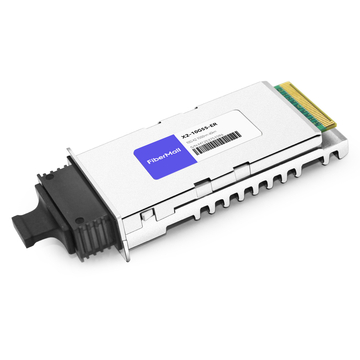
10G XENPAK and X2 transceivers are modular optical modules designed for 10 Gigabit Ethernet networks. XENPAK was one of the first 10GbE transceiver standards, featuring a larger form factor. X2 is its successor with a significantly reduced size while supporting the same 10GbE standards. Both support single-mode and multi-mode fiber, are hot-swappable, and offer flexibility for network upgrades and maintenance.
Overview of 10G Transceiver Technology
10G transceiver technology enables high-speed optical communication over various media. These devices comply with IEEE 802.3 standards for interoperability and support data rates up to 10 Gbps. Common form factors include SFP+, XFP, QSFP+, and CFP. They operate over distances from a few meters (multimode fiber) to 80 km (single-mode fiber).
Their pluggable design allows easy installation and scaling with minimal disruption. Many include Digital Diagnostics Monitoring (DDM) for real-time monitoring of optical power, temperature, and voltage. They offer low latency and high energy efficiency, suitable for data centers and telecom applications.
How 10G XENPAK/X2 Transceivers Work
10G XENPAK and X2 transceivers convert electrical signals to optical signals and vice versa for transmission over fiber at 10 Gbps. XENPAK has a larger form factor with older technology, while X2 is more compact and power-efficient. Both connect easily to switches and routers via standard interfaces.
Technical Principles Behind Transceiver Operation
Optical transceivers convert electrical signals into optical signals using a laser diode or LED, then transmit the light through fiber. At the receiving end, a photodiode converts the optical signal back to electrical.
Key components include the transmitter, receiver, and control circuitry. Advanced models use Forward Error Correction (FEC) and Digital Signal Processing (DSP) to improve signal quality, reduce noise, and support high data rates with low latency.
Compatibility and Interfacing with GBIC Technology
GBIC (Gigabit Interface Converter) modules support Gigabit Ethernet devices and allow hot-swappable fiber connections. They use unified ports for easy mixing of interfaces.
Transition from GBIC to 10G XENPAK/X2 Modules
The shift from 1Gbps GBIC to 10G XENPAK/X2 modules represents a major advancement in speed and performance. XENPAK and X2 use XAUI interfaces, offer better thermal management, and support longer transmission distances. They also enable advanced features such as DWDM for higher capacity in enterprise and data center networks.
Advantages and Limitations of 10G XENPAK/X2 Transceivers
10G XENPAK and X2 transceivers provide reliable long-distance transmission and broad wavelength support for enterprise and service provider networks. Their main limitations are larger size and higher power consumption compared to newer standards like SFP+. They remain useful in existing 10G infrastructure where upgrades are not immediately required.
Discussion on Bandwidth Efficiency, Speed, and Scalability
Bandwidth efficiency maximizes data throughput with minimal waste through advanced modulation (e.g., QAM) and optimization techniques. Speed determines network performance, with fiber optics enabling high-speed, low-attenuation transmission over long distances. Modern networks demand scalability to support growing traffic and higher speeds such as 400G/800G.
Key Specifications of 10G XENPAK/X2 Transceivers
These modules support 10 Gbps Ethernet per IEEE 802.3ae, work with single-mode and multi-mode fiber, and reach up to 80 km depending on the variant (SR, LR, ER, ZR). They include diagnostic features for improved network management.
Connector Types, Physical Dimensions, and Compatibility
Connector Varieties
Most models use LC connectors (preferred for density) or SC connectors.
Dimensional Characteristics
XENPAK modules are larger (approximately 121 mm × 36 mm × 18 mm); X2 modules are more compact but still larger than SFP+.
Compatibility
They are compatible with switches and routers supporting XENPAK or X2 slots. XENPAK and X2 are not interchangeable with each other or with GBIC due to different form factors and speeds.
Frequently Asked Questions (FAQs)
What is the purpose of the 10G XENPAK/X2 transceiver?
Application of 10G XENPAK and X2 transceivers is for purposes like enabling 10 Gigabit Ethernet in data centres, enterprise, and core networks. Unlike standard GBIC connectivity, these transceivers are designed for very high bandwidth deployment cases such as communications between switches and connections within the core backbone.
Are the 10G XENPAK and X2 transceivers compatible with each other?
These two formats offer a similar functionality in supporting 10 GbE, though the physical dimensions, the cable connectivity, and the power usage are different. This can be addressed by looking at the use of the equipment and the transceiver types that can be used therein.
What interface types do 10G XENPAK/X2 transceivers support?
There are several interfaces available in these transceivers, such as the SR, which stands for short Range, LR, long range, ER, extended range, and ZR, which is ultra long range, depending on distance and use.