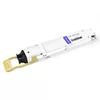
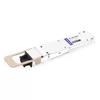
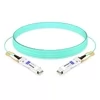
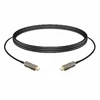
Transceiver Accessories
To get the most out of a transceiver, a few accessories are essential. Supporting clear signal formation and reliable connections in various weather conditions would not be possible without them for hobbyists or seasoned communication engineers.
Essential Transceiver Accessories for Efficient Communication
Among transceiver accessories, several options enhance communication efficiency. High-gain external antennas extend coverage and signal range without interruption. A noise-canceling headset makes listening and talking easier by eliminating external interference. A robust power supply ensures predictable performance during long-term use, while programming cables allow custom configurations for specific communication needs. Every accessory is designed to meet the demands of particular environments and events, making the user more effective and adaptable.
Overview of Transceiver Accessories and Their Purpose
Any communication system is incomplete without transceiver accessories. These increase usefulness and enhance performance in challenging environments. Accessories include antennas for improved signal strength and range, programming cables for system configuration and updates, and robust power supplies that maintain operation during extended use. Noise-canceling microphones and headsets improve audio quality by reducing external noise, which is critical in noisy missions or locations. No component exists merely for appearance; each contributes to adaptability, efficiency, and reliability for any communication application.
Top-Rated Antennas for Transceivers and How to Choose the Right One
When selecting an antenna for your transceiver, consider the application and operating frequency. Recommended types include:
Yagi antennas – Ideal for long-range directional communication due to high gain. They suit ham radio operators or situations requiring focused signal projection.
Vertical antennas – Commonly used because they are easy to install and often multi-band, making them versatile for most purposes.
Base station antennas – Preferred for permanent setups with no frequency limitations. They offer simple construction and reliable performance.
Mobile antennas – Designed for vehicle-mounted transceivers, allowing clear communication while moving.
Key selection factors include operating frequency, installation type (portable or stationary), range requirements, directional needs, and mobility. Antenna impedance must match the transceiver for optimal signal transmission.
Types of Transceiver Antennas (e.g., Whip, Telescopic, Base Station)
A wide variety of transceiver antennas are available in different shapes and designs based on usage and performance needs. Whip antennas are small, lightweight, and flexible; they return to shape after stress and provide a wide beam angle, making them suitable for vehicles and handheld devices. Telescopic antennas are retractable or extendable, allowing users to adjust length for better reach and amplification. Base station antennas are larger and fixed in one location. They deliver longer range and better directivity, ideal for stationary communication facilities. Antenna choice depends on activity type, mobility needs, supported distance, and installation constraints.
Cables and Connectors for Transceivers: Ensuring Seamless Connectivity
Cables and connectors for transceivers must deliver effective communication. Low-loss coaxial cables are preferred for efficiency. Compatible connectors such as SMA, Type N, and BNC ensure proper fit with the transceiver and cable; mismatches cause performance degradation or connection failure. All components must meet industry standards for signal quality and long-term mechanical reliability.
Types of Cables Used in Transceivers
The most common cables for transceiver accessories are coaxial cables. Types such as RG-213, RG-58, and LMR series are preferred for RF transmission due to low signal attenuation at high frequencies. Selection considers operating frequency, transmission distance, and environmental conditions to ensure optimal performance for the application.
Power Supplies and Batteries for Reliable Transceiver Performance
Reliable transceiver operation depends on a stable power supply. Use voltage sources that prevent damage to sensitive electronics and support extended runtime. For portable or remote use, batteries must match capacity and efficiency needs. Lithium-ion batteries are favored for high energy density, long cycle life, and reliability. The power source must match the equipment’s voltage and current requirements. Regular maintenance of power components prevents unexpected performance loss.
Differences Between Power Supplies and Battery Backups
Power supplies convert input power (e.g., from mains) into the stable voltage and current required by the device. They regulate output voltage, suppress AC ripple, and ensure efficient energy conversion for normal operation. Battery backups (or uninterruptible power supplies) provide temporary power during outages or fluctuations. They use stored energy from lead-acid or lithium-ion batteries to keep equipment running. Power supplies handle routine performance; battery backups protect against interruptions and maintain operation when mains power fails.
Cutting-Edge Innovations in Transceiver Accessories
Recent developments in transceiver accessories focus on improved performance, longevity, and network integration. Advances include high-efficiency amplifiers for stronger signals, better heat dissipation for sustained operation under load, and universal mounting systems for easy installation. These innovations support higher data integrity, lower power consumption, and reliable communication in modern radio systems.
Recent Advancements in Transceiver Technology
Innovation in transceiver technology emphasizes transmission range, power efficiency, and next-generation radio networks. Key improvements include digital signal processing and software-defined radio (SDR) capabilities that enable flexible frequency use and advanced modulation. These support high-speed digital modes required for modern applications such as emergency communications and data links. Integration of advanced materials reduces size and cost while improving performance. Enhanced thermal management solutions, including active cooling, handle heat in demanding conditions. These developments create faster, more efficient, and more reliable radio communication systems.
Frequently Asked Questions (FAQs)
What kind of things do people commonly add to their transceivers?
Common transceiver accessories include external antennas, low-loss coaxial cables, noise-canceling headsets, programming cables, and spare batteries. All help achieve reliable connectivity and maximize performance.
How do I know what cables to use for my transceiver?
Choose cables based on frequency, distance, and power level. Low-loss coaxial types (e.g., LMR or RG series) are standard. Connector type (SMA, N, BNC) must match the transceiver and antenna.
Do transceivers require any additional cooling components, such as heat sinks?
High-power transceivers can generate significant heat. A suitable heat sink or fan helps maintain performance in warm environments or during continuous operation.
What maintenance does the transceiver need?
Regularly inspect and clean connectors, cables, and antenna ports to prevent signal loss or damage. Check firmware updates and replace worn components promptly to ensure continued efficiency.