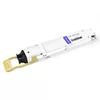
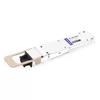
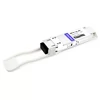
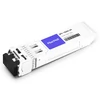
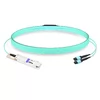
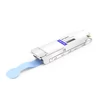
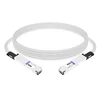
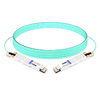
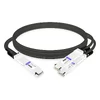
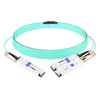
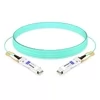
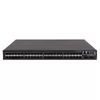
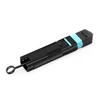
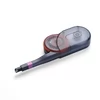
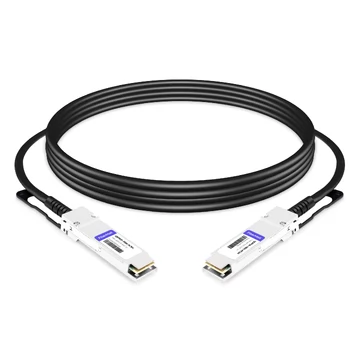
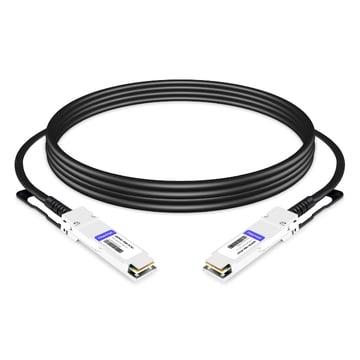
Selecting the right 100G interconnect is not just about bandwidth. The wrong cable choice can inflate your power budget, trigger compatibility failures, and force expensive mid-deployment changes. FiberMall stocks 100G Direct Attach Copper (DAC) cables across four distinct form factors—QSFP28, SFP-DD, SFP112, and DSFP—each pre-tested on the switch platforms you already run. Every cable ships with an individualized factory test report and a strict compatibility guarantee.
100G DAC Cable Overview
FiberMall manufactures and stocks 100G direct attach copper cables across four form factors, covering every major 100G deployment scenario from top-of-rack (ToR) server connections to high-density spine switches. All standard lengths ship from global inventory within 24 to 48 hours.
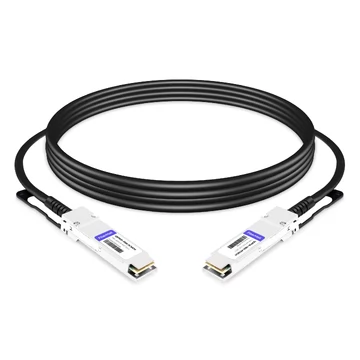
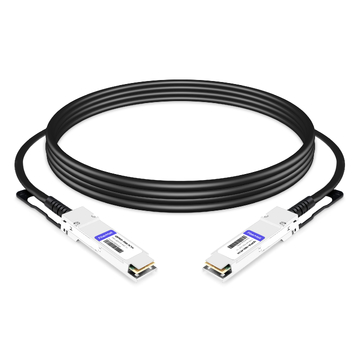
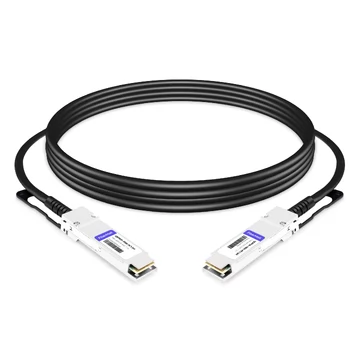
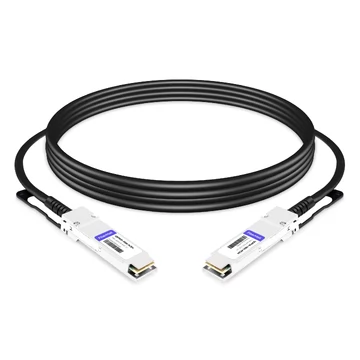
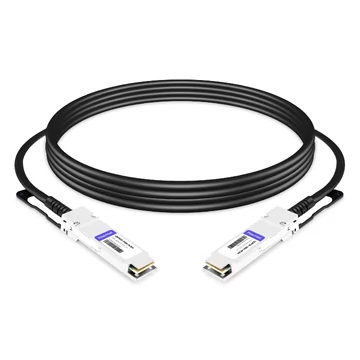
100G QSFP28 DAC: The dominant 100G form factor. Utilizes four 25G NRZ lanes housed in a standard QSFP28 shell. Delivers the widest switch compatibility and the lowest cost per link.
100G SFP-DD DAC: Double-Density SFP form factor. Utilizes two 50G PAM4 lanes. Delivers full 100G throughput in half the physical width of a QSFP28, making it ideal for high-port-density switches.
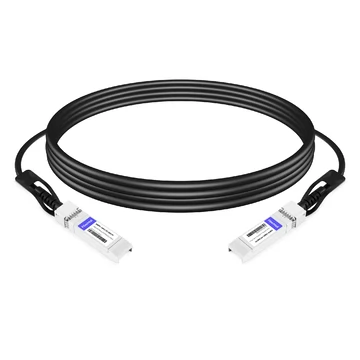
100G SFP112 DAC: Single-lane 100G PAM4 technology packaged in a standard SFP footprint. This represents the lowest-power 100G option available for space-constrained NICs and edge devices.
100G DSFP DAC: Dual-Source SFP form factor. Utilizes two 50G PAM4 lanes in a compact shell, structurally optimized for telecom and carrier-grade deployments.
All four form factors support standard lengths from 0.5 m to 5 m in passive copper. For longer reaches, active copper (ACC) and Active Optical Cable (AOC) options are fully available. Custom lengths, breakout configurations, and dual-vendor EEPROM coding can be provided directly from our assembly facilities.
Passive DAC vs. Active DAC vs. AOC: Which One Do You Need?
The first rule in 100G cable selection is distance. Beyond that, power consumption, cost, and physical constraints determine the correct technology path. The operational metrics below map out the decision matrix network engineers use when consulting on deployments:
Passive DAC
Passive DACs support a maximum distance of 0.5 to 5 meters while drawing less than 0.2 W of total power per link. For a 256-port switch deployment, this translates to a negligible total power consumption of approximately 26 W. It offers ultra-low latency (under 0.1 µs) and the lowest entry cost, averaging $25 to $55 for a 1-meter cable. Because it relies on solid copper twinax, it is physically heavy and susceptible to Electromagnetic Interference (EMI). It is best suited for same-rack connections looking for the absolute lowest cost and power footprints.
Rule of Thumb: If the server is in the same rack as the switch, a passive DAC is the correct choice roughly 97% of the time. Utilizing an AOC for 1- to 2-meter same-rack links is a common and expensive mistake that injects hundreds of watts of unnecessary heat into the rack.
Active DAC
Active DACs span the middle ground with a maximum distance of 5 to 15 meters while drawing less than 1 W of total power per link. On a 256-port switch, this yields a total power draw of roughly 205 W. It maintains an ultra-low latency profile of under 0.1 µs, and a 1-meter run incurs a relatively low cost of $50 to $95. Like its passive counterpart, it is heavy and EMI-susceptible due to its copper build, but it introduces integrated signal conditioning to clean up signal integrity over extended runs.
Active DACs occupy a frequently forgotten intermediate space. For 5- to 15-meter runs across adjacent racks, an active DAC adds required signal conditioning while remaining copper end-to-end. It costs roughly half as much as an AOC and consumes only one-quarter of the power. Many engineers mistakenly jump straight from passive DAC to AOC, missing this optimal intermediate solution.
Active Optical Cable (AOC)
AOCs support long distances up to 100 meters but draw a significant 4 to 7 W of total power per link. When scaled across a 256-port switch, this creates a massive thermal load of 1,024 to 1,792 W. It introduces a nominal latency of 50 to 150 ns, and a 1-meter link carries a high price tag ranging from $100 to over $300. Because it uses optical fiber, it is exceptionally light and entirely immune to EMI. It is ideal for long runs, high-density cable management environments, and areas with severe EMI exposure.
QSFP28 vs. SFP-DD vs. SFP112 vs. DSFP: Form Factor Comparison
Your switch hardware inherently dictates which form factor you need. These four 100G standards are not interchangeable, and ordering the wrong form factor will result in a failed deployment. Below is a breakdown of how each form factor maps to its ideal use case:
100G QSFP28 DAC: Configured with 4 x 25G NRZ lanes, measuring 18 x 72 x 8.5 mm. It supports up to 32 ports in a 1RU switch chassis, consumes less than 0.5 W of power per end, and provides backward compatibility with QSFP+ and QSFP28 ports. The typical price for a 1-meter cable is $25 to $55. This remains the volume leader; if your switches have QSFP28 cages and cost-per-port is your driving metric, this is your default choice.
100G SFP-DD DAC: Configured with 2 x 50G PAM4 lanes, measuring 14 x 56 x 8.5 mm. It doubles density to support up to 64 ports in a 1RU space, draws less than 0.5 W per end, and maintains backward compatibility with SFP, SFP+, and SFP28 cages. The typical price for a 1-meter cable is $45 to $95. This is the ultimate density play—delivering 100G in half the width while clearing a seamless upgrade roadmap to future 200G architectures.
100G SFP112 DAC: Configured with 1 x 100G PAM4 lane, measuring 14 x 56 x 8.5 mm. It supports up to 64 ports in a 1RU space and stands out for its exceptionally low power draw of less than 0.15 W per end. It offers backward compatibility with SFP+ and SFP28 ports, with a typical 1-meter price of $42 to $85. It serves as a highly specialized niche option for ultra-low-power, space-constrained server NICs and edge appliances where every milliwatt matters.
100G DSFP DAC: Configured with 2 x 50G PAM4 lanes, measuring 14 x 56 x 8.5 mm. It fits up to 64 ports in a 1RU footprint, draws less than 0.5 W per end, and is backward compatible with SFP, SFP+, and SFP28 architectures. The typical price for a 1-meter cable is $45 to $95. This option is purpose-built for telecom and carrier-grade environments where compact, dual-channel SFP-footprint density is critical.
Technical Specifications
FiberMall 100G DAC cables are built strictly to MSA (Multi-Source Agreement) standards and are fully validated across rigorous temperature, insertion loss, and EEPROM verification profiles. The technical specifications below apply to our standard passive twinax copper assemblies:
Data Rate: A uniform 100 Gbps across all form factors (QSFP28, SFP-DD, SFP112, DSFP).
Connector Type: Direct point-to-point configurations matching their respective cages (e.g., QSFP28 to QSFP28, SFP-DD to SFP-DD, etc.).
Cable Type: Passive twinax copper across all variants.
Wire Gauge (AWG): Standardized across all models—utilizing 30AWG for 0.5 to 2-meter runs and 26AWG for 3 to 5-meter runs.
Jacket Material: Available in standard PVC (OFNR) or Low Smoke Zero Halogen (LSZH).
Minimum Bend Radius: Uniformly rated at 33–35 mm for 30AWG variants and 45 mm for 26AWG variants.
Operating Temperature: Commercial grade ranges from 0°C to 70°C; an industrial-grade option spanning -40°C to 85°C is available across all form factors.
Power Consumption: Total power consumption is under 0.5 W for QSFP28, SFP-DD, and DSFP, and under 0.15 W for SFP112.
Compliance Standards: * QSFP28 DAC: IEEE 802.3bj, SFF-8665, SFF-8662, QSFP28 MSA
SFP-DD DAC: SFP-DD MSA, IEEE 802.3cd
SFP112 DAC: SFP112 MSA, IEEE 802.3ck
DSFP DAC: DSFP MSA, IEEE 802.3cd
Wire Gauge Guidance: Use 30AWG for 0.5 to 2-meter runs where cable flexibility is critical for routing. Step up to 26AWG for 3 to 5-meter runs to mitigate high-frequency signal attenuation. Be aware that a 30AWG cable deployed at 4+ meters in a warm rack environment (exceeding 28°C ambient) can produce intermittent Cyclic Redundancy Check (CRC) errors. If your data center runs hot, size up the gauge to 26AWG or transition to an active DAC. For runs stretching past 5 meters, active copper (ACC) and active optical (AOC) variants are available.
Switch Compatibility & Pre-Shipment Testing
FiberMall 100G DAC cables are hardware-coded and extensively tested for seamless integration across industry-standard networking platforms. Every single cable is inserted into a live, operational switch port, verified for successful link-up, and shipped with a dedicated verification report specifying the exact switch model and firmware version used during validation. For volume orders involving unlisted hardware, our engineering team can validate compatibility and build a custom EEPROM map at zero additional charge.
Platform-specific compatibility highlights include:
Cisco: Supported across Nexus 9000 and Catalyst 9000 families for QSFP28, SFP-DD, and SFP112 DACs; DSFP support is limited. NX-OS 9.3 or higher is highly recommended.
Juniper: Fully verified on QFX5000, QFX10000, and MX series for QSFP28, SFP-DD, and SFP112 DACs; DSFP support is limited. Verified on JunOS 20.4R1 and above.
Arista: Supported across 7050X, 7060X, 7170, and 7280 platforms for QSFP28, SFP-DD, and SFP112 DACs; DSFP support is limited. Requires EOS 4.28.x or higher; breakout configurations may vary by specific hardware.
NVIDIA / Mellanox: Supported across Spectrum-2/3/4 switches and ConnectX-5/6/7 NICs for QSFP28, SFP-DD, and SFP112 DACs; DSFP support is limited. Fully validated for RoCE (RDMA over Converged Ethernet) environments.
Dell: Supported on Z9264F, Z9332F, and S5248F platforms for QSFP28 and SFP-DD DACs; SFP112 and DSFP support is limited. Please verify the specific OS version prior to deployment.
HPE: Supported across FlexFabric and Altoline lines for QSFP28 and SFP-DD DACs; SFP112 and DSFP support is limited. Contact engineering for specific EEPROM variants.
H3C: Supported on S12500 and S6800 series for QSFP28 and SFP-DD DACs; SFP112 and DSFP support is limited. Pre-coded options are readily available upon request.
Edgecore: Supported on AS7712, AS7312, and AS7326 open networking platforms for QSFP28, SFP-DD, and SFP112 DACs; DSFP support is limited. Fully validated for open networking environments.
Dual-Vendor Coding Services: For mixed-switch environments, FiberMall offers a dual-vendor EEPROM programming service. If one end of your link attaches to a Cisco switch and the opposite end hooks into a Juniper device, we can program each connector with its respective vendor EEPROM signature. This completely eliminates the common "unsupported transceiver" error that standard, single-coded cables trigger in multi-vendor environments. Every cable is backed by a firm compatibility guarantee.
Power and TCO Advantages at Rack Scale
Cable power draw may seem trivial in isolation, but when multiplied across an entire high-density switch or an entire data center rack, the thermal and financial impacts compound dramatically. The following parameters highlight the real-world operational and thermal variance when deploying a 256-port leaf switch (estimates based on a $0.10/kWh rate running 24/7, excluding cooling multipliers which widen the total cost of ownership gap further):
Passive DAC: Operates at ~0.1 W per link, resulting in a total switch power draw of ~26 W. The thermal impact is completely negligible, driving an estimated annual power cost of just $30.
Active DAC: Operates at ~0.8 W per link, resulting in a total switch power draw of ~205 W. The thermal impact is minor, driving an estimated annual power cost of $230.
Active Optical Cable (AOC): Operates at a heavy 4 to 7 W per link, causing total switch power consumption to rocket to 1,024 to 1,792 W. The thermal impact is significant, racking up an estimated annual power cost of $1,150 to $2,010.
For intra-rack and adjacent-rack links under 5 meters, passive DACs deliver identical 100G line-rate throughput at a mere fraction of the operational overhead. The savings extend far beyond electricity; lower heat translates directly to reduced HVAC cooling loads, minimized PDU capacity requirements, and extended switch component lifespans. When your physical link budget falls within 5 meters, optical interconnects add cost and complexity without yielding a single shred of additional performance.
Physical weight must also be managed. Deploying forty-eight passive copper DACs into a single switch adds roughly 8 to 12 kg of dead hanging weight onto the front-panel ports. Over extended periods, this mechanical strain can warp connector cages and degrade high-frequency signal integrity. FiberMall mitigates this risk by providing tailored cable management layouts and bend-radius guidance with every volume project order.
Breakout Cable Options
Not every 100G port feeds into a singular 100G endpoint. FiberMall supplies factory-engineered breakout DAC cables that split one high-speed 100G interface into multiple lower-speed channels, greatly simplifying mixed-speed top-of-rack wiring topologies:
100G QSFP28 to 4x25G SFP28 DAC Breakout: The industry-standard fan-out assembly used to interface 100G switch ports directly to 25G server NICs.
100G QSFP28 to 2x50G QSFP28 DAC Breakout: Splits a single 100G port into two independent 50G links, enabling gradual, phased network migrations.
100G SFP-DD to 2x50G SFP28 DAC Breakout: Engineered to fan out from double-density switch ports straight to standard SFP28 endpoints.
100G DSFP to 2x50G SFP28 DAC Breakout: A telecom-grade breakout designed specifically for dense carrier environments.
All breakout cables share the identical wire gauge standards and temperature ratings as our straight-through twinax assemblies. Custom breakout pinouts and bespoke EEPROM mapping are fully supported for non-standard switch configurations. Crucially, breakout passive DACs consume under 0.5 W of total power, compared to 6 to 7 W for equivalent breakout AOCs—a massive power discrepancy when deployed at scale.
Customization and Factory-Direct Services
FiberMall operates its own dedicated cable assembly and advanced testing infrastructure. Because we have eliminated distributor layers, custom engineering requests transition from quote to production significantly faster than traditional market competitors:
Custom Lengths: Available in any custom increment from 0.1 m up to 7 m, including non-standard partial lengths.
Bespoke EEPROM Coding: Support for custom vendor ID strings, dual-vendor cross-coding for mixed-switch infrastructure, and proprietary legacy compatibility maps.
Color-Coded Pull-Tabs: Color-code your cable plant by function, target rack, or specific customer tenancy for simplified maintenance.
OEM Labeling & Packaging: White-label SKUs and custom packaging layouts are fully available for system integrators and VARs.
Active Copper (ACC) Engineering: Tailored for 3 to 7-meter spans where passive copper signal integrity falls short but optical costs are unjustifiable.
Industrial Temperature Ruggedization: Extended -40°C to 85°C builds engineered for unconditioned outdoor telecom enclosures.
Lab Sample Program: Order a single-unit cable for strict laboratory validation prior to confirming a volume project commitment.
Standard turnaround time for custom manufacturing runs is 5 to 7 business days, with expedited rush production options accessible for time-critical data center rollouts. Tiered volume pricing structures begin at 10 units and scale to specialized project rates for deployments exceeding 500 pieces.
Frequently Asked Questions (FAQ)
What is the maximum length of a 100G QSFP28 passive DAC cable?
Standard passive 100G QSFP28 DAC cables support a reach up to 3 meters when built with flexible 30AWG copper, and up to 5 meters when utilizing thicker 26AWG copper. For lengths spanning 5 to 15 meters, active DAC cables featuring integrated signal conditioning chips are required. AOCs represent the standard choice for runs extending past 15 meters.
What is the core difference between passive DAC, active DAC, and AOC?
Passive DAC is pure copper twinax with zero active electronic components inside the shells; it draws under 0.2 W per link and stands as the most economical option for 0.5 to 5-meter spans. Active DAC incorporates a low-power redriver or equalizer chip inside the connector housing to restore signal integrity over mid-range distances of 5 to 15 meters while keeping the link entirely on copper infrastructure. AOC replaces copper twinax with optical fiber and embeds micro-scale active optical transceivers into each end; it supports runs up to 100 meters but demands a much higher power budget of 4 to 7 W per link.
Are FiberMall 100G DAC cables fully compatible with Cisco, Juniper, and Arista switches?
Yes. FiberMall 100G DAC cables are completely coded and physical-port tested for seamless operation across Cisco Nexus/Catalyst, Juniper QFX/MX, Arista 7050X/7060X/7280, NVIDIA/Mellanox Spectrum/ConnectX, Dell, HPE, H3C, and Edgecore platforms. Every shipment includes an individualized verification report and a hard compatibility guarantee. Dual-vendor coding can be performed to bridge mixed-hardware links.
When should I choose SFP-DD or SFP112 over standard QSFP28?
Choose QSFP28 when your primary goals are minimizing individual port cost and leveraging the widest possible device compatibility. Choose SFP-DD when you must maximize 1RU panel port density or wish to establish a clear structural roadmap to future 200G upgrades within the same physical footprint. Choose SFP112 when power budgets and tight physical boundaries take absolute precedence—SFP112 draws under 0.15 W per end, making it perfect for space-constrained edge appliances and compact server NICs.
How much power does a 100G DAC save compared to an AOC?
A passive 100G DAC draws roughly 0.1 W per link, whereas an AOC requires 4 to 7 W per link. When scaled across a full 256-port switch, that baseline equation becomes 26 W versus 1,024 to 1,792 W. In scale-out topologies, this choice directly dictating your PDU sizing, total rack cooling capacity, and annual electricity overhead.
What copper wire gauge (AWG) should I select for my 100G DAC deployment?
Implement 30AWG copper for short 0.5 to 2-meter runs where cable flexibility is needed for tight cable management routing. Mandate thicker 26AWG copper for 3 to 5-meter runs to properly preserve signal integrity against attenuation. Keep in mind that running a thin 30AWG cable out to 4+ meters in a warm environment (exceeding 28°C ambient) risks triggering intermittent CRC packet errors. If your data center runs hot, select 26AWG or utilize an active DAC for any runs exceeding 3 meters.