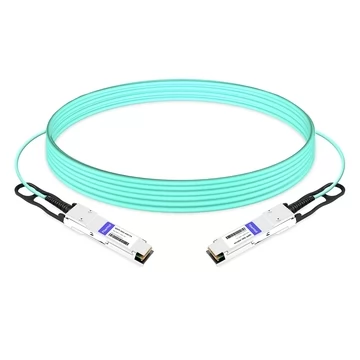
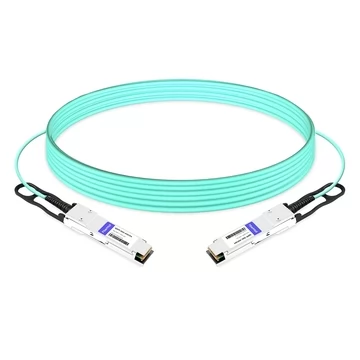
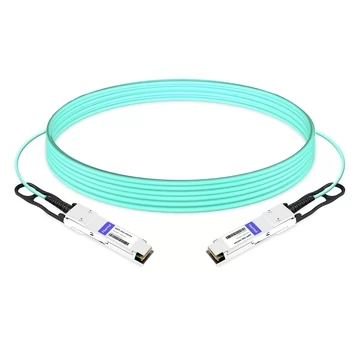
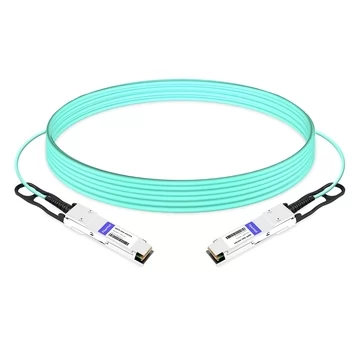
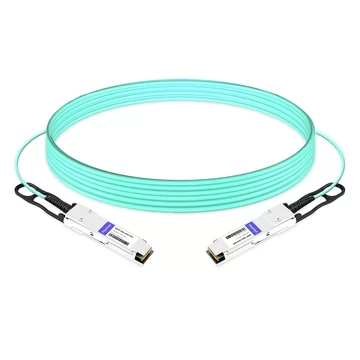
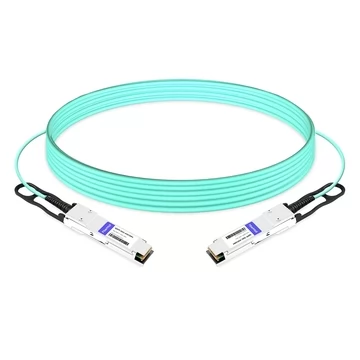
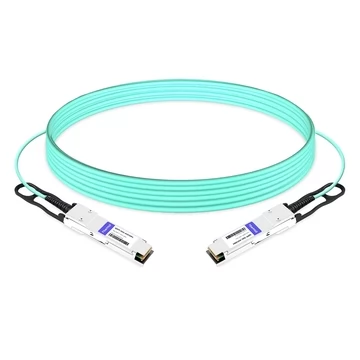
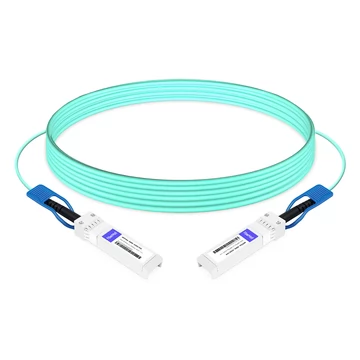
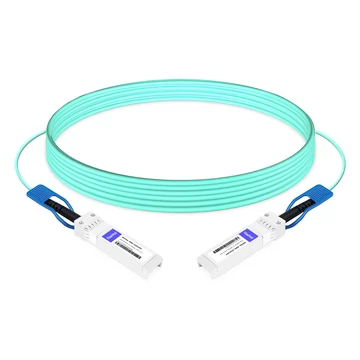
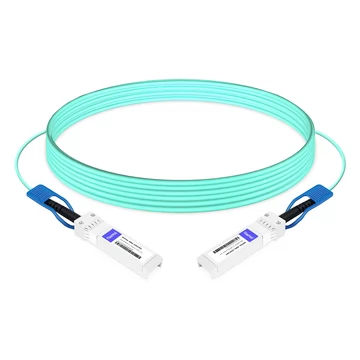
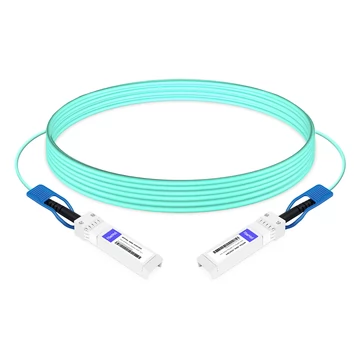
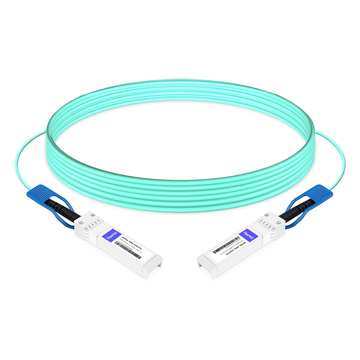
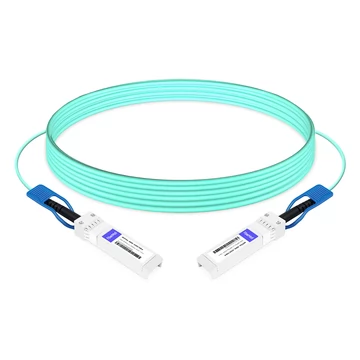
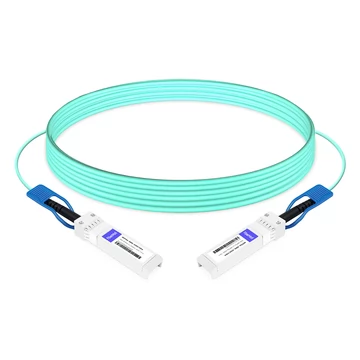
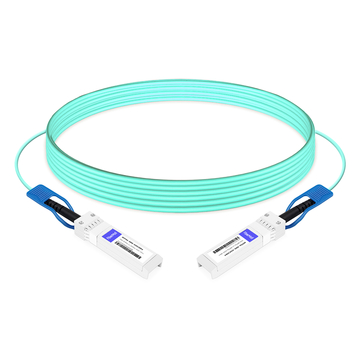
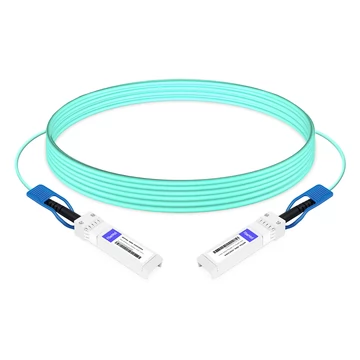
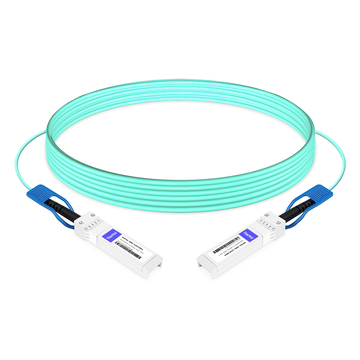
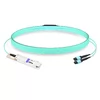
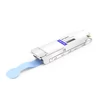
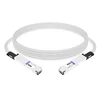
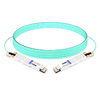
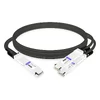
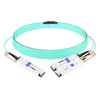
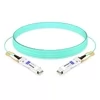
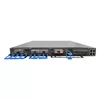
Data centers often need 50G/56G links that extend beyond the rack, while passive copper DAC cables are usually limited to only a few meters and can add bulk to already crowded cable pathways. Active Optical Cables (AOCs) solve both problems: they provide longer optical reach over multimode fiber while staying lighter, more flexible, and immune to electromagnetic interference.
Why 50G/56G AOC Cables Matter in Modern Networks
Data center architects face a recurring choice: connect high-density servers and switches with short, heavy copper DACs, or move to active optical cables that carry signals over fiber. For 50G Ethernet and 56G InfiniBand FDR links, the decision often comes down to reach, cable management, and noise immunity.
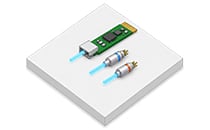
AOC cables integrate VCSEL transmitters, photodetectors, driver/receiver circuitry, EEPROM management, and, in some PAM4 or retimed designs, CDR or DSP functions directly into the connector housing. The result is a plug-and-play cable assembly that converts electrical signals to optical signals at one end and back to electrical signals at the other, eliminating the need for separate transceivers and patch cords. This matters in modern facilities where airflow, bend radius, and port density directly affect cooling and reliability.
Network engineers also use AOC cables when DACs introduce risk. Copper twinax cables can be affected by electromagnetic interference from power cables, UPS systems, and adjacent equipment. AOCs transmit data as light, so they maintain signal integrity across racks and rows without shielding or ground-loop concerns.
What Are 50G SFP56 and 56G QSFP AOC Cables?
50G SFP56 AOC
A 50G SFP56 AOC cable is a single-lane active optical assembly with SFP56 connectors on both ends. It supports 50G Ethernet over a single 26.5625 GBd PAM4 electrical lane, with a coded bit rate commonly expressed as 53.125 Gb/s. The SFP56 form factor retains the same physical size as SFP28, allowing switches to double port bandwidth without redesigning the faceplate.
Typical applications include:
Top-of-rack to server/NIC connections that exceed practical DAC reach
Rack-to-rack leaf-spine links
Breakout fan-out from 200G QSFP56 or 400G QSFP-DD ports, where the host platform supports breakout mode
5G fronthaul and eCPRI transport
56G QSFP AOC
A 56G QSFP AOC cable uses the larger QSFP/QSFP+ form factor with four 14.0625 Gb/s NRZ lanes, delivering an aggregate raw data rate of 56.25 Gb/s, commonly marketed as 56G. These cables are common in InfiniBand FDR fabrics, HPC clusters, and selected 40G/56G QSFP environments. The four-lane design matches the native lane mapping of many GPU clusters, HCAs, and high-performance computing switches.
Typical applications include:
InfiniBand FDR switch-to-switch and switch-to-HCA links
HPC cluster interconnects
QSFP-based multirate storage or Fibre Channel-related connections where the host platform supports those rates
Upgrades from 40G QSFP+ to 56G links without replacing compatible switch hardware
50G SFP56 AOC vs 56G QSFP AOC: Key Differences
50G SFP56 AOC and 56G QSFP AOC serve different network generations and port architectures, even though both are used for short- to medium-reach optical interconnects inside data centers and HPC environments.
A 50G SFP56 AOC uses the compact SFP56 form factor. It carries one 50G-class PAM4 lane and is primarily designed for 50G Ethernet, 5G fronthaul, eCPRI, and breakout applications from higher-speed switch ports. It typically uses 850 nm VCSEL optics over multimode fiber, with reach up to 100 m on OM4 or OM5, depending on the product design and host qualification. Power consumption is commonly below 2 W per end, and many models operate below 1.5 W per end.
A 56G QSFP AOC uses the QSFP/QSFP+ form factor. It carries four 14.0625 Gb/s NRZ lanes for an aggregate raw rate of 56.25 Gb/s. It is mainly used for InfiniBand FDR, HPC cluster interconnects, and selected 40G/56G Ethernet or VPI environments where supported by the host platform. Like 50G SFP56 AOC, it typically uses 850 nm multimode optics, but its reach is usually specified by the cable vendor and platform qualification. For many InfiniBand FDR AOC products, practical reach is commonly up to 100 m; longer variants should be confirmed against the exact product specification.
In terms of standards and compliance, 50G SFP56 AOC is associated with SFP56 MSA and IEEE 802.3cd / 50GBASE-SR-class operation. 56G QSFP AOC is associated with QSFP MSA, SFF-8436 or SFF-8685, and InfiniBand FDR. When a QSFP AOC is used in 40G Ethernet mode, IEEE 802.3ba / 40GBASE-SR4-class operation may also apply, depending on the host and cable design.
The choice between the two depends on your switch port type and protocol. If your switches expose SFP56 ports, you need SFP56 AOC. If they expose QSFP/QSFP+ ports or run InfiniBand FDR, you need a 56G QSFP AOC.
AOC vs DAC: When to Choose Active Optical Cable
DAC cables are the default choice for intra-rack links because they are inexpensive and consume almost no power. However, they fall short in several production scenarios. Use an AOC when your deployment requires one or more of the following:
Distance beyond practical DAC reach — 50G SFP56 AOC supports links up to 100 m on qualified multimode designs, while 56G QSFP AOC reach depends on vendor specification and host qualification.
EMI immunity — Fiber is not affected by electrical noise from power distribution systems, UPS equipment, or nearby machinery.
Better cable management — AOCs are much lighter and more flexible than copper twinax cables, improving airflow and making high-density cabling easier to manage.
Digital diagnostics — Many AOCs support DDM/DOM for real-time monitoring of Tx/Rx power, temperature, voltage, and related operating parameters.
Breakout flexibility — A single 200G or 400G switch port can fan out to multiple 50G SFP56 AOC links when the host platform supports the required breakout mode, FEC settings, and EEPROM coding.
Technical Specifications and Performance
FiberMall 50G/56G AOC cables are built for production environments. Key technical parameters include:
Data rate: 53.125 Gb/s coded bit rate for 50G SFP56 AOC, or 56.25 Gb/s aggregate raw rate for 56G QSFP AOC
Wavelength: 850 nm VCSEL with PIN photodiode receiver
Fiber: Integrated multimode optical fiber, typically OM3/OM4-class depending on product length and design
Reach: 1 m to 100 m for SFP56 AOC; 1 m to 100 m for many QSFP FDR AOC products, with longer vendor-qualified variants subject to confirmation
Power consumption: Typically below 2 W per end
Operating temperature: 0°C to 70°C commercial grade
Compliance: SFP56 MSA, QSFP MSA, IEEE 802.3cd, IEEE 802.3ba where applicable, SFF-8436 or SFF-8685, InfiniBand FDR, and RoHS
Diagnostics: DDM/DOM support on qualified models
Connector: Hot-pluggable design with pull-tab options available
Available standard lengths include 1 m, 3 m, 5 m, 7 m, 10 m, 15 m, 20 m, 25 m, 30 m, and 50 m. Custom lengths and private-label packaging are available under OEM/ODM programs.
Applications: Data Center, HPC, and InfiniBand FDR
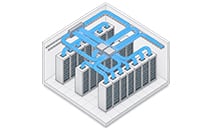
Data Center Networking
50G SFP56 AOC cables are widely deployed in leaf-spine and server access layers as networks move from 25G to 50G. They connect top-of-rack switches to servers, storage systems, and SmartNICs while keeping cable routing clean across adjacent racks.
High-Performance Computing
56G QSFP AOC cables remain a practical choice for InfiniBand FDR fabrics used in GPU clusters and supercomputing environments. The four-lane QSFP interface matches the native signaling of many HCAs and switch designs, simplifying procurement for cluster builders that still operate FDR-generation infrastructure.
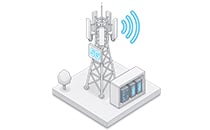
5G Fronthaul and eCPRI
Some 50G SFP56 AOC variants support eCPRI, making them suitable for 5G fronthaul links between baseband units and remote radio units where distance, cable weight, and EMI immunity matter.
Breakout and Fan-Out
Higher-speed ports frequently break out into multiple 50G links:
200G QSFP56 to 4 × 50G SFP56 AOC
400G QSFP-DD to 8 × 50G SFP56 AOC
Breakout operation requires host support for the target breakout mode, correct port configuration, compatible FEC settings, and vendor-specific EEPROM coding. FiberMall supplies breakout AOC assemblies with consistent coding and labeling across all legs.
Compatibility with Major Network Equipment
Compatibility is the top concern for buyers evaluating third-party AOC cables. FiberMall cables are designed around MSA and IEEE requirements and can be supplied with platform-specific coding for major switch, router, and adapter families.
Supported or available compatibility options include:
Cisco: Nexus and Catalyst switches with SFP56 or QSFP/QSFP+ ports
Juniper: QFX and MX series platforms
Arista: 7000 and 7500 series data center switches
Dell: PowerSwitch and Z-Series platforms
HPE: Aruba and FlexNetwork switches
H3C: S-series data center switches
Mellanox / NVIDIA: InfiniBand FDR and Ethernet switches
Intel: selected Ethernet adapter platforms; Omni-Path projects should be checked separately by exact adapter, port type, and cable requirement
Pre-sales testing and sample evaluation are available for large deployments. Contact our engineering team to confirm compatibility with your specific switch part numbers, firmware version, protocol mode, and port configuration.
Frequently Asked Questions
What is the difference between 50G SFP56 AOC and 56G QSFP AOC?
50G SFP56 AOC uses a single-lane PAM4 signal in a compact SFP56 form factor. It is mainly used for 50G Ethernet, 5G fronthaul, eCPRI, and breakout applications. 56G QSFP AOC uses four 14.0625 Gb/s NRZ lanes in a QSFP/QSFP+ form factor, delivering an aggregate raw rate of 56.25 Gb/s. It is commonly used for InfiniBand FDR and HPC cluster interconnects.
When should I choose AOC instead of DAC for 50G/56G connections?
Choose AOC when the distance exceeds practical DAC reach, when cables must route through EMI-heavy areas, when DDM/DOM diagnostics are required, or when cable weight, bend radius, and airflow are important concerns.
How far can 50G SFP56 AOC and 56G QSFP AOC cables reach?
50G SFP56 AOC can reach up to 100 m over qualified multimode designs, typically OM4 or OM5. 56G QSFP AOC reach depends on the vendor design and host qualification. Many InfiniBand FDR AOC products support lengths up to 100 m, while longer variants should be confirmed with the exact product specification.
Are FiberMall AOC cables compatible with Mellanox InfiniBand FDR switches?
Yes. FiberMall 56G QSFP AOC cables can be supplied for Mellanox/NVIDIA InfiniBand FDR environments. Compatibility should be confirmed against the exact switch model, HCA model, firmware version, and required InfiniBand or Ethernet mode.
What fiber type is used inside 50G/56G AOC cables?
50G/56G AOC cables use integrated multimode optical fiber, typically OM3/OM4-class fiber depending on product length and design. Since AOCs are fixed cable assemblies, customers usually need to select the correct cable length, host compatibility code, and connector form factor rather than choosing separate fiber jumpers.
What is the typical power consumption of 50G SFP56 AOC cables?
Power consumption is typically below 2 W per end, and many models operate below 1.5 W per end, depending on cable length and internal design.
Can I get custom lengths or branded AOC cables?
Yes. FiberMall offers custom lengths, private labeling, custom packaging, and firmware coding through OEM/ODM programs.
What is the typical lead time for 50G/56G AOC cable orders?
Standard lengths usually ship within 24–48 hours. Custom configurations typically ship 3–7 days after order confirmation.