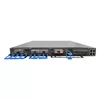
Your server has a PCIe slot, but the switch on the other side of the room — or the other side of the campus — connects over fiber. Onboard copper Ethernet is generally limited to a 100-meter channel and is not suitable when the run is longer, passes through an electrically noisy environment, or terminates at an SFP-based switch port.
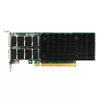
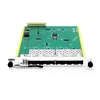
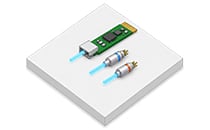
A gigabit fiber NIC puts an SFP port directly in your server, firewall, or Linux system, allowing you to use compatible SFP transceivers and LC fiber cabling already deployed in your network. FiberMall supplies the card, SFP module, and cable as a compatibility-tested kit built around Intel Ethernet controllers, with warranty coverage based on the applicable product category.
Why a Fiber NIC Beats a Copper Network Card
Most "gigabit network cards" on the market are copper RJ45 adapters. They work well for conventional desktop and server connections, but they reach practical limits when your deployment requires longer distances, electrical isolation, or direct connectivity to fiber-based network infrastructure.
Distance. 1000BASE-T supports channel lengths of up to 100 meters over standards-compliant twisted-pair cabling. A gigabit fiber NIC equipped with an appropriate LX-class SFP can reach several kilometers, with many commercially available 1G LX optics supporting up to 10 km over single-mode fiber. ZX-class optics can extend links to approximately 70–80 km or more, depending on the specific transceiver, fiber attenuation, and optical link budget. For campus links, building-to-building connections, utility networks, or remote radio sites, fiber can cover distances that copper Ethernet cannot.
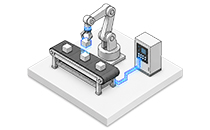
Electrical isolation. Fiber carries light rather than electrical current. In factories, power substations, equipment rooms, and other environments with motors, high-voltage equipment, or strong electromagnetic fields, a fiber link removes the data cable as a path for electromagnetic interference and ground-potential differences. If a copper connection becomes unstable when nearby machinery operates, replacing the electrical data path with fiber can eliminate an important source of interference.
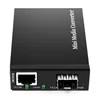
Switch compatibility. If your uplink switch, firewall, or router provides an SFP slot, an RJ45-only server NIC may require an additional media converter or copper transceiver. A fiber NIC with a compatible SFP cage allows the server to use the same class of optical transceivers deployed elsewhere in the network, simplifying cabling and transceiver inventory.
Future flexibility. An SFP slot is not permanently tied to a single optical reach. You can replace a compatible multimode SX transceiver with an LX- or ZX-class single-mode transceiver while keeping the same NIC. However, the installed fiber plant must also match the selected optic. Moving from multimode SX optics to single-mode LX or ZX optics may therefore require a different fiber path even though the network card itself does not need to be replaced.
Gigabit Fiber NICs Available from FiberMall
FiberMall builds its gigabit fiber NICs around Intel Ethernet controllers, which are widely used in server and network-appliance environments because of their mature driver ecosystems and long deployment history. Three models cover single-port through quad-port server applications.
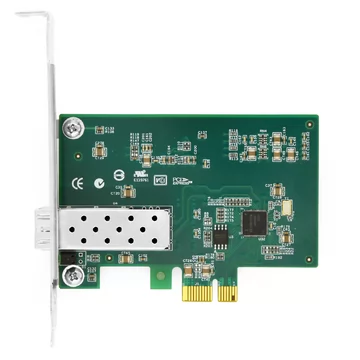
The FMI210-1G-S1 uses the Intel I210 controller and provides one SFP port through a PCIe x1 interface. It is suited to firewalls, pfSense/OPNsense appliances, management systems, and servers that require a single fiber uplink.
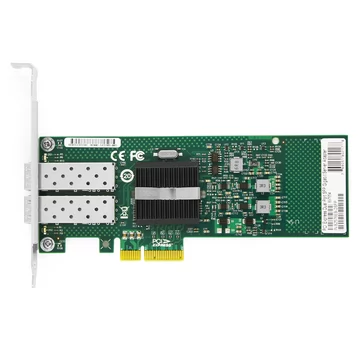
The FM82576-1G-S2 uses the Intel 82576 controller and provides two SFP ports through a PCIe x4 interface. Its dual-port design is appropriate for redundant links, link aggregation, dual-homed servers, and security appliances.
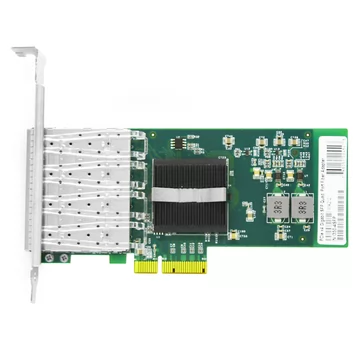
The FMI350-1G-S4 uses the Intel I350 controller and provides four SFP ports through a PCIe x4 interface. It is designed for virtualized hosts, multi-segment servers, NIC teaming, and applications where greater port density helps reduce PCIe slot usage.
FMI210-1G-S1 — Intel I210, Single-Port Gigabit SFP
The FMI210-1G-S1 is a compact single-port gigabit fiber NIC for servers or appliances that need one dedicated fiber uplink. The Intel I210 controller provides mature driver support together with hardware features such as checksum offload, segmentation offload, VLAN support, and multiple transmit and receive queues.
Unlike some higher-end Intel server controllers, the I210 does not provide hardware SR-IOV or VMDq. It is therefore best suited to general-purpose server, firewall, storage, management, and appliance applications where reliable single-port Gigabit Ethernet connectivity is the primary requirement.
FM82576-1G-S2 — Intel 82576, Dual-Port Gigabit SFP
The FM82576-1G-S2 provides two SFP ports on a PCIe x4 card for redundancy and flexible network design. The Intel 82576 includes virtualization-oriented capabilities such as VMDq and SR-IOV and is well suited to dual-port server applications.
The two interfaces can be configured for link aggregation, bonding, teaming, or active/standby redundancy depending on the operating system, driver, hypervisor, and switch configuration. With redundancy configured correctly, a failed optical module, fiber link, or switch connection does not have to take the host offline.
FMI350-1G-S4 — Intel I350, Quad-Port Gigabit SFP
The FMI350-1G-S4 provides four SFP ports for virtualized hosts and multi-segment servers. The Intel I350 is a widely deployed server-class Gigabit Ethernet controller with features such as receive-side scaling, multiple transmit and receive queues, VLAN filtering, checksum and segmentation offloads, VMDq, and SR-IOV support.
Its four-port density is useful when a server needs separate management, storage, production, or redundant network connections without consuming multiple PCIe slots.
Every model is available with full-height and low-profile bracket options. The cards are designed for compatible MSA-compliant 1G SFP transceivers, although the exact optic should still be qualified for the specific NIC, driver, operating system, and deployment environment.
Match the SFP Module to Your Reach
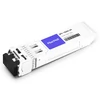
A gigabit fiber NIC is only one half of the optical link. The SFP transceiver installed in the card determines the supported fiber type, wavelength, optical budget, and transmission distance. FiberMall can supply the transceiver together with the NIC so the combination can be compatibility-tested before deployment.
1000BASE-SX optics are intended for multimode fiber and are commonly used for short links inside data centers and buildings. Depending on the fiber type, modal bandwidth, and transceiver specification, SX links can reach up to approximately 550 meters on suitable 50/125 µm multimode fiber. Legacy 62.5 µm multimode fiber generally supports shorter distances.
1000BASE-LX and LX-class optics operate around 1310 nm and are typically used over single-mode fiber for campus and building-to-building links. The IEEE 1000BASE-LX specification defines a shorter standardized reach, while many commercial LX/LH-class SFP modules provide enhanced optical budgets that support up to 10 km over OS2 single-mode fiber. The exact reach should therefore be taken from the transceiver data sheet.
ZX-class 1G SFPs are vendor-defined long-reach optics commonly used for approximately 70–80 km links over single-mode fiber. Their supported distance depends on transmitter power, receiver sensitivity, connector and splice loss, fiber attenuation, and the complete optical link budget. For very short links, some high-output long-reach optics may also require optical attenuation to avoid receiver overload.
The NIC can remain the same as your distance requirements change, but both the SFP and installed fiber must be appropriate for the selected optical interface.
Driver Compatibility: Intel Controllers, Mature OS Support
One of the most common problems with third-party network adapters is driver support. A low-cost card based on an obscure chipset can leave administrators searching for unsupported driver packages or kernel modules that may stop working after an operating-system upgrade.
FiberMall gigabit fiber NICs use Intel I210, I350, and 82576 controllers, all of which have mature driver ecosystems across commonly deployed server and network operating systems.
Windows and Windows Server support Intel Ethernet adapters through Microsoft-provided and Intel-provided drivers. Exact inbox support depends on the Windows release, controller revision, PCI device ID, and system configuration, so the operating-system and adapter compatibility should be verified before deployment.
Linux supports the Intel I210, I350, and 82576 families through the igb driver used by mainstream distributions such as RHEL, Ubuntu, and Debian. In many current Linux distributions, the required driver is already included with the kernel.
VMware ESXi support depends on the exact network adapter, PCI device ID, ESXi release, and available driver package. A controller family being widely supported does not guarantee compatibility with every ESXi version, so the specific adapter should be checked against the applicable VMware/Broadcom compatibility information before deployment.
FreeBSD, pfSense, and OPNsense include native support for Intel Gigabit Ethernet controller families through FreeBSD networking drivers. Driver naming and implementation can vary by operating-system release, so compatibility should be confirmed for the specific version being installed.
Intel controller families have a long history in server and embedded networking environments. That matters when a system is expected to operate for years in a data center, industrial site, or remote cabinet where unnecessary maintenance visits are costly.
Gigabit Fiber NIC FAQ
What is the difference between a copper and a fiber gigabit NIC?
A copper Gigabit Ethernet NIC normally terminates in an RJ45 port and carries 1000BASE-T over twisted-pair cabling, with a maximum standards-based channel length of 100 meters.
A gigabit fiber NIC instead provides an SFP slot and accepts compatible optical transceivers for multimode or single-mode fiber. Depending on the selected optic and installed fiber, links may range from a few hundred meters with SX to several kilometers with LX-class optics or tens of kilometers with ZX-class optics.
Fiber also provides electrical isolation between network endpoints, making it particularly useful for long-distance links, building-to-building connections, and electrically noisy environments.
Which SFP modules are compatible with an Intel I210 fiber NIC?
Compatible MSA-compliant 1G SFP transceivers can be used with fiber NICs based on Intel I210, I350, or 82576 controllers when the card, driver, firmware, and operating system support the selected optic.
Typical choices include 1000BASE-SX for multimode fiber, LX or LX-class optics for single-mode links of several kilometers, and vendor-defined ZX-class optics for much longer single-mode links.
Compatibility should not be assumed solely from the MSA designation. FiberMall can supply and pre-test the SFP with the network card so the NIC and optic combination is validated before shipment.
Will a gigabit fiber NIC work with pfSense, VMware ESXi, or FreeBSD?
Intel I210, I350, and 82576 controller families have broad operating-system support, but exact compatibility depends on the card and software version.
FreeBSD-based systems such as pfSense and OPNsense support these Intel Gigabit Ethernet families through native FreeBSD drivers. Linux distributions commonly support them through the in-kernel igb driver.
VMware ESXi support should be checked against the specific ESXi release, driver package, adapter PCI ID, and current VMware/Broadcom compatibility information. Windows and Windows Server may use inbox or Intel-provided drivers depending on the operating-system version.
How far can a gigabit fiber NIC transmit?
The NIC itself does not determine the transmission distance — the SFP transceiver, fiber type, and total optical link budget do.
A 1000BASE-SX module can support up to approximately 550 meters on suitable multimode fiber. Commercial LX/LX-class modules commonly support single-mode links of several kilometers, with many products rated for up to 10 km. ZX-class modules are commonly available for approximately 70–80 km applications, although the exact reach varies by transceiver specification and link conditions.
If your distance requirements change, you can often replace the SFP without replacing the NIC, provided the installed fiber is also compatible with the new optical module.
Do you sell the NIC, SFP module, and fiber cable as a tested kit?
Yes. FiberMall can supply the NIC, SFP transceiver, and LC fiber patch cable as a compatibility-tested solution. Supplying the major link components together reduces the risk of mismatched optics, incorrect fiber types, or unsupported combinations.
Instead of sourcing the NIC, optical module, and fiber separately, customers can place one order and work with one engineering team for compatibility verification and technical support. Warranty coverage follows the applicable terms for each product category.
Do you offer volume pricing for multi-server or appliance deployments?
Yes. Volume pricing is available for multi-card, multi-host, and OEM/ODM deployments. FiberMall's engineering team can provide complete bill-of-materials pricing covering the NIC, SFP transceiver, and fiber cable, typically within 24 hours for standard configurations.
Custom controller options, bracket configurations, and private-label branding are also available for qualified projects.