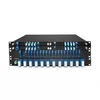
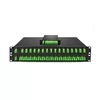
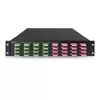
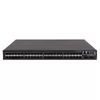
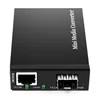
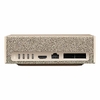
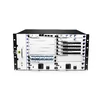
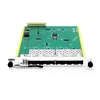
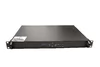
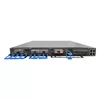
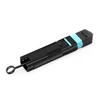
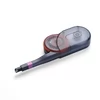
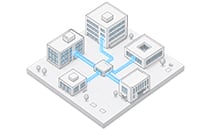
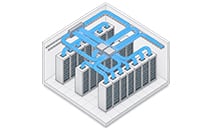
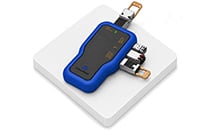
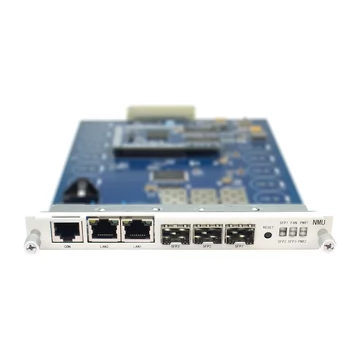
The Network Management Unit (NMU) provides centralized SNMP control, enabling you to easily monitor and manage an entire chassis system through a single interface. By providing real-time access to critical status updates, alarms, and performance data, it streamlines operations and maintenance while reducing the need for manual intervention. Regardless of the deployment scale, it enables unified coordination and intelligent responses, ensuring stable, high-efficiency system operation and enhancing overall management reliability.
The Chassis Is Only as Manageable as Its Management Card
A rack of standalone converters means a rack of blind spots. Each device has its own LEDs, its own power supply, and its own failure mode—and none of it reports to a centralized system you can monitor. When a link drops, the on-call engineer must walk the rack, locate the device, and read the LEDs manually.
A chassis consolidates hardware, but it does not automatically consolidate visibility. Even if you populate a chassis with manageable media converter cards, you still need one element to tie them together: the management card. Without it, you simply have sixteen isolated cards in a box that you must monitor individually.
That management card is the network management unit. It makes the difference between a chassis you can actively manage and a chassis you merely mount. Get it right, and your Network Operations Center (NOC) can view voltage, temperature, fan health, link status, and optical power in real time. Skip it, and you have bought density without the control needed to justify it.
What Is a Network Management Unit?
A network management unit (NMU) is a hot-swappable management card that slides into a managed chassis, providing centralized monitoring, configuration, and alarm handling for every service card inside. In the FiberMall chassis, it serves as the master control card—the single module that speaks SNMP, WEB, TELNET, and CONSOLE, allowing the rest of the chassis to be managed remotely.
The three capabilities that define an NMU are:
· Fault, configuration, performance, and security management: The NMU reports card and link statuses, pushes configuration changes, and raises SNMP Trap alarms when a component degrades, all without requiring a site visit.
· In-band and out-of-band management: It connects through optical SFP ports and 10/100 Mbps RJ45 Ethernet ports, allowing you to reach it over the network you are managing or via a dedicated management path.
· Hot-swap independence: The NMU operates independently of the service cards, meaning you can replace or reboot the management card without interrupting the traffic those cards carry.
The NMU is not an accessory. It is the reason a managed chassis earns the term managed.
Remote Monitoring Without the Truck Roll
Most outages worsen before they are fixed because nobody sees them coming. A card runs hot, an optical module drifts out of tolerance, or a fan slows down—and the first sign of trouble is a user calling in a downed link. Remote monitoring changes this paradigm.
The FiberMall NMU reports real-time voltage, temperature, fan status, port status, speed, duplex, and link state across every card it supervises. For SFP, CWDM SFP, and DWDM SFP modules, it surfaces Digital Diagnostic Monitoring (DDM) data—such as transmit and receive power, laser bias current, and module temperature—ensuring a degrading optic is caught before it fails.
What remote monitoring eliminates:
· The diagnostic trip: No more dispatching technicians to manually read LEDs; the NMU tells you exactly what failed and where.
· The reactive fix: SNMP Trap alarms and pre-alarm thresholds flag trouble before it escalates into an outage, allowing you to replace parts on your schedule rather than under pressure.
· The 3 a.m. scramble: Remote power-off alarms and flow statistics give your NOC the visibility to triage issues from a desk instead of at the rack.
It is a simple trade-off: investing in one management card saves the hours and truck rolls currently spent on guesswork.
Hot-Swap the NMU Without Dropping a Link
The most common objection to adopting a centralized management card is also the most reasonable one: if the NMU fails, does the whole chassis go down with it?
It does not. The NMU and the service cards run independently, and the NMU is fully hot-swappable. A failed management card can be pulled from a live chassis and replaced without powering down the system or disturbing the converter and WDM cards carrying traffic. The links stay active while you restore management capabilities.
Replacing the NMU takes three simple steps:
· Identify the failure: The management interface reports the NMU's own health, eliminating any guesswork about which module has failed.
· Pull the failed card: Its hot-swappable design means you can remove it from the live chassis while other cards continue passing traffic.
· Insert the spare: The replacement card boots up, rediscovers the chassis, and restores management within minutes.
Keeping a spare NMU on the shelf transforms the management layer from a potential single point of failure into a routine swap. It is the same redundancy principle you already apply to power supplies and line cards—now applied to the card that monitors them all.
Manage Up to 4 Chassis from One Interface
Typically, one NMU manages one chassis. However, most networks requiring a chassis will eventually need more than one, and the last thing administrators want is a separate login for each rack.
The FiberMall NMU utilizes a master-and-slave architecture that cascades up to four chassis behind a single management interface. The top-tree view groups every cascaded chassis into a single pane of glass, allowing operators to monitor everything simultaneously instead of flipping between four different consoles.
Cascading provides:
· One login for the fleet: Manage up to 64 converter and WDM links (four chassis, each with sixteen slots) from a single SNMP, WEB, TELNET, or CONSOLE session.
· Faster triage: A downed link in chassis three appears in the same view as the healthy links in chassis one, enabling you to isolate faults without context-switching.
· MIB files for your existing NMS: The NMU ships with MIB files that integrate seamlessly with HP OpenView, SNMPc, and others, allowing you to drop the chassis into your existing network management system rather than learning a new one.
This cascading capability separates a simple management card from a true management platform, and it is why growing ISPs, telecoms, and enterprise networks standardize on a chassis family centered around a robust NMU.
How It Works
· Confirm your chassis and cards: Select the FiberMall main chassis, the manageable converter and WDM cards, and the NMU that supervises them. A FiberMall engineer can help you match the right management configuration to your specific deployment.
· Install the NMU and connect: The NMU slides into the chassis and connects via SFP optical and RJ45 Ethernet ports. It supports both in-band and out-of-band connections for SNMP, WEB, TELNET, or CONSOLE access.
· Cascade, monitor, and alarm: Link up to four chassis, point the NMU's MIB files to your existing NMS, and begin monitoring voltage, temperature, optical power, and link states from one unified interface.
Technical Specifications
The Network Management Unit (NMU) is designed specifically for the FiberMall managed chassis (SKU: store-17091) to serve as a hot-swappable master management card. It supports a comprehensive suite of management protocols, including SNMP, WEB, TELNET, and CONSOLE.
For connectivity, the NMU is equipped with an RS232 console port (RJ45) and a 10/100 Mbps RJ45 Ethernet port for out-of-band management, alongside SFP ports designed for in-band management (exact port counts vary by specific SKU). Its master-and-slave cascading capability allows operators to link and manage up to four chassis from a single interface.
The unit excels in real-time monitoring, tracking chassis voltage, temperature, fan health, port status, and link states. It also supports Digital Diagnostic Monitoring (DDM) for SFP, CWDM SFP, and DWDM SFP modules, providing critical telemetry on transmit and receive (TX/RX) power, laser bias current, and optical temperatures. When issues arise, the NMU triggers SNMP Traps and alerts based on pre-set alarm thresholds, while maintaining historical alarm and operational logs for auditing.
Integration into existing network ecosystems is seamless, as the NMU includes MIB files compatible with HP OpenView, SNMPc, and other third-party Network Management Systems (NMS). The card's hot-swap capability ensures it can be replaced without disrupting the active service cards. Furthermore, the NMU includes advanced network features such as VLAN support (including Q-in-Q and 802.1q), rate limiting, loopback testing, remote power-off alarms, flow statistics tracking, FTP-based firmware upgrades, and graded user management. It is ideally suited for ISP/FTTx deployments, telecom central offices, enterprise networks, and data centers.
Frequently Asked Questions
What does a network management unit do?
A network management unit (NMU) is a hot-swappable management card that monitors, configures, and alarms every service card in a managed chassis from a single SNMP, WEB, TELNET, or CONSOLE interface. It reports voltage, temperature, fan status, link state, and optical power so operators can manage the chassis remotely.
Do I need a network management unit for my chassis?
If you require remote visibility—such as link status, environmental monitoring, and remote configuration—you need an NMU. A chassis without one only consolidates power and physical mounting; it offers no aggregated monitoring or control. For any multi-link deployment, the NMU is the component that makes the chassis truly manageable.
Can I hot-swap the NMU without dropping traffic?
Yes. The NMU operates independently of the service cards and is fully hot-swappable. You can remove and replace the management card without powering down the chassis or interrupting the traffic flowing through the converter and WDM cards.
Does the FiberMall NMU work with OpenView or SNMPc?
Yes. The NMU ships with MIB files designed to integrate with third-party NMS platforms, including HP OpenView and SNMPc. This allows you to incorporate the chassis directly into the network management system you already operate.
How many chassis can one NMU manage?
Directly, one NMU supervises one chassis. However, its master-and-slave architecture allows you to cascade up to four chassis behind a single management interface. This means you can manage up to 64 converter and WDM links from one unified pane of glass.
Will the network management unit fit my FiberMall chassis?
Yes. The NMU is the specifically matched management card for the FiberMall main chassis (store-17091). Because FiberMall supplies the chassis, the service cards, and the NMU as an integrated ecosystem, physical fit and protocol compatibility are guaranteed.