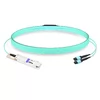
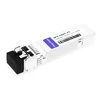
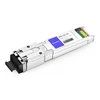
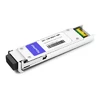
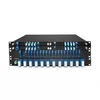
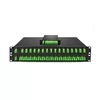
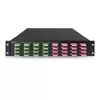
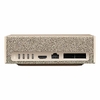
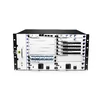
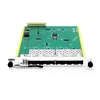
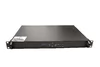
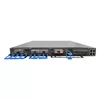
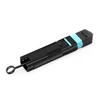
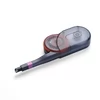
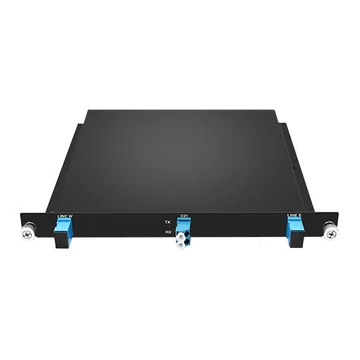
Fiber capacity is limited, but DWDM allows the available optical spectrum to be used far more efficiently. A DWDM OADM (Dense Wavelength Division Multiplexing Optical Add-Drop Multiplexer) lets you add or drop selected 100 GHz C-band wavelength channels at intermediate nodes while allowing all other wavelengths to continue along the express path. It requires no electrical power or cooling, and express traffic can pass through without electronic termination during normal operation.
FiberMall supplies passive DWDM OADM modules in 1CH, 2CH, 4CH, 8CH, and 16CH configurations. Available options include single-fiber or dual-fiber designs, East, West, or East and West configurations, and LGX or 1U rack-mount packaging. Channel center frequencies are aligned with the ITU-T G.694.1 DWDM frequency grid. Each module is tested for insertion loss, channel isolation, return loss, polarization-dependent loss, and thermal stability to meet the requirements of metro, backbone, and data center interconnect applications.
Your Fiber Is Full, but Your Network Still Needs More Sites
Network architects operating metro rings, backbone routes, and data center interconnects often face the same constraint: the installed fiber count is fixed, while the number of network endpoints and services continues to grow. Installing new fiber is expensive and time-consuming, while leasing additional dark fiber creates recurring costs and reduces control over the physical route.
A DWDM OADM addresses this challenge at the wavelength layer. Instead of terminating the entire DWDM signal at every location, the OADM drops only the wavelength channels required by the local site, adds local traffic on designated wavelength channels, and allows the remaining channels to pass through unchanged.
Because the device is completely passive, it consumes no electrical power, generates no operating heat, and introduces no active electronic failure points at remote locations. However, its insertion loss must still be included in the optical link budget.
FiberMall DWDM OADMs are designed for standard G.652.D single-mode fiber and can be used with compatible fixed-wavelength or tunable DWDM transceivers. Compatibility depends on the channel frequency, channel spacing, optical signal bandwidth, launch power, receiver sensitivity, and overall link budget—not simply on whether the transceiver uses an ITU DWDM wavelength.
Whether you need to add one wavelength at a remote point of presence or drop multiple wavelengths at a metro aggregation node, the OADM can be configured according to your required channel plan, connector type, fiber arrangement, and optical power budget.
FiberMall DWDM OADM Solution Overview
FiberMall DWDM OADM modules provide selective access to wavelength channels in DWDM ring, linear, and point-to-point network topologies. The modules use passive thin-film filter technology to deliver controlled passbands, low insertion loss, and high adjacent-channel isolation on a 100 GHz DWDM grid.
Key Benefits
• Passive operation — No electrical power supply, cooling fan, software, or active monitoring system is required.
• ITU-T-aligned wavelength grid — Channel center frequencies are aligned with the 100 GHz fixed grid defined in ITU-T G.694.1.
• Protocol-transparent operation — The OADM does not process the client protocol or data rate. It can carry compatible 10G, 25G, 100G, and other optical services when their spectral width, center frequency, optical power, and link-budget requirements fit the OADM specifications.
• Flexible configurations — Available in single-fiber or dual-fiber designs with East, West, or East and West access.
• Multiple channel-count options — Standard configurations include 1CH, 2CH, 4CH, 8CH, and 16CH.
• Industrial-temperature options — Selected models are available with extended operating-temperature ranges for qualified remote-cabinet and industrial applications.
• System compatibility — The OADMs can be paired with compatible FiberMall DWDM SFP, SFP+, SFP28, QSFP, QSFP28, and other DWDM optical transceivers.
Standard narrow-passband OADMs should not automatically be assumed to support high-baud-rate coherent signals. Applications involving 100G, 400G, or higher-speed coherent transmission must be verified against the filter passband, center-frequency tolerance, modulation format, and optical link requirements of the specific transceiver.
Whether you are building a metro ring, expanding a backbone route, or connecting multiple data centers, FiberMall can configure the channel count, ITU channel set, connector type, fiber length, port arrangement, and housing to match your network design.
Features That Deliver Reliable DWDM Add/Drop Performance
Low Insertion Loss on the 100 GHz Grid
DWDM filters have much narrower channel passbands than CWDM filters, making insertion-loss control especially important. FiberMall DWDM OADMs are designed to maintain low add/drop insertion loss and predictable express-path loss, minimizing their effect on the total optical power budget in multi-node networks.
The exact insertion loss depends on the number of channels, fiber configuration, connector type, and East/West arrangement. Each OADM should therefore be evaluated using the specifications for the exact product configuration.
High Channel Isolation
Adjacent-channel isolation of at least 30 dB and non-adjacent-channel isolation of at least 35 dB help suppress crosstalk between closely spaced 100 GHz wavelength channels and maintain reliable signal separation.
Isolation values may vary by model and channel count. The corresponding product datasheet should be used for final network design.
Optional Monitor and Express Ports
A monitor port can tap a small portion of the optical signal for power measurement, spectrum analysis, or troubleshooting without disconnecting the live express path.
Depending on the model, an additional express, upgrade, or expansion port may also be available to support future wavelength expansion. The exact function of this port should be confirmed in the port map and product datasheet.
Multiple Connector and Polish Options
LC, SC, and FC connectors are available with UPC or APC polish. APC connectors may be selected when lower back reflection is required, while UPC connectors are widely used in Ethernet and data center systems.
The connector polish must match the connected equipment and patch cables. UPC and APC connectors must not be directly mated because the different end-face geometries can cause excessive insertion loss, reflection, and physical damage.
LGX Box and 1U Rack-Mount Packaging
Standard LGX packaging simplifies installation in compatible 1U, 19-inch rack chassis and modular patch panels. Custom ABS boxes, plug-in modules, and rack-mount packages are also available for space-constrained, industrial, and OEM deployments.
DWDM OADM Specifications
FiberMall DWDM OADMs use passive thin-film filter technology and require no external power.
Their channel center frequencies are aligned with the ITU-T G.694.1 DWDM grid. Standard products commonly use 100 GHz channel spacing, while selected 50 GHz configurations may be available as custom options.
The supported wavelength range is typically within the C-band. Common channel selections include ITU channels C21 through C60, although the exact available channel set depends on the product model and configuration.
Standard channel-count options include 1CH, 2CH, 4CH, 8CH, and 16CH. Custom channel counts or channel combinations may be available for OEM and project-based requirements.
The modules are designed for standard G.652.D single-mode fiber.
Available connector types include LC, SC, and FC with either UPC or APC polish. Connector type and polish should be selected according to the connected equipment and optical distribution system.
Add/drop insertion loss typically ranges from no more than 1.0 dB for selected 1CH configurations to no more than 4.75 dB for selected 16CH configurations. Actual values depend on the channel count, fiber arrangement, connector type, and East/West configuration.
Express-path insertion loss also varies according to the channel count and configuration. The exact value should be obtained from the datasheet for the selected model.
A typical channel passband may be specified as approximately ±0.11 nm relative to the ITU center wavelength. However, the applicable insertion-loss threshold, such as the 1 dB or 3 dB bandwidth, must be confirmed in the product datasheet. Passband suitability is particularly important for high-baud-rate PAM4 and coherent optical signals.
Typical adjacent-channel isolation is at least 30 dB, while non-adjacent-channel isolation is at least 35 dB.
Polarization-dependent loss is typically no more than 0.3 dB, and polarization-mode dispersion is typically no more than 0.2 ps.
Return loss is typically at least 45 dB, while directivity is typically at least 50 dB.
Standard models may support operating temperatures from −5 °C to +65 °C. Selected industrial-temperature models may support operating temperatures from −40 °C to +85 °C. Actual environmental suitability depends on the product housing, connector sealing, humidity, vibration, and installation conditions.
Products may be available with RoHS compliance and applicable CE documentation. Manufacturing may be performed under an ISO 9001-certified quality management system. ISO 9001 refers to the manufacturer’s quality management system rather than certification of the individual OADM product. Any additional regulatory claim should be confirmed using the applicable declaration or test report.
All specification values vary by channel count and product configuration. The datasheet for the exact part number should be used for final network planning.
How to Choose Your DWDM OADM Configuration
Not sure which configuration fits your network? The following guidance can help narrow down the available options.
Single-Fiber, East or West
A single-fiber, single-sided OADM provides add/drop access from one side of a single-fiber optical link. Bidirectional transmission on one fiber normally uses different wavelength sets for the two transmission directions.
This configuration is suitable for point-to-point or linear networks where local wavelength access is required from only one side of the route.
Some FiberMall product families may identify this configuration using the code “SS.” Configuration codes are product-specific and should be verified against the relevant port diagram.
Single-Fiber, East and West
A single-fiber, East and West OADM provides wavelength access from both sides of a single-fiber ring or linear route. Different wavelengths are normally assigned to opposite transmission directions on the same fiber.
This design can support single-fiber ring architectures, but the wavelength plan must be carefully coordinated to prevent directional conflicts.
Some product families may identify this configuration using the code “SD.” The exact code and port assignment should be confirmed in the product datasheet.
Dual-Fiber, East or West
A dual-fiber, single-sided OADM uses separate fibers for the two transmission directions and provides add/drop access from one side of the route.
This is a common configuration for conventional point-to-point, linear, bus, or ring networks that use separate transmit and receive fibers.
Some product families may identify this configuration using the code “DS.”
Dual-Fiber, East and West
A dual-fiber, East and West OADM provides wavelength access from both sides of a dual-fiber ring. Separate fibers carry traffic in opposite directions, while the OADM provides add/drop ports for both sides of the ring.
This arrangement can be incorporated into resilient ring designs. However, the passive OADM itself does not perform automatic protection switching, route calculation, or traffic rerouting. Those functions must be implemented by the connected transmission equipment, optical switches, or network protection protocols.
Some product families may identify this configuration using the code“DD.”
Selecting the Channel Count
A 1CH OADM is suitable for a site that needs to add or drop one wavelength service.
A 2CH or 4CH OADM is suitable for locations carrying several independent services or requiring limited future expansion.
An 8CH or 16CH OADM is more appropriate for aggregation sites that need access to multiple wavelength channels.
Higher channel counts normally introduce greater insertion loss, so the total optical power budget must be recalculated whenever additional filters or OADM nodes are added.
Single-Fiber vs. Dual-Fiber
A single-fiber system saves fiber resources by using different wavelengths for opposite transmission directions on the same physical fiber. It requires a carefully matched wavelength plan and compatible single-fiber transceivers or optical interfaces.
A dual-fiber system uses one fiber for each transmission direction. It consumes a fiber pair but is generally simpler to design, operate, and troubleshoot in conventional ring and point-to-point networks.
East and West Ports
“East” and “West” describe the two sides of the optical span or ring connected to the OADM. A single-sided OADM provides local wavelength access from either the East or West side.
A dual-sided East and West OADM provides wavelength access from both directions. It can be used as part of a protected ring architecture, but it does not independently switch traffic between directions.
100 GHz vs. 50 GHz
A 100 GHz channel grid is widely used and is compatible with a broad range of fixed-wavelength and tunable DWDM transceivers.
A 50 GHz grid can support higher channel density within the available spectrum, but it requires tighter laser-frequency control, narrower filtering, and more careful management of passband width, OSNR, dispersion, and the overall optical link budget.
Before selecting a 50 GHz OADM, confirm that both the transceivers and all passive or active line-system components support the same channel grid.
Applications for FiberMall DWDM OADM
Metropolitan Area Networks
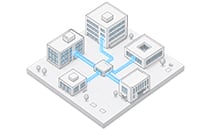
DWDM OADMs can drop selected wavelength channels at central offices, aggregation nodes, customer handoff locations, and remote points of presence without demultiplexing or terminating every wavelength at each site.
This reduces equipment count and allows new wavelength services to be introduced while existing express channels continue through the network.
Long-Haul and Backbone Networks
Selected wavelength channels can be added or dropped at intermediate equipment sites, amplifier locations, or route junctions while express traffic remains on the same fiber route.
DWDM OADMs can be used in networks that also include EDFAs, provided that the amplifier wavelength range, gain profile, optical power, noise figure, OSNR, and component placement are properly engineered. Compatibility with an EDFA does not eliminate the need for a complete optical link-budget and OSNR analysis.
Data Center Interconnect
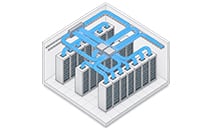
DWDM OADMs can help expand capacity between data centers by allowing additional sites or services to access selected wavelengths on an existing fiber route.
This is especially useful in multi-site metro DCI networks where not every wavelength needs to terminate at every data center. Coherent DCI applications must use OADMs specifically qualified for the signal bandwidth and filtering requirements of the selected coherent transceivers.
5G Backhaul and Mobile Fronthaul
DWDM OADMs can add or drop mobile backhaul or fronthaul wavelength services at aggregation hubs and intermediate sites.
Because they operate passively, OADMs can avoid unnecessary optical-electrical-optical conversion at intermediate locations. This can reduce power consumption, equipment complexity, and operating costs compared with architectures that require active switching or transponders at every site.
The complete latency performance still depends on the connected transport equipment, switching architecture, fiber distance, and network protocol.
Enterprise Private Optical Networks
Enterprises can use DWDM OADMs to build dedicated, high-capacity private optical rings between campuses, offices, data centers, and disaster-recovery sites.
The OADM provides selective wavelength access but does not itself provide data encryption, user authentication, or access control. Where security is required, encryption and network security functions must be implemented by the connected transmission or network equipment.
DWDM OADM vs. Full Mux/Demux vs. CWDM OADM
A DWDM OADM is generally the preferred device when an intermediate node needs to access only one or several DWDM wavelength channels. It allows selected wavelengths to be added or dropped without terminating all channels, reducing equipment complexity and avoiding unnecessary demultiplexing of the complete wavelength set.
A full DWDM Mux/Demux is normally used at a terminal node where all configured DWDM channels must be combined onto or separated from the line fiber. It is more appropriate for endpoints, central offices, or data centers where the complete channel group is terminated.
A CWDM OADM is often suitable for cost-sensitive, short-reach networks that need a relatively small number of wavelength channels. CWDM uses wider 20 nm channel spacing and typically supports up to 18 standardized wavelength channels. These systems are commonly deployed without optical amplification, although the actual need for amplification always depends on the total link loss and available optical power budget.
For high-channel-count terminal nodes, such as systems carrying 40 or more DWDM channels, a DWDM Mux/Demux based on an athermal arrayed waveguide grating, or AAWG, may provide consistent channel spacing and scalable capacity. The maximum transmission distance is not determined by the AAWG alone; it depends on the transceiver performance, total insertion loss, fiber attenuation, chromatic dispersion, nonlinear effects, OSNR, and amplifier design.
DWDM OADMs are therefore most appropriate when selected wavelengths must be accessed at intermediate locations in a high-density optical network. Full DWDM Mux/Demux devices are used at terminal locations where all configured channels must be combined or separated. CWDM OADMs are generally better suited to shorter-distance, lower-channel-count, and cost-sensitive applications.
FAQ
What Is a DWDM OADM?
A DWDM OADM is a passive optical device that adds one or more DWDM wavelength channels to a fiber link or drops selected channels from the link while allowing the remaining wavelengths to continue along the express path.
It is commonly used at intermediate nodes in DWDM rings, backbone routes, metro networks, and data center interconnects.
How Does a DWDM OADM Work?
Incoming WDM light enters the OADM through a line port. Thin-film filters separate the selected add/drop wavelengths and route them to the corresponding local ports. All unselected wavelengths continue through the express path.
Local optical signals can be inserted through the add ports on the designated wavelength channels. Bidirectional operation depends on the OADM configuration, fiber arrangement, and wavelength plan.
What Is the Difference Between a DWDM OADM and a CWDM OADM?
DWDM OADMs use relatively tight channel spacing, typically 100 GHz or 50 GHz, based on the ITU-T G.694.1 DWDM frequency grid. They support higher channel density but require more precise wavelength control and narrower optical filtering.
CWDM OADMs use 20 nm channel spacing based on the ITU-T G.694.2 wavelength grid. They are generally less expensive and are commonly used in short- and medium-reach networks with lower channel counts.
Learn more in our CWDM vs. DWDM guide.
What Is the Difference Between a Single-Fiber and Dual-Fiber DWDM OADM?
A single-fiber OADM supports bidirectional transmission over one physical fiber by assigning different wavelength channels to opposite transmission directions. This reduces fiber consumption but requires a coordinated directional wavelength plan.
A dual-fiber OADM uses a fiber pair, with one fiber carrying traffic in each direction. It is usually simpler to plan, deploy, and troubleshoot in conventional network architectures.
What Do East and West Mean for a DWDM OADM?
East and West identify the two sides of the optical span or ring connected to the OADM.
A single-sided OADM connects to either the East or West side. A dual-sided OADM connects to both sides and provides wavelength access from both directions.
An East and West OADM can be incorporated into a protected ring design, but the passive device does not perform automatic protection switching or traffic rerouting by itself.
What Is the Difference Between a 100 GHz and 50 GHz DWDM OADM?
A 100 GHz OADM provides wider channel spacing and is compatible with a broad range of standard DWDM transceivers.
A 50 GHz OADM doubles the potential channel density within the same optical spectrum, but it requires tighter laser-frequency control, compatible filters, and more careful evaluation of signal bandwidth, passband shape, OSNR, and the optical link budget.
How Many Channels Does a DWDM OADM Support?
FiberMall offers standard 1CH, 2CH, 4CH, 8CH, and 16CH DWDM OADM configurations.
Custom channel counts, channel combinations, and ITU channel sets may be available for project-based and OEM/ODM orders.
Is a DWDM OADM Active or Passive?
A DWDM OADM is passive. It requires no electrical power, cooling fan, operating software, or active management system.
This reduces remote-site power consumption and eliminates active electronic failure points. However, the OADM still introduces optical insertion loss and contains passive components, connectors, and fiber assemblies that must be installed and maintained correctly.
What Is the Typical Insertion Loss of a DWDM OADM?
Add/drop insertion loss may range from no more than approximately 1.0 dB for selected 1CH configurations to no more than approximately 4.75 dB for selected 16CH configurations.
Express-path loss depends on the number of channels, fiber arrangement, connector type, and East/West configuration. Always use the datasheet for the exact part number when calculating the optical link budget.
What ITU Channels Are Supported?
FiberMall DWDM OADMs support standard C-band ITU channels. Common configurations may use channels from C21 through C60.
Custom channel sets and channel combinations may also be available. The exact channel-frequency plan should be confirmed before ordering.
What Connectors Are Available?
Available connector options include LC, SC, and FC with UPC or APC polish.
APC connectors may be selected for systems that require lower back reflection, while UPC connectors are widely used in Ethernet and digital data applications.
The connector type and polish must match the connected equipment. UPC and APC connectors must not be directly mated.
What Is a Monitor Port?
A monitor port taps a small percentage of the optical signal for optical-power measurement, spectrum analysis, or troubleshooting without disconnecting the primary express path.
Because a monitor port introduces a small additional optical loss, the tap ratio and associated insertion loss should be included in the optical link budget.
When Should I Use an OADM Instead of a Full Mux/Demux?
Use an OADM at an intermediate node where only selected wavelength channels need to be accessed.
Use a full DWDM Mux/Demux at a terminal node where all configured wavelength channels need to be combined onto or separated from the line fiber.
Can FiberMall Customize My DWDM OADM?
Yes. FiberMall supports customization of wavelength channels, channel counts, connectors, connector polish, fiber lengths, fiber types, port arrangements, housing formats, labels, and packaging.
Contact the FiberMall team for project-based or OEM/ODM services.
How Much Does a DWDM OADM Cost?
Published FiberMall pricing may start at approximately $110 for selected 1CH, single-fiber DWDM OADM LGX configurations.
Prices vary according to the channel count, wavelength plan, connector type, housing, fiber arrangement, customization requirements, and order quantity. Published prices are subject to change, so current pricing should be confirmed before ordering.