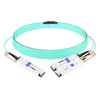
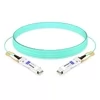
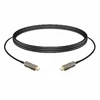
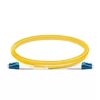
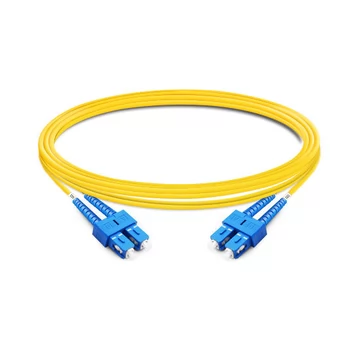
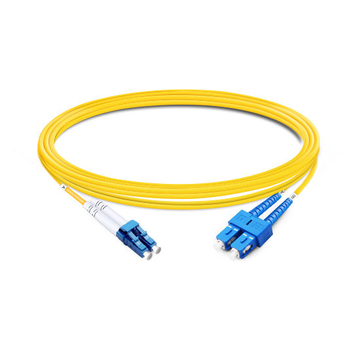
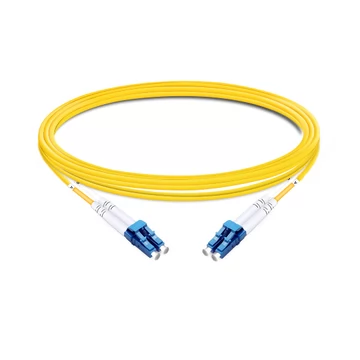
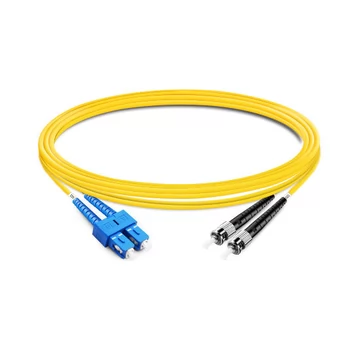
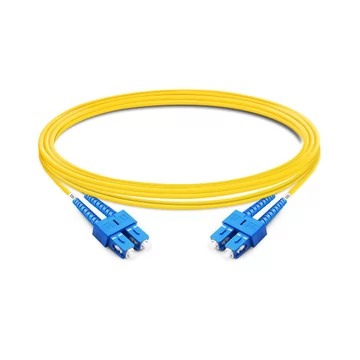
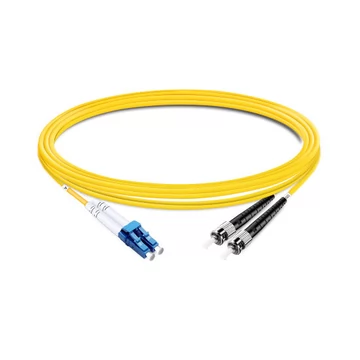
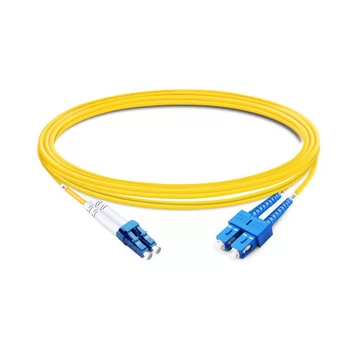
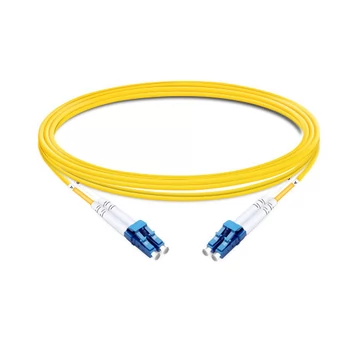
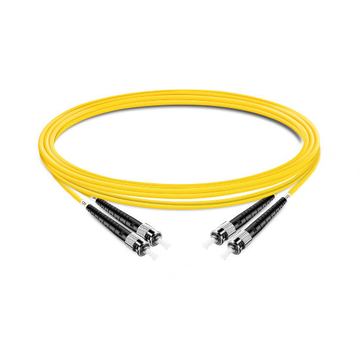
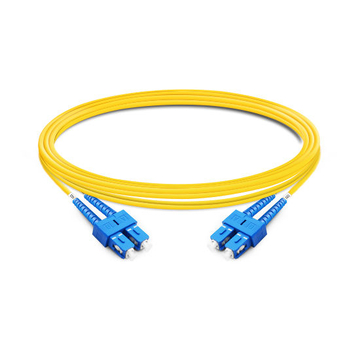
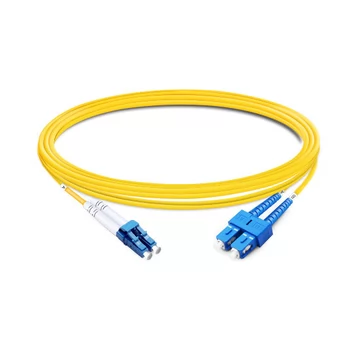
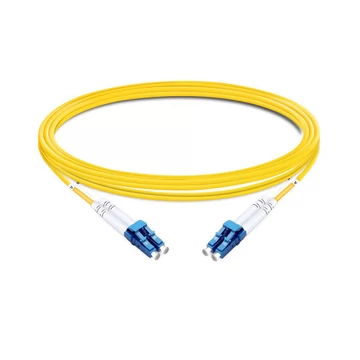
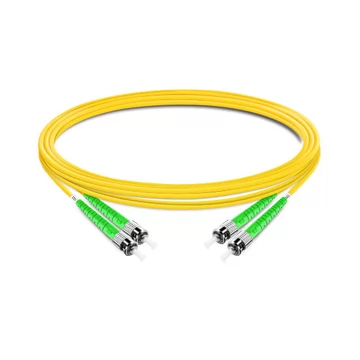
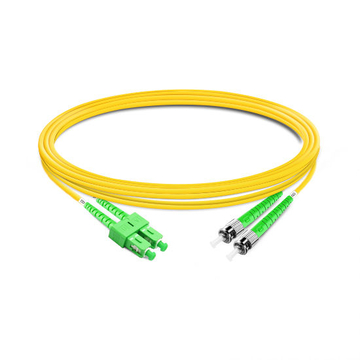
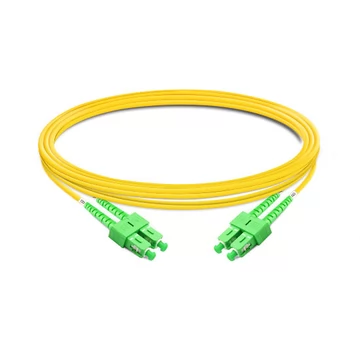
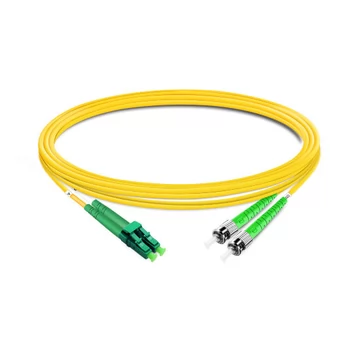
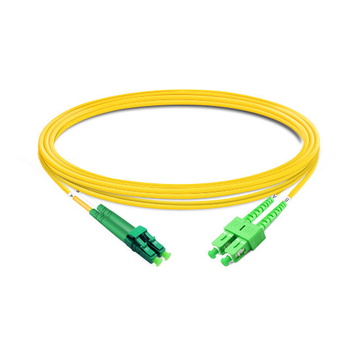
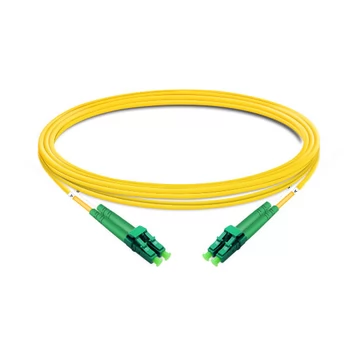
The OS2 duplex single-mode fiber patch cord features 9/125 µm single-mode fiber and is optimized for transmission at common single-mode wavelengths such as 1310 nm and 1550 nm. With low insertion loss and high return loss, it provides reliable performance for long-distance, high-speed optical transmission. Its duplex design uses two fibers, typically one for transmit and one for receive, making it a stable and dependable choice for data centers, telecommunications, enterprise networks, and FTTx applications.
Why the Right OS2 Duplex Cable Matters
Single-mode links are unforgiving about one detail: everything has to match. An OS2 duplex patch cable contains two 9/125 µm single-mode fibers, typically one for transmit and one for receive. It is commonly used with optical systems operating around 1310 nm and 1550 nm.
Get the connector wrong, and the cable may not physically connect to your transceiver, adapter, or patch panel. Get the polish type wrong — for example, mating UPC and APC interfaces — and insertion loss and back-reflection can increase significantly, potentially degrading link performance and damaging connector end faces. Get the jacket rating wrong in a regulated installation area, and the cabling may fail local fire or building-code requirements.
Teams can lose hours troubleshooting these mismatches. They may order a generic “single-mode duplex cable” without specifying the connector combination, only to discover that the cable uses SC-ST connectors while the equipment requires LC-LC. Or they may purchase cables without verified insertion-loss and return-loss specifications, making marginal optical links much harder to diagnose.
Choose Your Connector: LC, SC, and ST
The connector is the first decision because it is determined by the hardware at each end of the link. FiberMall’s OS2 duplex range covers common connector combinations:
· LC-LC — widely used with SFP, SFP+, SFP28, and many duplex-LC QSFP/QSFP-DD optical transceivers in data centers and enterprise networks. LC’s compact form factor makes it especially suitable for high-density applications.
· LC-SC and LC-ST — useful when connecting modern optical equipment to legacy patch panels or distribution frames commonly found in older telecom rooms, campus networks, and industrial facilities.
· SC-SC — widely used in telecom, broadband access, CATV, enterprise, and fiber distribution environments. SC/APC connectors are also commonly used in many PON and FTTx systems.
· SC-ST and ST-ST — suitable for legacy ST-based fiber infrastructure that remains in service in campus, industrial, and older enterprise networks.
The connectors use precision zirconia ceramic ferrules with polished end faces designed to maintain stable optical alignment. If you are unsure which combination your hardware needs, check the connector interface on the transceiver, equipment port, adapter, or patch panel. The patch cable should match the connector type at both ends.
UPC or APC? Choosing the Right Polish
Polish type affects the amount of optical power reflected back toward the transmitter, which is characterized by return loss.
· UPC (Ultra Physical Contact) — uses a precisely polished, slightly convex physical-contact end face and typically provides return loss of ≥ 50 dB. UPC is widely used in Ethernet, data-center, enterprise, telephony, and general optical networking applications.
· APC (Angled Physical Contact) — uses an approximately 8° angled end face to reduce back-reflection and typically provides return loss of ≥ 60 dB. APC is widely used in FTTx, PON, CATV, RF-over-fiber, WDM, and other applications where low optical reflection is important.
The rule is simple: mate UPC with UPC and APC with APC. UPC and APC connectors should not be directly mated. Although some connector formats may physically engage, the different end-face geometries can create excessive insertion loss, poor return loss, unstable optical performance, and possible connector damage.
FiberMall provides both UPC and APC options across multiple connector combinations, allowing the cable to match the optical interface and network standard used in your system.
Jacket Rating: OFNP, OFNR, and LSZH
Cable jacket rating determines where the cable can be installed and must be selected according to local fire, building, and safety requirements.
· OFNP (Optical Fiber Nonconductive Plenum) — designed for plenum spaces such as air-handling areas above suspended ceilings or below raised floors where stricter flame-spread and smoke requirements apply.
· OFNR (Optical Fiber Nonconductive Riser) / PVC — designed for vertical riser shafts and many general indoor applications where plenum-rated cable is not required.
· LSZH (Low Smoke Zero Halogen) — designed to emit low levels of smoke and minimal halogen gases when exposed to fire. It is commonly specified in data centers, enclosed facilities, transportation systems, marine environments, and other installations where smoke toxicity and corrosive gases are important considerations.
The correct jacket depends on local regulations and the installation environment. In many North American installations, OFNP cable can be used in locations where OFNR cable is permitted, while OFNR generally cannot replace OFNP cable in a plenum space. LSZH and NEC plenum/riser classifications are different rating systems, so local code requirements should always be verified before installation.
OS2 Duplex Specifications
FiberMall OS2 duplex patch cables use OS2 9/125 µm single-mode fiber with two fibers in each duplex assembly. They are designed for common single-mode operating wavelengths including 1310 nm and 1550 nm.
Available connector options include LC, SC, and ST, with UPC or APC polish depending on the connector type and application. Typical insertion loss is ≤ 0.3 dB per mated connection, while return loss is typically ≥ 50 dB for UPC connectors and ≥ 60 dB for APC connectors.
Available jacket options include OFNP, OFNR/PVC, and LSZH. Yellow is the commonly used industry color for single-mode fiber patch cords, although actual jacket colors may vary depending on construction, manufacturer, or application requirements.
Standard cable lengths range from approximately 1 m to 30 m and longer custom lengths can also be supplied.
Bend-insensitive single-mode fiber options based on ITU-T G.657.A1 or G.657.A2 are available for installations that require improved macrobend performance. These fibers are designed to maintain compatibility with conventional G.652.D single-mode systems while providing better performance in tight routing environments.
OS2 fiber can be used with 1G, 10G, 25G, 40G, 100G, 400G, and other single-mode Ethernet optical interfaces when the cable type, connector interface, wavelength, and optical transceiver specification are correctly matched. Actual transmission distance is determined primarily by the transceiver standard, optical power budget, fiber attenuation, connector loss, splice loss, and overall link design.
Depending on the optics, single-mode Ethernet links may operate from a few hundred meters to 10 km, 40 km, 80 km, or farther. For high-density installations and tight cable-management paths, G.657.A1/A2 bend-insensitive fiber helps reduce macrobending loss caused by tighter routing.
OS2 vs OM3/OM4: Which Fiber Do You Need?
· OS2 is single-mode fiber with a 9/125 µm geometry. It is commonly used with single-mode laser optics operating around wavelengths such as 1310 nm and 1550 nm and supports transmission over distances ranging from hundreds of meters to many kilometers. It is the preferred choice for campus backbones, building-to-building connections, metro networks, telecom infrastructure, and other applications requiring longer reach.
· OM3 and OM4 are 50/125 µm multimode fibers. They are commonly used with 850 nm VCSEL-based optics for short-distance data-center and enterprise links. Maximum supported distance depends heavily on Ethernet speed and transceiver type. Depending on the application, OM3/OM4 links may range from several tens of meters to several hundred meters.
Choose OS2 duplex when the link extends beyond the supported range of multimode optics, connects separate buildings or facilities, or requires a single-mode optical architecture for current or future high-speed transmission.
Choose OM3/OM4 when the transmission distance is short and the installed transceivers are specifically designed for multimode fiber.
OS2 and OM3/OM4 should not be treated as interchangeable cabling systems. The fiber type must match the optical transceivers and link specification at both ends.
Applications
FiberMall OS2 duplex patch cables are deployed across:
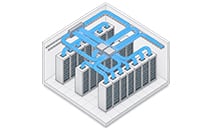
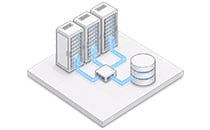
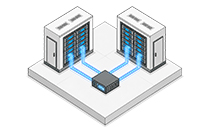
· Data center interconnect — patching duplex single-mode optical transceivers in leaf-spine fabrics, distribution systems, cross-connects, and data-center interconnect links.
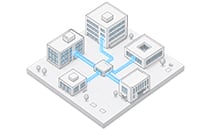
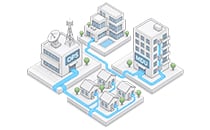
· Campus and metro backbone — connecting buildings, telecom rooms, aggregation sites, and other locations where multimode fiber does not provide sufficient transmission distance.
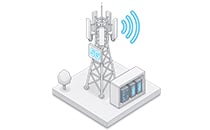
· Telecom and FTTx — supporting optical distribution and access-network applications, including APC-polished configurations commonly used in PON and FTTx infrastructure.
· Enterprise and storage — supporting SAN, WAN, backbone, and other network links that require single-mode reach, low loss, and stable optical performance.
Frequently Asked Questions
What is an OS2 duplex fiber patch cable?
An OS2 duplex patch cable is a single-mode fiber assembly containing two 9/125 µm fibers, typically with one fiber used for transmit and the other for receive. It is commonly used with single-mode optical systems operating around wavelengths such as 1310 nm and 1550 nm.
Depending on the transceiver and Ethernet standard, OS2 fiber can support links ranging from hundreds of meters to tens of kilometers or more and can be used with speeds including 1G, 10G, 25G, 40G, 100G, and 400G.
Should I choose UPC or APC connectors?
Choose UPC for Ethernet, data-center, enterprise, telephony, and other applications where standard low-reflection physical-contact connectors are appropriate. UPC connectors typically provide return loss of ≥ 50 dB.
Choose APC for applications such as FTTx, PON, CATV, WDM, and other systems where lower optical back-reflection is important. APC connectors typically provide return loss of ≥ 60 dB.
UPC and APC connectors should not be directly mated. Always match the polish type on both sides of the connection.
Do I need OFNP, OFNR, or LSZH cable?
Use OFNP cable where local regulations require plenum-rated cabling, such as certain air-handling spaces.
Use OFNR cable for riser shafts and other indoor areas where riser-rated cable is permitted.
Use LSZH cable where low smoke and low halogen emissions are specified, particularly in enclosed, occupied, transportation, marine, or other safety-sensitive environments.
Because OFNP, OFNR, and LSZH requirements vary by country and installation environment, always confirm the applicable local fire and building codes before selecting the jacket.
Is OS2 compatible with my SFP/SFP+/QSFP transceivers?
OS2 fiber is compatible with single-mode optical transceivers when the fiber type, wavelength, connector interface, and optical specifications match.
Many SFP, SFP+, and SFP28 single-mode transceivers use duplex LC connectors. Some QSFP, QSFP28, QSFP-DD, and OSFP transceivers also use duplex LC connectors, while others use MPO/MTP or other optical interfaces.
Therefore, do not select the cable based only on the transceiver form factor. Check the transceiver’s optical interface and specification first. Common single-mode designations include LR, ER, ZR, FR, DR, CWDM, and related variants, but connector type and fiber requirements vary by standard.
What's the difference between OS2 and OM3/OM4?
OS2 is 9/125 µm single-mode fiber designed for longer-distance optical transmission. OM3 and OM4 are 50/125 µm multimode fibers designed primarily for shorter-distance links.
Single-mode optics should normally be connected using OS2 single-mode fiber, while multimode optics should be connected using the appropriate OM3, OM4, or other multimode fiber specified by the transceiver manufacturer.
The correct choice depends on the transceiver type, wavelength, transmission distance, connector interface, and required Ethernet standard.