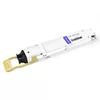
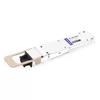
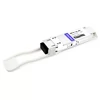
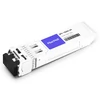
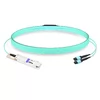
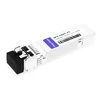
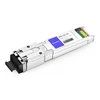
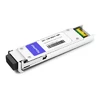
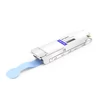
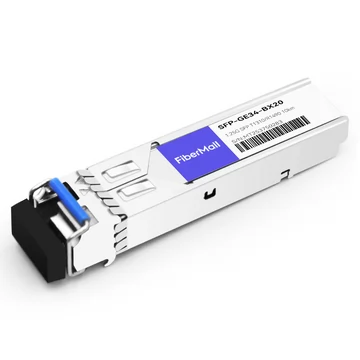
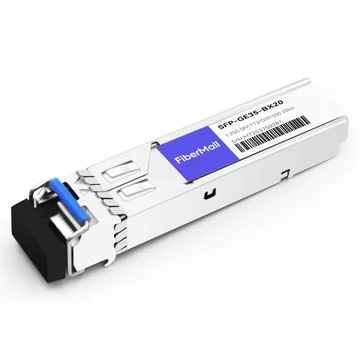
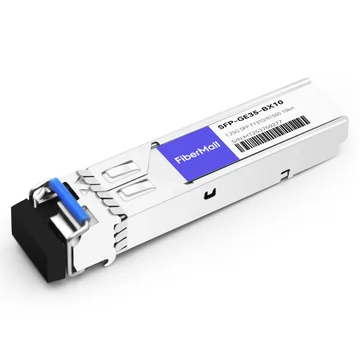
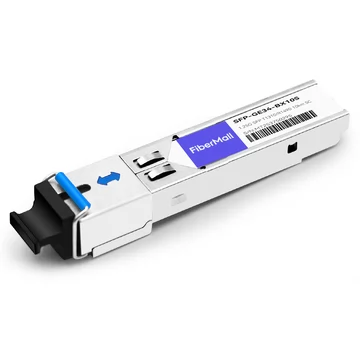
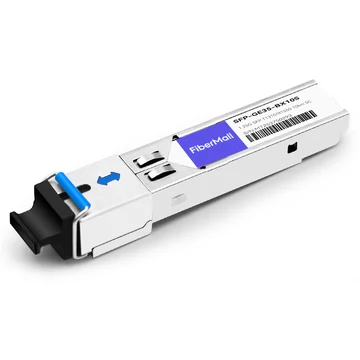
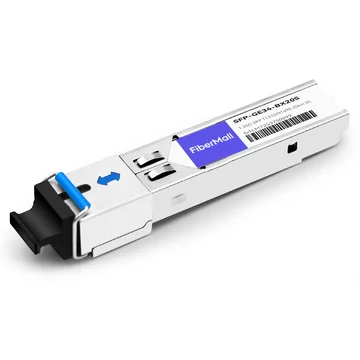
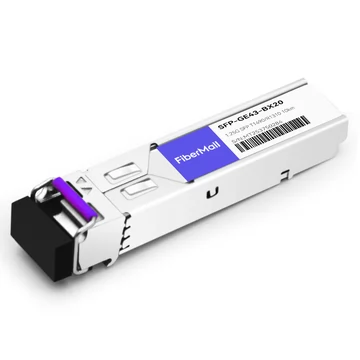
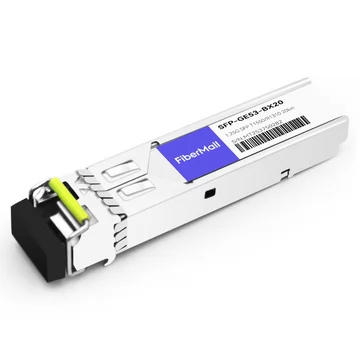
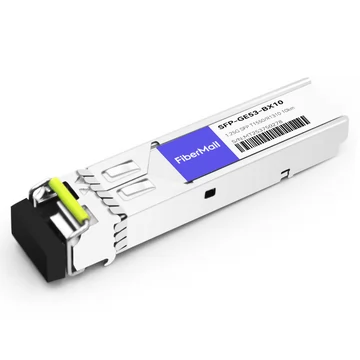
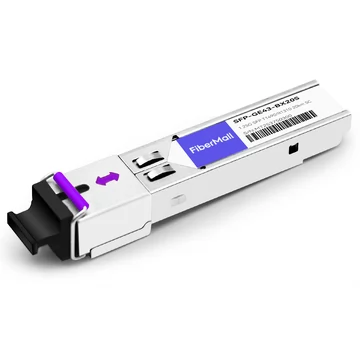
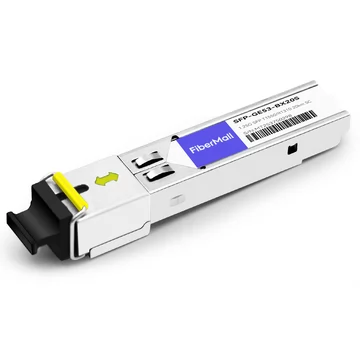
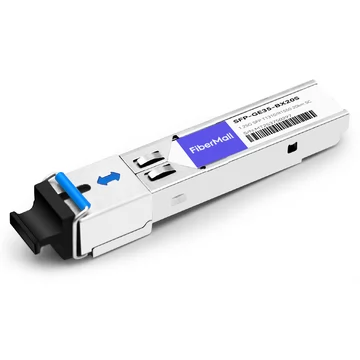
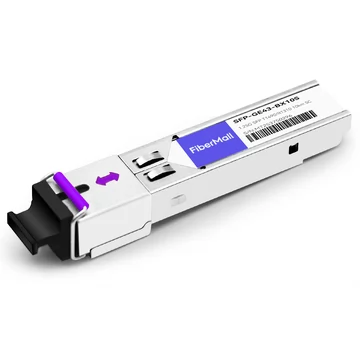
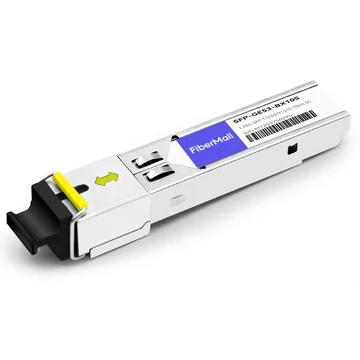
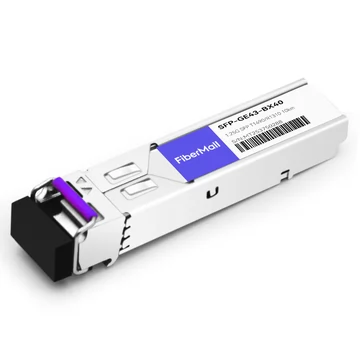
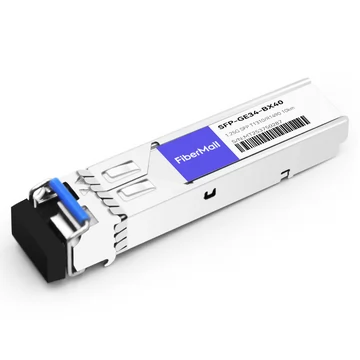
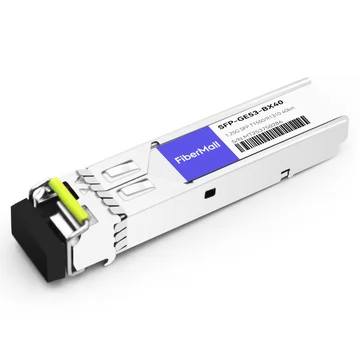
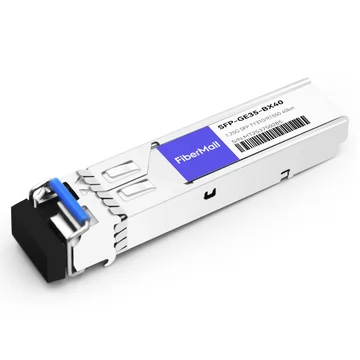
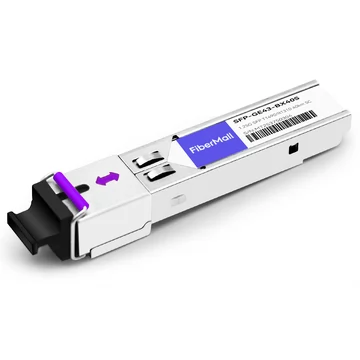
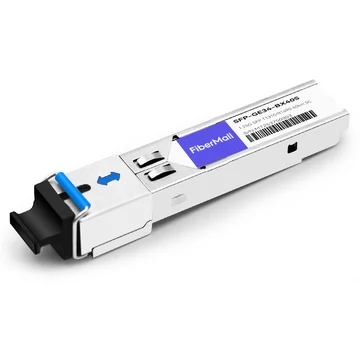
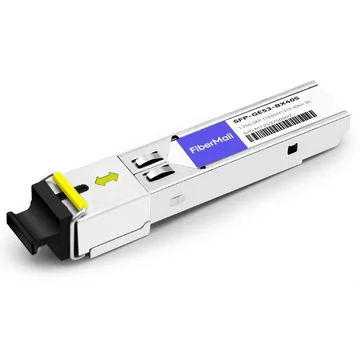
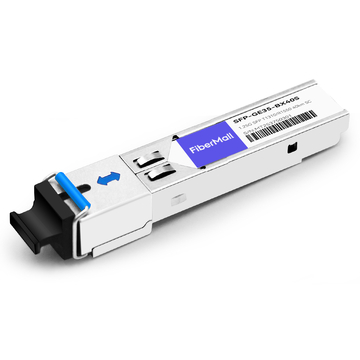
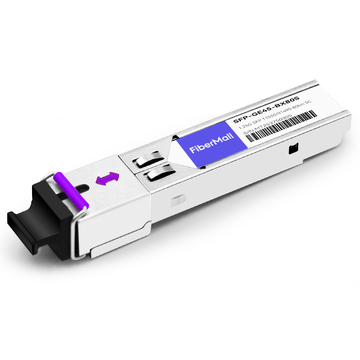
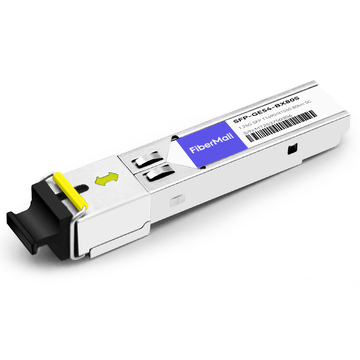
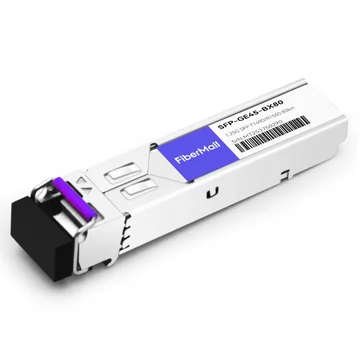
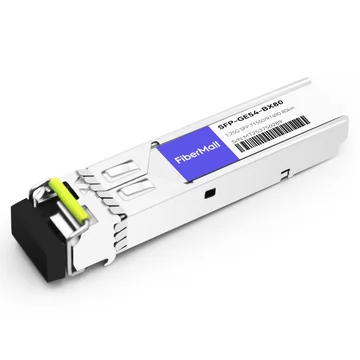
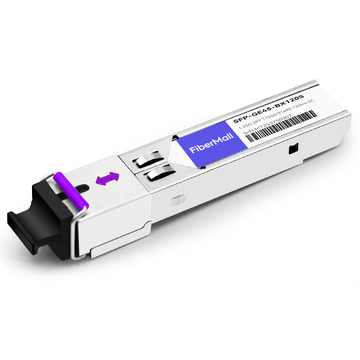
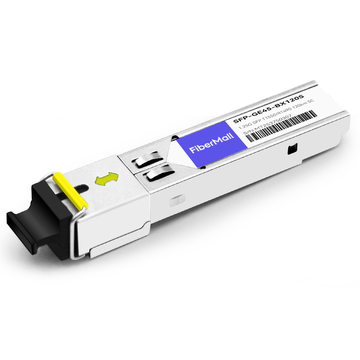
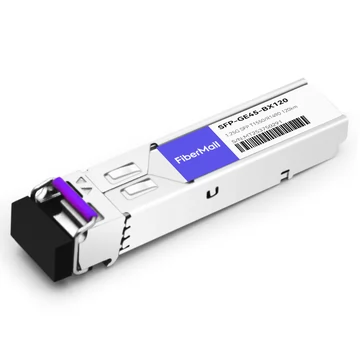
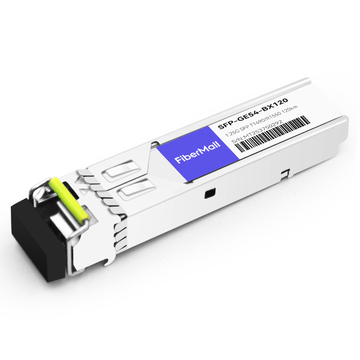
1000BASE BiDi SFP Transceiver Module
With the rapid development of fiber optic communication technology, the 1000BASE-BX bidirectional SFP transceiver module has become crucial due to its advantage of single-fiber bidirectional data transmission. This single-fiber communication method reflects the innovative design and technical specifications of the device.
Introduction to the 1000BASE BiDi SFP Transceiver Module
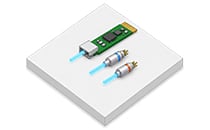
The 1000BASE BiDi SFP transceiver module is a small-sized, swappable module that allows for bi-directional communication over a fibre optic cable, with optimisation of wavelength usage. It can transmit and receive data over a distance of 10 km; separate optical paths are used for transmission and reception. The module uses single-mode fiber and supports a data rate of 1.25 Gbps. This transceiver comes in handy for applications within metropolitan areas, data centers, and enterprises where there is a need to optimize fiber usage and minimize the costs of infrastructure.
Overview of the 1000BASE standard
The technology under the IEEE 802.3ah framework is specified as “1000BASE-BX”, which essentially is an Ethernet technology that is used for bidirectional transmissions over one single-mode fiber. This standard makes use of Wavelength Division Multiplexing (WDM), which includes the use of two different wavelengths for a particular purpose. Usually, the data that is received by the user from the central office, i.e., the downstream, uses a 1490 nm wavelength, while the data that is sent from the user to the central office, i.e., the upstream, uses a wavelength of 1310 nm. Integration of these two enables one to achieve optimal fiber utilization, lowering infrastructure costs without compromising on performance.
Explanation of BiDi (Bidirectional) technology
The BiDirectional or BiDi technology is the method of transmitting information using optical fibers. This technology allows the transmission of information back and forth within a single strand. This is achieved with the help of wavelength-coded communication for transmitting signals upwards and downwards. Wavelength Division Multiplexing, WDM, is a method used to combat the low number of fibers and reduce investment substantially. The uniqueness in the construction of BiDi transceivers is that the lights, or wavelengths, include integral optical processing, including division filters for different wavelengths, in order to simultaneously perform the function of sending and receiving.
The advantage of BiDi technology is that it uses only half the amount of fiber required by the conventional duplex bidirectional systems, which require separate fibers for transmitting and receiving signals. This achievement is most useful in local area networks, data centers, and campuses, where the physical construction space and active components are limited. In addition, BiDi reduces the complexity of a network as it eases the deployment process and minimizes the cabling involved, while still retaining the quality of a well-performing system, such as low latency and extended bandwidth.
Key Specifications and Features of 1000BASE BiDi SFP
The 1000BASE BiDi SFP is a device incorporated in optical transceivers that employs duplex operation on a single fiber. It achieves this by splitting the outgoing and incoming traffic into disparate wavelengths. The most common practice is to operate with 1310 nm for transmission, which is upstream, whereas 1490 nm is for the downstream mode. This configuration provides an efficient means of communication up to a distance of 10 km. As per the IEEE 802.3ah specifications, this module is ready to operate with various equipment in the network, supporting a speed of 1.25 Gbps. Devices also support physical layer features, including DDM (Digital Diagnostics Monitoring), which is often integrated with optical devices in order to display device working statistics and performance characteristics such as temperature, optical power, and voltage. Due to its high reliability, low power consumption, and simplicity of network architecture, this solution is very applicable in a high-density environment.
Data rate support and wavelength specifications
Data rates up to 1.25 Giga-bit per second are supported by the 1000BASE-BX BiDi Active and Passive SFP module, ensuring high-performance communication for networks of gigabit Ethernet and optical transport systems. It is usually through a single strand of optical fiber and often with two specific wavelengths used for bidirectional transmission. 1310 nm is the most common wavelength configuration for upstream traffic, and that of 1490 nm or 1550 nm is used for downstream traffic to reduce crosstalk and maintain the quality of signals. The overloading of bandwidth using this overlay technology enables efficient active use of such resources, while offering fast and reliable performance within a variety of networking domains.
Advantages of Using 1000BASE BiDi SFP Modules
There are some significant benefits to the use of 1000BASE-BX BiDi SFP modules, especially when the efficient use of the installed fiber cables is in question. In these modules, the need for cabling is greatly reduced as these modules allow signal transmission in both directions on a single fiber, thus reducing costs when deploying and maintaining networks. Ethernet access and enterprise-grade services, among other communications, can be achieved using these modules since they are capable of supporting scalable rates of above 1 Gbps of data transmission within the links. Also, the fact that 1000BASE-BX BiDi modules can be used with WDM systems means that signals over the same link will not interfere with each other as additional fiber is deployed, or can be avoided completely with such a design. As such, they are a feasible option for today's high-speed data networking needs.
Cost-effectiveness of single-fiber solutions
BiDi SFP modules are a classic example of single-fiber cables and work in both directions, which significantly lowers the costs of optical distribution networks as only a single optical fiber is required for bidirectional communication. This limits the amount of fiber that has to be leased, installed, and maintained. Also, reduced demand for physical infrastructure cuts down energy and space requirements, and hence, reduces operational costs. Single-fiber solutions better complement network architecture than dual-fiber as they have the same operational quality and extent; therefore, they are well suited to contemporary networking as they simplify the design and functional approach of networks while reducing the costs.
Installation and Deployment Guidelines
Careful planning and adherence to best practices in installing and deploying single-fiber systems are essential for achieving optimal levels of performance. First, a site assessment should be done to check on the requirements of the network, such as the bandwidth that will be available, the distances involved, and future growth. High-quality optical transmitters and corresponding devices should be used to minimize any signal losses and maintain the functionality of the system. To ensure that insertions and reflections do not compromise the signal, all fiber splicing and connectorization must be as good as possible. Successful installation depends on a strict test of the network, such as the amount of power in the network and links from one end to the other because the design targets must be achieved. Lastly, it is recommended to perform regular checkups to assess the state of the network and fix any possible problems in time, ensuring the functional and effective operation of the single fiber network for long periods.
Physical installation steps for SFP modules
When dealing with SFP -Short Form Pluggable Modules, actual physical components, one must follow certain routines for the optimum results and reliable connectivity. Once a decision has been made to deploy a particular SFP, ensure that it is compatible with the network device, both in terms of specifications and in a non-damaged state. Make sure to switch off the power to the device, as this will prevent any sparks or shocks as you insert the module in the same place. Taking great care that the key simply replaces the port, also aligns the SFP parallel to the locator notch on the port—insert the SFP into the port until it clicks into place. Once the installation has been completed, proceed to connect any relevant fibers or copper cords, and beware of the cleanliness of the connector and proper seating of the connector in the interface to avoid any loss of signal during the installation. Thereafter, power on the device and verify the module in the management interface of the system, and check the operation condition along with solving any error related to the connection, firmware, or similar issues. Extensive levels of professional handling and proper following of these instructions limit the possibility of the occurrence of any damage, and hence make it possible to operate under the given system failure-free conditions.
Applications of 1000BASE BiDi SFP in Networking
The uses of the 1000BASE-BiDi SFP are most prominent in applications requiring cost-effective, single-cable transmission. This is mainly deployed along links that connect places such as a central office with remote stations in an organization, among others (such as that for the MANs ‘last-mile’ connections) or maintenance of fiber links inside a building. The module’s capability in delivering the signals works using different wavelengths across two ends of a single fiber, which is what enhances spare fiber usage for particular installations. It is also compatible with gigabit Ethernet switches and routers to accommodate the needs of the data center and campus deployment. It is especially important where there is the need to cut down on fiber installation, yet still, provide high standards of full-duplex connection for distances that do not exceed 10 km.
Use cases in data center interconnects
Interconnecting data centers, DCI helps in a seamless linkage of numerous data centers against issues like the flow of data, scaling, and continuity in business enterprises. Most essential scenarios include, but are not limited to, backup and disaster recovery, where the involved low-latency, fast networks allow for real-time replication of data, helping in the loss of data during information systems failures. There is a hybrid cloud DCI deployment maintaining effective and secure integration between the traditional driver-enabled systems and on-cloud systems, for better load balancing and usage of resources. Lastly, pushing load among data centers located far apart is also possible thanks to DCI, which ensures efficient use of resources, reduced latencies, and a high availability level of services anywhere in the world.
Frequently Asked Questions (FAQs)
Could you please explain what a 1000Base BiDi SFP transceiver module is?
Yes, sure! The 1000BASE BiDi SFP transceiver module is a purpose-built pluggable device for Small-Form Factor Pluggable and enables bi-directional transmission over a single strand of fiber. It makes use of different wavelengths for both transmission and reception, 1310 nm for upstream and 1490 nm for downstream.
What are some of the benefits offered by the use of 1000BASE BiDi SFP Modules?
The use of such modules increases fiber efficiency since duplex communication is achieved using only one fiber, hence lowering the cost of laying them. These modules are designed for applications with limited optical fiber resources, support Gigabit Ethernet, and optical fiber-based networks, and guarantee robust high-speed networks.
What is the standard range for transmission using the 1000BASE-BIDI SFP modules?
1000BASE BiDi SFP modules come with a varying degree of transmission distances depending on the model in use and the optical power budget. Transmission distances of up to 10 km over single-mode fiber (SMF) belong to the category of popular configurations.
Can 1000BASE BiDi SFP modules be used in regular SFP ports?
Yes, these modules are designed to be used in common SFP ports. Therefore, the modules can be installed in different network gears like routers and switches, provided that they are of the same wavelength and operating with similar standards as specified by, for example, IEEE 802.3ah.