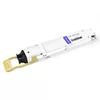
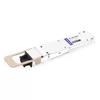
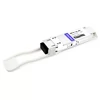
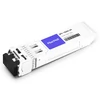
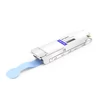
CWDM SFP Transceiver
Optical network technology has made significant progress over the years, with many new functions and improvements emerging; for example, the CWDM SFP transceiver module is designed to improve data transmission and reception efficiency cost-effectively.
Introduction to CWDM SFP Transceivers
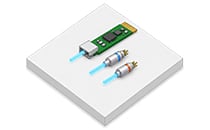
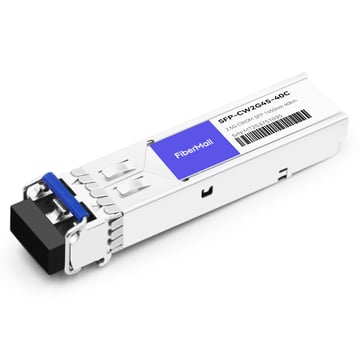
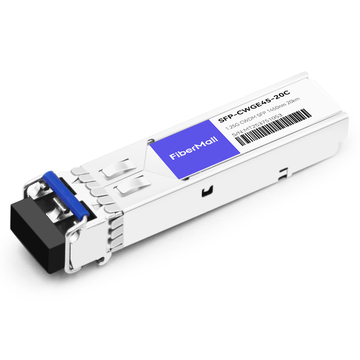
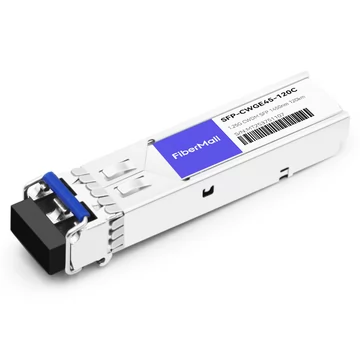
Small Form-factor Pluggable (SFP) CWDM (Coarse Wavelength Division Multiplexing) transceivers are optical communication modules that can be easily loaded into optical slots for seamless data transfer across extended distances compared to standard optical cables. The CWDM solution enables multiple data streams to be transmitted over a fiber optic cable through the use of different light frequencies, therefore enhancing the effective traffic capacity of the fiber optic cable. The units are dependable, used with virtually all the current networking devices, and often find applications within underground access, data centers in businesses, including telephone companies. The advantage is that there is no additional fiber optics to be incorporated in the network to increase its bandwidth; the CWDM SFP transceivers system adds capacity to the existing network in a cost-saving manner.
Definition and functionality of CWDM SFP transceivers
The first and most prominent of them are the hot-swappable fabric submodule wavelength optical data transport devices called ‘CWDM SFP transceivers’ (also in short as ‘coarse wavelength division multiplexing small form factor pluggable devices’). The devices are enabled by using CWDM, a system used to communicate several optical signals within the same fiber, placing every signal at a different wavelength. Their maximum per fiber strand transceiver capability is 18 different wavelengths ranging from 1270-1610 nm with a 20 nm separation between the channels supported by CWDM links. This outperforms other methods in data transmission because it allows data to be routed in several wavelengths without interfering with each other.
In terms of functionality, it is worth noting that both Compact and Standard CWDM SFP transceivers are appreciated by many due to their applicability in a wide array of networking systems, such as switches and routers with respective SFP ports. They are implemented for wide and different distances, starting at usually between ten kilometres and more than a hundred kilometres, or in any case, depending on the model and type of fibers employed. Such gadgets are essential components for Metro Area Networks, Enterprises, and even Telecommunication Systems used for Transmission over Large Distances. Consequently, the usage of CWDM SFP transceivers promotes economic network expansion as a result of optimization of already installed fiber laying, such network deployment issues without increasing layer complexity or sophistication.
How CWDM Technology Works in SFP Transceivers
Wavelength divisional multiplexing technology in CWDM SFP modules is characterized by the multiplexing of several independent wavelength data streams into one and transmitting the data through a single fiber. This optical multiplexing is facilitated by different passive optical components; active optical components, filters, etc., and these components do not care what band the channels are in; they combine them and separate them accordingly. The users of CWDM system SFP modules or transceivers must also note that each has a particular wavelength upon which it operates, and these wavelengths are in the range of (1270 nm – 1610 nm) evenly spaced by 20 nm. Those laser diode lamps and photo-detectors fitted in SFP transceivers are dedicated to such working wavelengths. Thus, this method is most efficient and utilizes the available fiber network to a greater extent without laying any additional fibers, and thus very popular technology used in this high communication era.
Overview of CWDM (Coarse Wavelength Division Multiplexing) technology
There are several essential benefits that CWDM tech brings to the contemporary network landscape. In contrast to DWDM equipment, the passive multiplexers used along with CWDM are spaced wider and, as a result, do not require additional power supply or generate a lot of heat, hence reducing the ongoing expenses. More so, these equipment are maintenance-free since it employs the use of uncooled lasers, where there is no need to control temperatures within the system.
The other major factor is cost. Since all of the CWDM components, like transceivers and multiplexers, are much cheaper than DWDM components. This is possible because of the reduction of cost by effectively using existing fiber or any other kind of infrastructure, making CWDM such an easy thing to do, especially for middle networks, metropolitan networks, and access networks, which do not require long reach capacity.
Benefits of Using CWDM SFP Transceivers in Telecommunications
Among the many innovations in today's telecommunications industry, CWDM SFP transceivers effectively address numerous technical and operational challenges. One of their advantages lies in the inherent characteristics of the device itself. Because a single fiber can carry a large data stream, excessive infrastructure development, such as cabling, can be reduced. These transceivers or optical devices utilize Coarse Wavelength Division Multiplexing (CWDM) channels, making them particularly useful for rapidly expanding telecommunications services over existing fiber optic lines. Since fiber optic lines are typically congested, their performance must ensure ease of disassembly and installation, thereby reducing maintenance time, even during product upgrades or replacements.
Increased bandwidth capacity and network scalability
SFP transceivers enable bandwidth requirement increases, network capabilities enhancement, and ease of network extension. The modularity of these transceivers, as well as their support for the different communication standards, also makes it easy to put into place without any issues on the existing networks. Different data rates, ranging from 1 Gbps to 100 Gbps and even exceeding this, could also be managed with the use of such transceivers that aid in enhancing the handling of high-speed connection demands. Moreover, their support for different wavelengths and reach distances in operation enhances the operator's effort in upgrading networks without the need for significant changes. This scalability is important to cater to changes in demand within the data centers, carrier networks, as well as within the enterprises, regarding resource utilization as well as network practices in the future.
CWDM SFP Transceiver Compatibility and Integration
CWDM SFPs are manufactured in line with the norms of the IEEE 802.3 standards as well as the Multi-Source Agreements (MSAs), which guarantee a wide range of functionality with the majority of the network devices. In order to accomplish optimum interoperability, it is important to confirm that the transceivers fit into the bands of wavelengths of the network and within the abilities of the switches or routers, or multiplexers being used. Sometimes the firmware for the network equipment has to be upgraded to accommodate the transceivers’ capabilities. Moreover, due attention should be given to the correct optic fiber cables, connectors, and expected insertion loss, such that a bump in performance and effort is minimized. All of the above ensures smooth integration of the CWDM SFP modules into the network, thereby yielding tiered connectivity systems.
Compatibility with fiber types and network devices
Due to less signal loss, CWDM SFP transceivers work well over long distances via single-mode cables, although multimode cables can also be used with these devices. Additional factors, such as range, may have to be controlled in order to enable the support of multimode cables. When the need arises to use CWDM transceivers in any networking equipment, it is imperative that the equipment in question is compatible with CWDM transceivers and also fulfills the multi-source agreement (MSA protocol). In some cases, such kits are wrapped in vendor-specific packages, making them fit for purpose. The transceiver must also be pointed at the right wavelength if this wavelength is not already being used in the network, and therefore suits a more productive use of open bands. It is important to mention that such actions help with system integration and the functioning of such systems in the network.
Top Use Cases for CWDM SFP Transceivers
CWDM SFPs are simple in structure and easy to use, thus playing a crucial role in modern network technology and being applied to almost all network technology principles. They can effectively utilize limited fiber optic cables, doubling their transmission capacity. In metropolitan area networks, especially access networks, when traffic needs to be transmitted through multiple channels on the same fiber, the main purpose of SFP components is to avoid using expensive additional fiber, thereby reducing costs. In data centers, SFP components are also very useful when high-speed communication between multiple sites is required. Furthermore, SFPs play an important role in network expansion and upgrades because they provide excellent interfaces without the need for end-to-end fiber replacement. More importantly, these devices operate with extremely low power consumption, making them ideal for use in environments with low infrastructure requirements.
Deployment in metropolitan area networks (MAN)
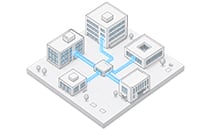
The exploitation of CWDM SFP Transceivers in cities and metropolitan networks is more of a case instrument that guarantees the handling of the high-capacity load distributed over tens of kilometers in urban areas. Moreover, these Transceivers provide the option for cost-enhanced WDM, which increases the capacity of the existing fibers by making the transmission of several signals in different wavelengths at the same time. This barrier is essential in the normalization of high bandwidth services such as video, the Internet of things and enterprise clouds.
Coarse wavelength division multiplexing (CWDM) is particularly popular in metropolitan area network (MAN) applications due to the fact that it is easier and cheaper to run than Dense Wavelength Division Multiplexing (DWDM) networks. There’s no need for power-hungry units such as amplifiers in short- to medium-range systems due to the fact that it is a passive technology suitable for city-wide networks for this purpose. More so, the solutions that utilize CWDM SFP modules offer scalability and expansion of the network as needed without largely affecting traffic or laying new fibers. These two attributes, this level of flexibility and the fact that it can easily fall into the network system already built, suffice to make this technology so indispensable to the survival of modern urban network designs.
Frequently Asked Questions (FAQs)
What is meant by a CWDM SFP transceiver?
A CWDM SFP or Coarse Wavelength Division Multiplexing Small Form-Factor Pluggable transceiver is a type of modular hardware equipment that enables large volumes of data to be transferred under one fiber at any given time by multiplying wavelengths. It is mainly used in Metro networks and access networks in order to make more use of fibers and complement the operation of G-PON systems.
Please elaborate on the detailed benefits of acquiring CWDM SFP transceivers?
There are several benefits of this approach: it is relatively cheap, allows for data to be transmitted onto several wavelengths, and most importantly, only a few fibres are deployed. It is easy to add capacity to the existing network in the future, and more importantly, it can work harmoniously with the existing networks without disrupting them.
What is the difference between CWDM and DWDM as used in today’s networking practices?
The system called coarse wavelength division multiplexing (CWDM) operates with a larger spacing of wavelength (20 nm) and thus supports applications that cover relatively short distances of no more than 80 Km. On the contrary, Dense Wavelength Division Multiplexing (DWDM) enjoys a more dense spacing of optical fiber wavelengths of 0.8 nm and is intended for long-distance channels with a huge capacity, which sometimes can be very expensive.
Which aspects should one assess when using CWDM architecture?
Among the critical elements of this are the type and status of fiber, consideration for wavelengths to maximize the efficiency, environments for reliability, and box fitting to the already existing network infrastructure, which allows for more efficient usage.