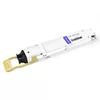
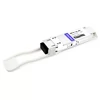
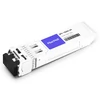
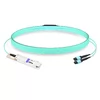
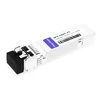
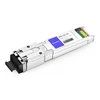
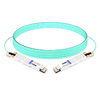
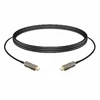
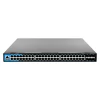
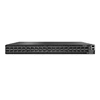
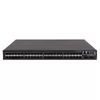
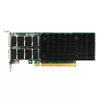
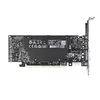
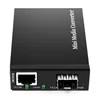
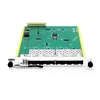
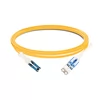
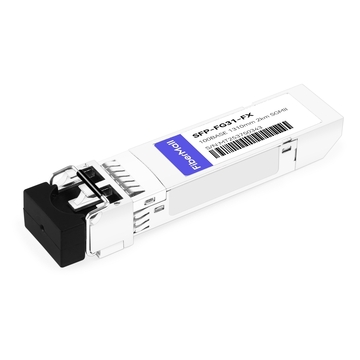
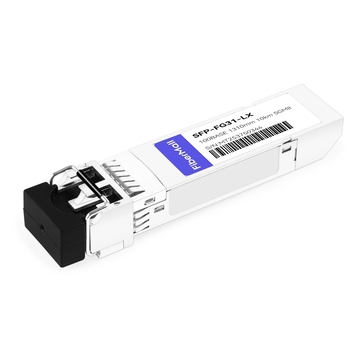
SGMII SFP cable transceiver module
In the design and implementation of network infrastructure, it would be incomplete to overlook the SGMII SFP fiber optic transceiver module. This compact device is crucial for data exchange between network components and devices.
What is an SGMII SFP Cable Transceiver Module?
Small Form-factor Pluggable Serial Gigabit Media Independent Interface (SGMII SFP) cable transceiver module is an assistive device that comes in a small, solid structure and that can be swapped without turning off the system. Its main function is to enable real-time high-speed data exchanges between Ethernet entities as and when required. The transport of packets over short distances is facilitated by connections between switches, routers, or even Ethernet cards using electronics such as SGMII SFP. To achieve this communication control while maintaining compatibility with all kinds of Ethernet ports under this specific architecture, this module employs the SGMII interface, thereby reducing delay and enhancing signal quality, making it very useful in contemporary network structures.
Definition of SFP and SGMII
Networking technology has had to expand rapidly with the growing needs of businesses, and an SFP (Small Form-factor Pluggable) module is one of the important components in this sector. It is also one of the most popular type of transceivers that supports telecommunication as well as data communication over optical fiber or copper cabling, thus making it useful for different networks. These modules are embedded in the standards for interlinking purposes and are also quite known for their scalable and hot-swappable nature that makes developing networks quite easy with no breaks.
SGMII (Serial Gigabit Media Independent Interface) presents a set of rules that govern the interconnection of Ethernet PHYs and MACs. The SGMII standard operates at 1.25Gbps and provides a serialized interface as opposed to parallel interface connections, facilitating PCB design as not many signal lines are required. This standard achieves efficient data transfer at high speeds with low latency and compatibility with the Ethernet system in gigabit mode. These technologies, meanwhile, serve as the basic features utilized in modern-day networks.
How SGMII SFP Modules Operate within Networking Systems
To use SGMII SFP modules, one needs to link the appropriate networking devices, such as routers and switches, with actual fiber optic or copper cables. SGMII protocol facilitates communication between the media access control of a device and the logical layer that is connected to its physical network. This helps to transport the data at higher rates in gigabit systems by converting data into a serial form and preserving it. Such interaction gives an opportunity to interact without problems and with low latency, which is why such modules are so common in fast-growing communications networks.
Detailed explanation of signal processing in SGMII modules
The role of signal processing in SGMII SFP (serial gigabit media independent interface) modules is vital for the efficient and robust transmission within Gigabit Ethernet infrastructure. SGMII protocol involves encoding of parallel data coming from the MAC layer to external ports in order to reduce the number of wires needed and avoid emissions, as well as to avoid putting a large number of wires in a package with them. The normal practice is to serialize data into differential signals with a data rate of 1.25GHz.
The SGMII modules are also fitted with mechanisms, such as PLL (phase-locked loop), to allow for clock recovery and data in both directions, data signals may become corrupted due to clock drifts. SGMII SFP. Furthermore, the 8b10b encoding method is employed, whereby data is converted to a different code such that transmission is balanced and also helps to correct errors.
When it comes to the receiver’s end, these modules are responsible for the deserialization of the supported data format or conversion of serial data back into parallel formats. Additionally, by using the CRC (Cyclic Redundancy Check) error classification technique, the sending process ensures that all corrupted packets, in the form of coded voice, data, or video, do not pass unnoticed. Such effective signal processing renders it possible to employ SFP interfaces at higher speeds and in larger networks with existing or even higher latency.
Benefits of Using SGMII SFP Transceiver Modules
The SGMII SFP transceiver modules have a considerable edge over the traditional ones in the contemporary setup. They produce and transmit data at speedy rates and with low optimal delay for systems that are required for rapid communication. The modules support a variety of protocols, which makes them more flexible and less troublesome when incorporating infrastructure. These modules have a simple design, making them ideal for high-density areas, along with their data integrity and reliability with error correction. Power consumption is also decreased when using the SGMII SFP modules, which means that they are more economical in the long run.
Advantages of high-speed data transmission
The availability of high-data-rate capabilities comes with a set of strategic advantages for a wide range of existing and emerging technologies. It allows faster processing of information, therefore reducing the latency time, which is fundamental in many missions such as SGMII SFP Cloud, video conferencing, or automation processes. It also sets the bar of communication by allowing large files or data sets to be shifted from one point to another efficiently, and hence enhancing the work processing as per the task crite there machine learning pr big data. Besides, it averts the network system's efficiency and capacity declining by providing the capacity that is necessary to accommodate the contemporary world infrastructure demands. High-speed transmission helps to address these issues by supporting modern encryption and other security protocols without compromising the system’s qualities. For this reason, it has become a common utility that fits masses of industries in the quest of utilizing the advantages of the increasing digitalization and connective platforms.
Key Differences Between SGMII Transceivers and Other SFP Modules
The main difference between SGMII transceivers and other SFP modules lies in their interface and functions. While SFP modules and Gigabit Ethernet use protocols such as Ethernet for certain modes of transmission, in contrast, SGMII transceivers serve to interconnect two Gigabit Ethernet devices through their MAC and PHY layers, which use a more compact transmission scheme. SGMII thus proves to be suitable in situations where space and power usage of the module are limiting factors. In addition, the transceivers of the SGMII configuration can also be adjusted through the respective provisions of the protocol, as most of the remaining SFP modules lack such enhancements by default. All these factors make SGMII very desirable for contemporary networking systems, which require efficiency and flexibility.
Comparison with Gigabit Ethernet SFP and XFP modules
SFP modules and XFP modules are completely different from SGMII functionality, form, and application. SGMii is composed of the txp transmit the serial stream from the framer IC, a spirally pluggable SFP card. SFP units ( Small Form Factor Pluggable ) are hot-swappable transceivers that support both the Gigabit and Fast Ethernet standards, targeting fiber optic or copper-based links. While XFP units (01 Gb Small Form-factor Pluggable) support high-speed 10-Gigabit Ethernet, the development of these units has brought about a greater form factor and greater power consumption when compared to SFP systems.
The majority of SFP and XFP modules rely on standard interface formats such as 1000Base-X and 10GBase-R. The SGMII interface protocol is particularly aimed at reducing the space between the MAC and PHY functionality. It allows for autonegotiation between MAC and PHY devices, unimpeded transmission of data, and such functionality between different link speeds, in turn, reducing the size and power complexity of systems. SFP and XFP optical modules are especially useful in cases of high bandwidth, while in case ease of integration, space per power is vital. SGMII would be a preferable option because of its ability to customize and offer fast-forwarding capabilities.
Optimizing Network Performance with SGMII SFP Transceivers
Network performance optimisation with SGMII SFP transceivers is based on the functionality of the transceiver to carry data at maximum possible transmission rates and compatibility with different link speeds. The transceivers employ Serial Gigabit Media Independent Interface (SGMII) to enable effective communication between hardware components in order to minimise the power consumption and eliminate any delays. They are small enough to comply with the demands of today’s high-density network designs in an efficient and scalable manner without compromising the quality or durability of the signal. The use of SGMII SFP transceivers in an installation improves its overall efficiency by striking an appropriate balance between speed, effectiveness, and versatility.
Techniques for maximizing bandwidth utilization
Many organizations find effective use of bandwidth through different approaches and tools, most of which enable effective transmission of data while minimizing network issues. Quality of Service management, coupled with the deployment of hierarchy, provides a priority for important information and scales the network when demand is high. Other strategies may include traffic shaping and rate controlling, which may help manage the traffic, ensuring that no one shared resource is swamped by another bandwidth-consuming protocol or application. Application of advanced compression techniques is one more optimal way, as it allows for the reduction of the size of transmitted information, hence higher throughput, and no need for additional equipment. Similarly, employing robust load-balancing paradigms is very important in ensuring equal distribution of traffic over the various links, as opposed to congesting one link while others are idle. Use of continuous surveillance and analysis of networks is vital to any given bandwidth utilization since it helps in ascertaining as well as correcting any usage patterns or even problems promptly.
Frequently Asked Questions (FAQs)
What are SGMII SFP Cables Module Transceivers Primarily Used for?
These modules are mostly used in Ethernet networks, which include data centers, corporate networks, and telecommunications, due to their ability to provide connections for short distances. It also suits the situations that involve the usage of devices with high bandwidth and latency to minimal levels.
Why would you prefer the SGMII SFP Transceiver Module over traditional fixed Interface designs?
Thanks to the compartmental design of SFP transceivers, administrators can effortlessly modify their networks according to the specific needs and expansion plans. These SGMII modules are advantageous since they help to enhance flexibility, cut down on power usage, and can operate different media interfaces, thereby achieving efficiency at a reduced cost.
How can SGMII SFP modules be used with interfaces that are not SGMII?
SGMII SFP modules are intended for the SGMII interface standard only. Although some may not have advantages for any interface that is not SGMII, the SGMII modules may be replaceable with any provided accessories that may be available including the devices themselves and some network arrangements.