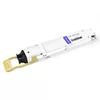
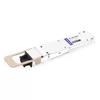
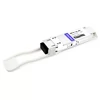
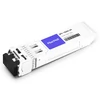
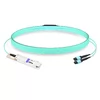
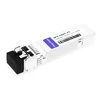
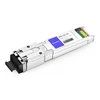
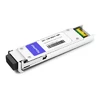
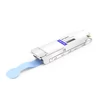
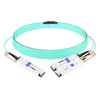
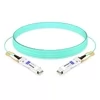
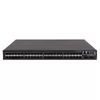
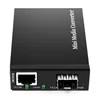
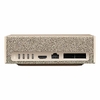
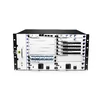
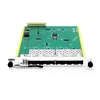
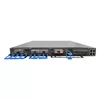
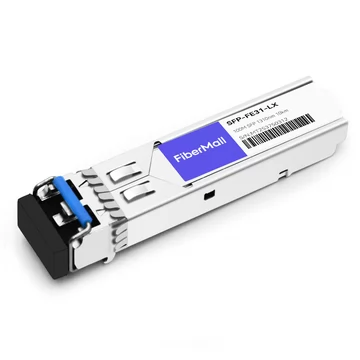
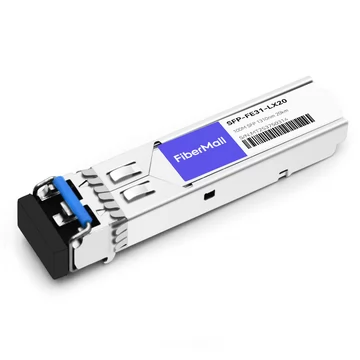
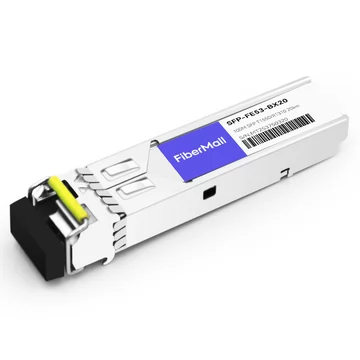
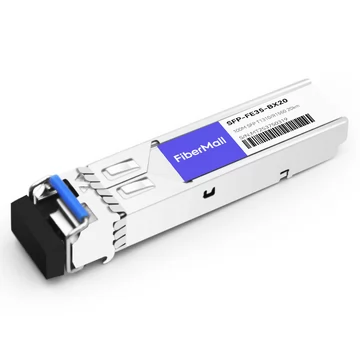
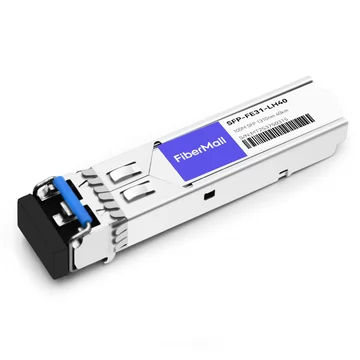
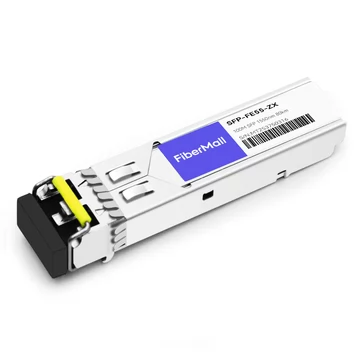
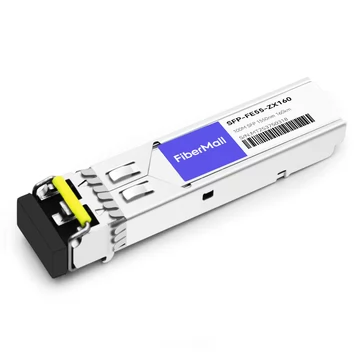
100BASE BiDi SFP Transceiver Module
With its innovative design and technology, the Vancouver 100BASE BiDi features a 100BASE-BIDI SFP design, utilizing passive optical connectivity for efficient operation. Its design features and key advantages cover a wide range of topics that IT resource managers need to know to optimize workflows and avoid additional expenses.
Introduction to 100BASE BiDi SFP Transceiver Modules
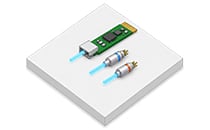
To be clear, a 100BASE BiDi SFP transceiver module is a small form factor device that is easily replaceable without turning off the device, and its purpose is to provide bi-directional communication using one optical fiber. To explain further, a traditional transceiver has two strands of fibers; one is used for signal transmission while the other receives the signal back. The 100BASE BiDi SFP, however, utilizes Wavelength Division Multiplexing (WDM) technology to alternately ‘present’ each function over the single fiber strand. Design allows for a reduced number of fiber wires and, at the same time, carries forward the data with a guarantee on its integrity at a speed that does not exceed 100 Mbps. This makes the utilization of WDM in a 100BASE-BIDI SFP economically feasible for the purpose of expanding the Ethernet network. Its operation also capitalizes on enterprise networks, telecommunication spheres, and many other solutions found in industrial workplaces.
Overview of BiDi (Bidirectional) technology
Improved optical communication technique, known as Bidirectional (BiDi) Technology, allows for the transmission and reception over a single optical fiber, eliminating the necessity for two different fibers. This is made possible with the aid of Wavelength Division Multiplexing (WDM) in which different wavelengths (or colours) are assigned to the send and receive signals such that they are both in the same orientation but may not interfere with each other inside the same fiber. Such technology enhancement requires BiDi transceivers that usually have a single optical port and possess special optical filters and components for proper separation of the different wavelengths.
Bidirectional technology primarily boasts a benefit of enormous cost savings on infrastructure, and makes network design simpler as it reduces the fiber needs by a factor of two. This technology has become prevalent in industries such as Ethernet, Fiber to the Curb (FTTH), and corporate data centers, as it is efficient in terms of cost and is easy to use. For this reason, the BiDi technology is capable of supporting data rates ranging from 100 Mega to 100 Giga and distances of tens of kilometers, which can assist functions in all telecommunication, industrial controls, and Metropolitan Area Networks.
How 100BASE BiDi SFP Modules Work
Connections established with the 100base bidi sfp Ports are capable of using only a single standard optical connection for both transmission and reception of signals in the same time span. The module is more than just bidirectional, in that it uses an operating frequency. It is usually applied in twos such that the units are a mie designed and prables with dexterous frequency ranges of the Tx and Rx respectively. The use of WDM concepts in the network removes the need for having two different fibers for the forward and return directions, which considerably saves the fibers instead of wasting them.
Technical explanation of bidirectional data transmission over a single fiber
Modern technologies such as wavelength-division multiplexing (WDM) and time-division multiplexing (TDM) enable the transmission of data in either direction over a single optical fiber. In WDM, different wavelengths (λ) are used to transmit data in one direction and the other, respectively. A pair of these wavelengths does not overlap on the optical spectrum - their position does not permit it, and this battle for the bandwidth of the medium is no longer the case in this measurement.
In contrast, in TDM, bi-directional transmission is accomplished over the same fiber by allocating specific times called slots for transmitting and receiving data to ensure temporal separation of the signals. Therefore, the signals do not tend to overlap or interfere with each other either when transmitting or retrieving them.
Advantages of 100BASE BiDi SFP Modules in Network Design
The use of 100BASE BiDi SFP modules in present-day networking systems has some huge benefits. First and foremost, they perceive data in both directions on the same strand of fiber and therefore cut the amount of fiber in use in half as compared to dual-strand systems. Fiber materials are an expensive investment when it comes to first installation and further maintenance, and these costs are drastically reduced. More so, such modules fit well into the layout of the network, obviating the need for the costly and time-wasting upgrade of the entire system. The miniaturization of the modules also allows for higher port density configurations, which are very important for network expansion in data centers and enterprises. Last but not least, the 100BASE BiDi SFP modules are able to deliver high performance with little to no signal crosstalk and minimum latency, thus providing effective and reliable communication for high-end applications. In the end of all, it scales up the network with ease and all the working processes within it too.
Reduction of fiber usage and cost-effectiveness
To alleviate the problem of excessive use of fiber, the 100BASE-BIDI SFP modules use only one strand of centralized fiber cables for communication in both directions. This reduces by half the amount of cables required from the traditional case of bidirectional communication using fiber optic cables in a duplex configuration, where each end has one strand for sending and the other one for receiving information. As such, these modules provide significant savings on the cost of both the necessary materials and the installation cost, which in turn translates to enormous cost benefits to the network operators. Further, reductions in the fiber usage further enhance the incremental savings made by simplifying the cabling and also the deployment process. The above and other factors make 100BASE BiDi SFP modules the most cost-effective and viable option suitable for modern, rapidly expanding, and changing networks.
Comparison of 100BASE BiDi vs. 100BASE SX/FX Modules
Optical transceivers using 100BASE BIDI SFP technology are different from those using 100BASE SX/FX in terms of how they work and how efficient they are. While optical transceivers that use 100BASE SX/FX require two separate fibres, one for transmission and the other for reception, optical transceivers using 100BASE BIDI SFP only use one single-mode fibre. This means that less than half of the fiber is utilized in relation to the verb usage. Meaning the expenses of laying and putting in such optic systems are decreased as opposed to the corresponding fiber performance. Moreover, the use of such 100BIDI interfaces eases the socio-technical problem of network wiring, which is very efficient in high-density networks. Although 100BASE SX/FX is still relied on for some parts of targeted conventional installations, 100BASE BIDI is more welcomed, as it is appealing and less expensive, and has several improved functionalities.
Technical distinctions between BiDi, SX, and FX
The key concepts to functional differences between the 100BASE BiDi, the 100BASE SX, and the 100BASE FX standards are the optical structures and the use cases. BiDi (Bilateral) employs just a single fiber-optic strand to facilitate bi-directional data communications at raised wavelengths, thereby reducing the number of fibers used and leading to a reduction in the cost of design. With this said, BiDi is suitable for new generation, dense networks, and areas where there is scarce fiber.
The 100BASE SX, on the other hand, is more efficient with short- reach- communication multi-mode fiber networks. It, too, uses shorter wavelengths (η ≥ 850Nm) for transmission purposes, making it an inexpensive technology fit for campus or organizational networks performing within narrow distances with a moderate level of traffic.
Meanwhile, the 100BASE-FX standard is manufactured to sustain the distance of communication over longer distances. This type of connection uses either multimode or single-mode optical fibers, employing longer wavelength (often the 1310 nm one) optics, multi-mode fiber which covers up to 2km, and has even higher limits for single-mode implementations. As such, the FX variant of the x-base designs especially particular outlook, over large urban networks or within buildings, distances requiring inter-building linkages.
Each of the mentioned technologies also has to be additionally considered on aspects such as the distance of transmission required, need for gigs, and finances, as each of them has its fair share of advantages and building purposes.
Key Specifications of 100BASE BiDi SFP Modules
100BASE BIDI SFP transceiver is a compact and hot-pluggable bi-directional module that operates over a single-mode fiber. Generally, the operating wavelength is divided into 1310 nm and 1550 nm, while transmitting and receiving, respectively, meaning communication can take place in both directions at the same time. Supporting data rates up to 100 Mbps, the modules can be incorporated into a variety of networking devices, like switches and routers. They promise efficiency over a distance of between 2 km and 100 km, for most cases, depending on the optical fiber as well as on the working conditions. They consume less power and adhere to some of the industry conventions, for example, IEEE 802.3, making them a more affordable solution where network applications over a small number of fibers are available.
Standard compliance (IEEE specifications)
Contemporary communication networks rely heavily upon the deployment of optical transceivers. For these transceivers to function efficiently and be able to work in different networks without a hitch, they must conform to the specified norms of IEEE. Therefore, Ethernet technologies and networks that operate at 1Gbps (Gigabit Ethernet), 10Gbps (10G Ethernet), and more are one of the IEEE specifications referred to in this paper, and it is referred to as IEEE 802.3. Specific clauses within this standard govern interfaces for different media, such as 802.3z for Gigabit Ethernet over fiber and 802.3ae for 10G Ethernet. There are SFP modules that adapt to such a level, meeting MSA – multi-source agreement, which registers all the interfaces, including their physical dimensions. These efforts replicate the same level of efficiency, integration, and system interoperability across the different networking systems.
Frequently Asked Questions (FAQs)
What is a 100BASE BiDi SFP transceiver module?
A 100BASE BiDi SFP transceiver module is a glass-bound optical receiver and transmitter meant for E1, 100 Mbps Ethernet over a full-duplex 9/125um Second BiDi Node. This is done by utilizing the Wavelength Division Multiplexer (WDM) technique, which involves starting to operate at the user and network in different lights preventing twin fibers cabling, thus reducing operational costs.
What are the differences between a standard and a 100BASE BiDi SFP module?
Standard SFP modules have to be provided separately because data cannot be transmitted in a single fiber, unlike 100BASE BiDi SFP, which uses a single fiber, and WDM is applied for the two-directional flows of data. Therefore, in the case of the limited presence of fibers, they are used.
In a 100BASE BiDi SFP module, what wavelengths are used in general?
Common 100BASE BiDi SFP transceivers are of two kinds– operating at a wavelength of 1310 nm for transmission purposes and 1550 nm for reception purposes (and the other way around). Such pairs of wavelengths allow for bidirectional data transmission over a single-strand glass medium.
In what types of networks can the 100BASE BiDi SFP transceivers be deployed?
100BASE BiDi SFP transceivers are most appropriate in instances such as the utilization of fiber in a point-to-point manner, especially in enterprise and campus-level networks, as well as environments that have limited fiber resources. Such devices are very useful in the case where existing single-fiber installations need an upgrade for 100Mbps Ethernet.