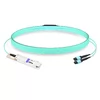
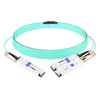
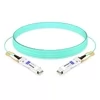
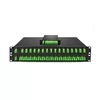
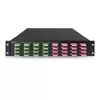
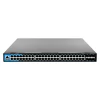
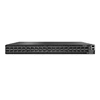
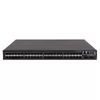
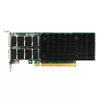
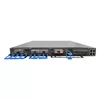
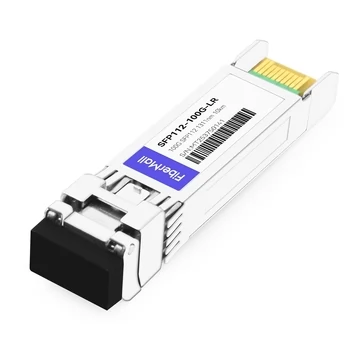
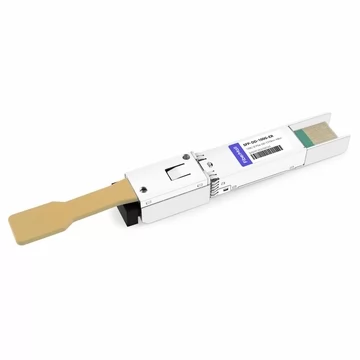
Understanding 100G SFP Transceivers
What is a 100G SFP Transceiver?
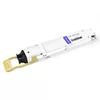
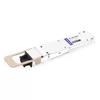
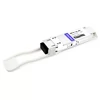
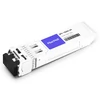
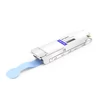
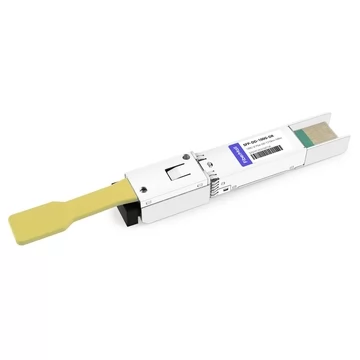
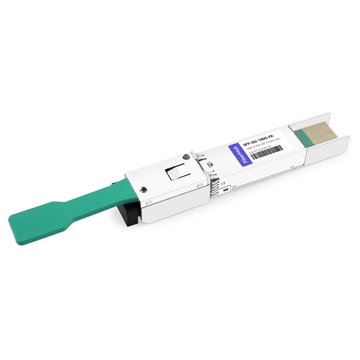
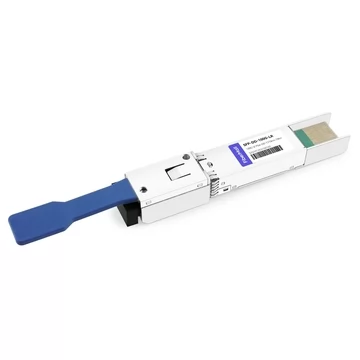
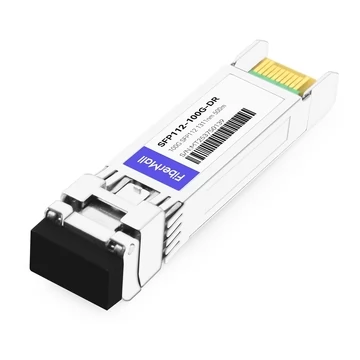
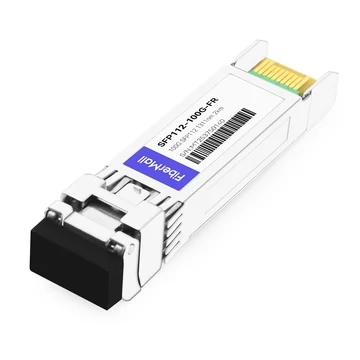
The 100G SFP transceiver functions as a small optical module which allows users to replace it while operating in fast data transmission and network transmission activities. The transceivers provide 100 Gigabit Ethernet (100GbE) connection support which enables users to transmit data quickly between nearby and distant locations. The term "SFP" stands for Small Form-Factor Pluggable, and in the case of 100G speeds, these modules often fall under the QSFP28 (Quad Small Form-Factor Pluggable 28) category, which is specifically engineered for 100G networks. QSFP28 modules support multiple interface types, including SR4 (Short Reach for multimode fibers), LR4 (Long Reach for single-mode fibers), and CWDM4 (Coarse Wavelength Division Multiplexing), which allows them to function in various networking settings.
Key Features of 100G Transceivers
The 100G transceivers provide advanced features which meet the needs of current networking environments. The system provides three main components which include:
1. High Data Rates: These modules support high-bandwidth applications through their capability to transfer data at speeds reaching 100Gbps.
2. Versatile Interface Options: The QSFP28 transceivers provide multiple interface options which include SR4 and LR4 and CWDM4 to enable users to select their desired connection method for both short-range and long-range deployment.
3. Energy Efficiency: The system operates with low power needs which results in decreased operating expenses and helps data centers achieve their environmental sustainability targets.
4. Compact Form Factor: The QSFP28 form factor enables space-efficient deployment, allowing for higher port density in networking equipment such as switches and routers.
5. Enhanced Reliability: The system achieves dependable data transmission through its error correction system and its adherence to established industry standards.
6. Interoperability: The system provides seamless integration through its compatibility with various networking infrastructure brands and devices which operate in different environments.
Technical Specifications of 100G Modules
The 100G transceiver modules have been developed to fulfill the strict performance standards which modern networking infrastructure requires. The devices use QSFP28 and CFP form factors which provide both small size and high operational efficiency. The modules support IEEE 802.3ba and ITU-T standards which enable devices to work together across different networks.
The main technical specifications present the following information about the system:
1. Data Rate: The system can transmit data at speeds which reach up to 100 Gbps.
Wavelengths: The system operates on designated wavelength ranges which include 850nm and 1310nm and 1550nm based on the module type (SR, LR, ER, etc.).
2. Reach: The system provides different reach options which include short-reach (SR) modules that extend up to 100 meters through multimode fiber and long-reach (LR) modules that cover distances beyond 10 kilometers through single-mode fiber.
3. Connector Interface: The system employs standard connectors such as LC and MPO/MTP, which enable simple system connection.
4. Power Consumption: The system achieves power efficiency with a power range that operates between 3.5W and 5W.
5. Compatibility: The system enables hot-swappable operation while maintaining full functionality with network routers and switches and servers.
Types of 100G Transceivers
Overview of QSFP28 Transceiver
The QSFP28 transceiver operates as a compact optical module which enables high-speed data transmission through three networking standards that include 100G Ethernet EDR InfiniBand and multiple advanced networking technologies. The system reaches its peak data throughput of 100 Gbps through its four 25 Gbps data channels. The transceiver offers multiple model options which include SR (Short Range) LR (Long Range) and CWDM4 to support different network transmission needs and distance requirements.
Comparison of 100GBASE-SR4 and 100GBASE-LR4
The 100GBASE-SR4 and 100GBASE-LR4 transceivers serve distinct use cases and are optimized for different networking environments.
The system provides short-range communication capabilities for data centers through its implementation of 100GBASE-SR4 technology. The system transmits data through eight lanes which connect two endpoints and achieves a data rate of 25 Gbps through multi-mode fiber (MMF) resulting in a total data rate of 100 Gbps. The typical transmission distance for 100GBASE-SR4 is up to 100 meters when used with OM4 fiber. The system operates at a low cost and delivers high efficiency which makes it suitable for data center connections and connections between high-speed racks.
Understanding 100GBASE-SR4 QSFP28 Transceivers
The 100GBASE-SR4 QSFP28 transceivers deliver high data transmission speeds at short distances, which makes them appropriate for use in modern data center facilities. The transceivers use multimode fiber (MMF) technology to transmit data at a wavelength of about 850nm while they use an MPO/MTP connector for their network connections. The system enables operational range of 100 meters through OM4 multimode fiber and 70 meters through OM3 multimode fiber, which makes it suitable for data center rack connections. The 100GBASE-SR4 specification divides data transmission into four parallel lanes which each operate at 25Gbps to provide dependable performance at 100Gbps total data rate. The solution provides cost benefits for high-density spaces that already use multimode fiber systems.
Applications of 100G SFP Transceivers
Networking and Data Center Applications
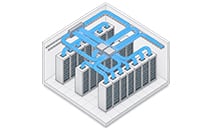
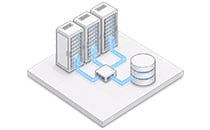
100G SFP transceivers function as essential components which fulfill the requirements of contemporary networking and data center operations. The transceivers operate at high bandwidth capacities which allow them to transmit data rapidly and reliably through extensive network systems. The system permits data centers to connect switches and routers and servers for complete communication between their remote components.
Recent search trends indicate that more people want to use 100G SFP transceivers for their cloud computing needs which require high data transfer rates and minimal delay to support AI workloads. The system gains additional marketability because it works with current multimode fiber networks which allow businesses to enhance their systems without needing to replace their existing cable infrastructure. The combination of speed and efficiency with scalability in 100G SFP transceivers enables modern data centers to operate more effectively while solving the increasing worldwide demand for advanced networking solutions.
Telecommunications and Optical Networks
The essential infrastructure for worldwide communication depends on telecommunications systems and optical networks which enable fast data transmission between distant locations. The 100G SFP transceivers improve network performance through their ability to provide fast data transmission and dependable operation at an affordable price. The transceivers serve a critical function in supporting applications that require high bandwidth for 5G networks and cloud services and AI data processing.
Industrial and Enterprise Use Cases
100G SFP transceivers serve industrial and enterprise markets because they deliver fast data transmission and support multiple applications. Industrial sectors depend on them to create reliable IoT systems which enable machines to share data with their central control systems in smart factories. The transceivers establish dependable fast connections for mining operations and oil extraction activities and gas production processes which require equipment that can withstand tough environments while using less power.
Comparing 100G SFP with Other Transceiver Types
Differences Between QSFP28 and CFP Transceivers
High-speed network applications use both QSFP28 and CFP transceivers for identical functions. The two systems show major differences because their design elements, performance capabilities and application fields differ. The compact size of QSFP28 (Quad Small Form-Factor Pluggable 28) enables it to deliver 100Gbps data transmission through four 25Gbps data lanes. Data centers widely use QSFP28 because it provides high port density, low energy consumption, and compatibility with current network equipment. Operators select QSFP28 modules mainly for their ability to conserve space and minimize energy usage during operations.
CFP transceivers use a larger design which enables them to handle various high-speed transport protocols that extend from 40Gbps to 100Gbps and higher speeds. The larger design of the device enables it to support tunable optical components which serve as critical tools for both long-distance telecommunications and metro network operations. The larger space requirements of CFP modules make them unsuitable for locations that need to maintain compact equipment arrangements.
Technical Comparison of 100G SFP and 100G QSFP28
The comparison between 100G SFP and 100G QSFP28 transceivers reveals multiple technical differences which serve different networking requirements. The 100G QSFP28 module operates in high-density environments which require low power consumption while maintaining a compact design that supports data transmission speeds up to 100Gbps. The system provides effective and expandable solutions which handle high-bandwidth requirements because it allows hyperscale data centers to operate multiple data lanes from a single module. QSFP28 modules use advanced interfaces such as SR4 LR4 and CWDM4to meet various network requirements.
Market Trends: 100G SFP vs Other Speeds
The market for high-speed optical modules, which includes 100G SFP modules, keeps expanding because various industries need higher bandwidth capacity. The current data shows that 400G modules are quickly becoming popular in the market because they can satisfy the rising requirements of hyperscale data centers and cloud providers. Enterprises with networks requiring small upgrades and metro and edge deployment needs still find 100G SFP modules to be relevant.
Future Trends in 100G Transceiver Market
Market Projections for 100G Technology
The 100G transceiver market will continue its growth pattern throughout upcoming years because various industries require high-speed data transmission. The industry reports and market analysis show that 100G technology will maintain its strong compound annual growth rate (CAGR) because data centers and telecom networks and enterprise applications widely use the technology. The rising demand for cloud services together with the transition to edge computing highlights 100G solutions as effective and affordable expansion solutions.
Innovations in Optical Transceiver Technology
The current research developments in optical transceiver technology seek to address two main requirements which include faster data transmission and better power efficiency. The creation of coherent optics technology stands as the primary advancement because it enables users to send information through transmission systems at 800G while they maintain their ability to receive clear signals throughout extensive distance ranges. The artificial intelligence (AI) and machine learning (ML) systems create a real-time network optimization solution which allows transceivers to change their operations according to different data traffic patterns and environmental conditions.
Silicon photonics technology has transformed optical transceiver design by providing compact and affordable solutions which enable higher bandwidth transmission. The leading companies in the industry are developing pluggable transceivers which work with multiple platforms to provide businesses and data centers with easy network expansion capabilities. The ongoing development of new materials together with enhanced production techniques ensures that optical transceivers will maintain their position as the primary technology for future communication systems.
Impact of 100G on Networking Infrastructure
The introduction of 100G networking technology has transformed both the design and construction of contemporary networking systems. The 100G system delivers exceptional bandwidth capacity through its capability to process data at much higher speeds which fulfills the increasing requirements of data-heavy applications and cloud computing and streaming services. Data shows that worldwide data traffic has grown at an exponential rate because people now use 4K streaming and IoT devices and AI-powered applications more widely. The 100G network technology enables enterprises and data centers to send information at higher speeds while decreasing waiting time which allows businesses to run vital operations with greater efficiency.
Frequently Asked Questions
What is a 100G SFP?
A 100G SFP functions as a compact plug-in device which establishes 100 gigabits per second data transmission capability. We use these modules to connect network switches and routers and servers through fiber optic cables.
What is the difference between SFP and QSFP?
Standard SFP modules usually handle lower network speeds. The actual 100G speed requires the use of a QSFP28 (Quad Small Form-factor Pluggable) module. The "quad" means it uses four separate data lanes to reach that massive 100G speed.
How far can a 100G module transmit data?
The reach of the system depends on the particular module type which you select. Some transceivers are built for short trips across a data center and reach about 100 meters. Other long-range models can send signals up to 40 kilometers using specialized fiber cables.
Can I use a 100G module in a 40G port?
No, you cannot put a 100G module into a 40G port and expect it to work. However, the reverse is often true. We can usually plug a 40G module into a 100G port, and the switch will simply adjust its speed down to match the 40G limit.