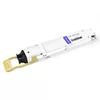
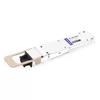
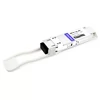
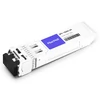
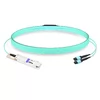
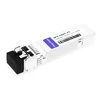
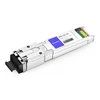
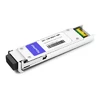
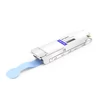
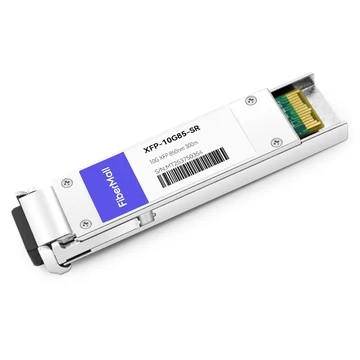
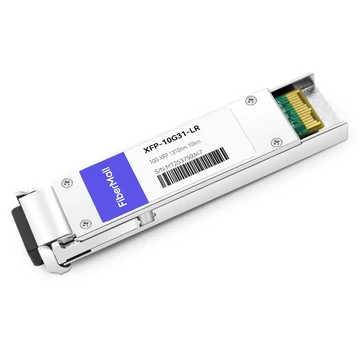
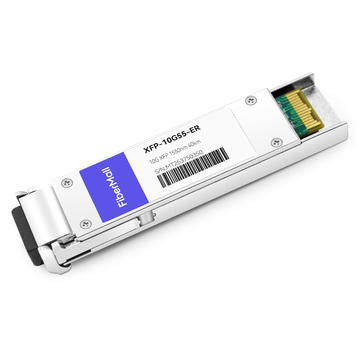
10G XFP Transceivers
For complex networking environments, fast and responsive solutions are crucial, as the need for higher data volumes has grown rapidly. One solution is 10G XFP transceivers, which facilitate data movement at 10 Gbps in enterprise and telco networks. These hot-pluggable mini modules are compatible with most systems, operating wavelengths, and transmission distances.
What are 10G XFP Transceivers?
10G XFP modules are hot-swappable optical transceivers that transmit data at 10 Gbps over copper or fiber optic links. They support 10G encapsulation for Ethernet, SONET/SDH, and Fibre Channel. They are small, lightweight, and available in multiple distances and wavelength options. Their plug-and-play design enables easy installation and replacement, in accordance with the XFP MSA, which ensures interoperability among devices from different vendors.
Definition and overview
The XFP (10 Gigabit Small Form-Factor Pluggable) is a hot-swappable optical transceiver module used mainly in high-data-rate optical communication systems. It supports 10 Gbps transmission in applications such as 10G Ethernet, Fibre Channel, and SONET/SDH networks. XFP modules offer flexibility for short- and long-distance links across wavelengths of 850 nm, 1310 nm, and 1550 nm. They support distances from meters to over 80 km, depending on the module type. These solutions follow the industry Multi-Source Agreement (XFP MSA), which promotes interoperability among vendors and accelerates deployment in networking. Their compact size and low power consumption help manage heat and make them an excellent choice for modern network architectures.
Advantages of Using 10G XFP Transceivers in Network Infrastructure
10G XFP transceivers benefit network infrastructure by delivering high-speed data over long distances while supporting multi-vendor interoperability through XFP MSA compliance. Their small size allows embedding in networking devices, and low power requirements improve system reliability and reduce operating costs. These features make XFP transceivers highly functional for scaling networks.
Flexibility and scalability in network design
Today’s networking environments require built-in flexibility and scalability to respond to changing data demands and emerging technologies. Adaptability allows the addition of new devices, protocols, or applications without reinstallation or disruption. Scalability enables addition of resources, servers, or functions as the organization grows. This is achieved through modular systems, including Software-Defined Networking (SDN) for easy management and automation.
High-speed transceivers such as 10G XFP contribute to both flexibility and scalability, letting administrators upgrade link speeds and reach without issues. They are designed for coexistence with existing systems, minimizing equipment changes and improving cross-vendor compatibility. These technologies help organizations future-proof networks while maintaining performance, scalability, and continuous service.
How to Choose the Right 10G XFP Transceiver for Your Network
Selecting the appropriate 10G XFP transceiver requires evaluating equipment compatibility, transmission distance, and fiber type (single-mode or multi-mode). The wavelength must also match network standards to optimize performance. Considering these factors ensures the transceiver meets your network’s technical and operational needs.
Considerations for network compatibility
As networks evolve, it is important to verify factors that enhance performance and reduce downtime. The transceiver must support the required data rate and protocols, including Ethernet, Fibre Channel, SONET, or SDH. Non-compliant modules provide no benefit. Consult the Hardware Compatibility List (HCL) for switches, routers, and servers.
Consider the physical network layout, such as cable length. Use single-mode fiber for longer runs and multi-mode fiber for shorter distances. Match the wavelength (e.g., 850 nm for multi-mode) with the fiber and components. Finally, confirm the transceiver fits the power budget and thermal design of your network equipment. Addressing these factors sequentially creates a robust and effective network.
10G XFP Transceivers vs. Other Transceiver Types
10G XFP transceivers differ in form factor from SFP+ transceivers. XFP modules preceded SFP+ and are larger, so most modern installations use SFP+. Unlike QSFP+ modules, which handle multi-channel 40G+ rates, XFP transceivers operate on a single 10G channel. They perform all functions in hardware with an external SERDES. While XFP modules remain suitable for certain legacy infrastructures, smaller and more advanced SFP+ and QSFP+ options are preferred today.
Comparison with SFP+, QSFP, and other standards
10G XFP transceivers differ from current standards such as SFP+ and QSFP in form factor, functionality, and application. SFP+ offers a more compact size, lower power consumption, and higher port density while supporting 10G single-channel solutions. QSFP transceivers address higher bandwidth needs with multi-channel 40G/100G configurations, ideal for data centers and high-speed enterprise networks.
XFP transceivers are typically used in older single-channel 10G setups with external SERDES. Advances in SFP+, QSFP, and newer technologies make them more efficient and powerful for modern networking.
Installation and Maintenance of 10G XFP Transceivers
10G XFP transceivers are hot-pluggable, allowing insertion and removal without powering down the device. Align the module with the XFP slot and insert until it clicks. Secure any locking mechanism.
For maintenance, regularly inspect optical connectors for dust or dirt, which degrades signal quality. Clean with approved fiber cleaning kits when needed. Keep operating temperatures within manufacturer specifications to prevent overheating. Update firmware as required to maintain security and performance.
Step-by-step guide to proper installation
Check the 10G XFP and the Slot
Inspect the XFP slot on the router, switch, or firewall for damage, dust, or debris. Clean connectors with an optical cleaning kit if necessary.
Position the XFP Module
Align the module correctly with the port. Orientation is keyed to prevent incorrect insertion.
Slowly Insert the Unit
Gently push the module fully into the slot until seated. Avoid excessive force to prevent damage.
Lock the Module
Secure the latch or lock to keep the module in place during operation.
Connect Power and Test
Power on or resume the device. Verify the module initializes correctly via LEDs or the management interface. Troubleshoot any issues immediately.
Upgrade Firmware and Track
Apply any required firmware updates. Monitor performance with network tools.
Frequently Asked Questions (FAQs)
What do 10G XFP transceivers do?
These hot-pluggable optical modules convert 10 Gigabit Ethernet, Fibre Channel, or SONET/SDH signals for transmission over fiber, enabling high-performance networks over extended distances.
What are the main reasons to purchase 10G XFP transceivers?
Key benefits include compatibility with various network equipment, low power consumption, support for single-mode and multi-mode fiber, and hot-swapping capability that allows replacement without network downtime.
How do I verify compatibility with my equipment?
Confirm that your networking device supports XFP transceivers. Check that the module matches the required data rate, distance, wavelength, and fiber type. Refer to the vendor’s Hardware Compatibility List.
What is the life expectancy of a 10G XFP module?
With proper installation and maintenance, 10G XFP transceivers typically last 5 to 10 years, depending on the environment, application, and quality.