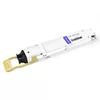
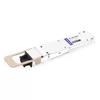
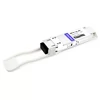
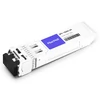
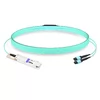
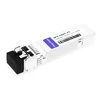
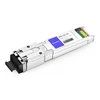
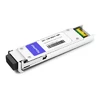
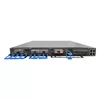
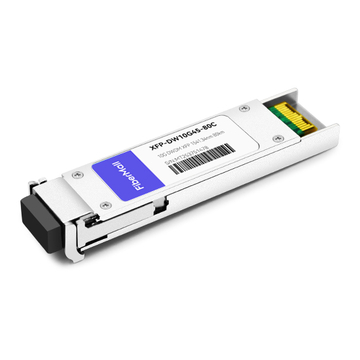
10G DWDM XFP Transceivers
Telecommunications development has received increasing attention as demand for high-speed capacity transmission and fast network scalability grows. 10G DWDM XFP transceivers make it easier to enhance optical transmission systems that use fiber optics. Simple in appearance yet highly effective, these transceivers are critical for innovative high-capacity networks.
Introduction to 10G DWDM XFP Transceivers
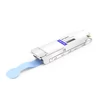
Hot-pluggable 10G DWDM XFP transceivers are mainly used in Dense Wavelength Division Multiplexing (DWDM) networks. Their compact size supports high-density 10G systems. They provide high-capacity data transmission over long distances by using different wavelengths. Popular applications include enterprise networks, data centers, and telecommunications services because these solutions are efficient, scalable, and reliable. Key advantages include compliance with recognized standards, low power consumption, and operation over wide temperature ranges, making them suitable for many network types.
Key features of 10G DWDM XFP Transceivers
The 10G DWDM XFP is an optical module that enables data transmission over extended distances using Dense Wavelength Division Multiplexing (DWDM) technology. It complies with ITU-T G.694.1 for backward compatibility with existing networks. These transceivers are hot-pluggable, allowing replacement or installation without system shutdown. Their low power consumption and 10 Gbps transmission rates reduce costs while meeting current network needs. They also include digital diagnostic monitoring, enabling network operators to monitor performance and operate reliably in different environments.
How 10G DWDM XFP Transceivers Work
In simple terms, 10G DWDM XFP transceivers convert electrical data into optical signals for transport over DWDM systems. They operate on specific wavelengths within the DWDM grid and allow multiple data streams to share a single fiber. Extremely accurate lasers and special filters prevent channel overlap. Modules at the network edge include optical amplification and dispersion compensation to support long-haul transmission.
The technical principles behind DWDM
DWDM (Dense Wavelength Division Multiplexing) technology enables the transmission of a large number of optical carrier signals over a single fiber using precise wavelength management. DWDM channels use specific frequencies in the C-Band or L-Band spectrum, with channel spacing of 100 GHz, 50 GHz, or 25 GHz in advanced systems. Erbium Doped Fiber Amplifiers support optical transmission over hundreds of kilometers with minimal noise and signal loss.
When deploying 10G DWDM XFP networks, several aspects are critical for efficiency. Transmit and receive ports must match at each fiber endpoint. Fiber optic data avoids obstacles such as attenuation and dispersion, enabling longer distances, higher bandwidth, and faster speeds than traditional methods. Grounding and electrical considerations prevent signal corruption. These transceivers support direct connections between routers without additional DWDM equipment. Power and cooling performance of chassis components must also be considered.
Applications of 10G DWDM XFP Transceivers in Optical Networks
Optical communication systems use 10G DWDM XFP transceivers for efficient data transfer via multiple wavelengths in DWDM systems. They are particularly suited for long-distance and regional networks because they expand existing fiber capacity in a cost-effective way without adding fibers. Advanced wavelength division techniques allow multiple data streams over a single fiber strand, dramatically improving bandwidth utilization. Their compact size and hot-swappable design simplify deployment and maintenance in applications such as data center interconnection, 5G networks, and large-scale infrastructure.
Use cases in metropolitan area networks (MANs), long-haul transmission, and data centers
In MAN networks, these optical transceivers provide high-speed communication across urban areas. In long-haul networks, they simplify large-scale data transport over vast distances using wavelength division multiplexing, which minimizes signal loss and increases system capacity. Within data centers, they optimize server-to-server and server-to-switch interconnections, supporting rapid traffic growth while maintaining low latency and seamless integration with new network technologies.
Comparing 10G DWDM XFP Transceivers with Other Optical Modules
10G DWDM XFP modules offer major advantages over other optical transceivers, especially for long-distance communication and capacity expansion. Traditional transceivers have limited transmission ranges that often require additional fibers, whereas DWDM XFP transceivers use multiple wavelengths to carry high capacity over fewer fibers. They form a core part of DWDM systems and support unlimited optical node and fiber distances without throughput degradation. Compared with CWDM modules, DWDM XFP transceivers provide narrower channel spacing, enabling higher data density and more efficient fiber use. They are ideal for high-capacity networks in telecommunications and data centers.
Comparison with SFP+ and QSFP+ transceivers
SFP+ (Small Form-Factor Pluggable Plus) and QSFP+ (Quad Small Form-Factor Pluggable Plus) transceivers serve specific roles in optical networks. SFP+ modules support one channel at up to 10 Gbps and are used for short- to medium-distance links in office or consolidated systems. QSFP+ modules use four channels for an aggregate bandwidth of 40 Gbps and are common in high-bandwidth data centers and cloud networks.
Compared with SFP+ and QSFP+ modules, DWDM XFP transceivers are optimized for long-distance networks through wavelength multiplexing over a single fiber. SFP+ and QSFP+ focus mainly on short-range or intra-data-center connections, with SFP+ suited for lower-speed links and QSFP+ for higher port density. Choice depends on distance, bandwidth, and network architecture requirements.
Performance Specifications and Standards for 10G DWDM XFP Transceivers
10G DWDM XFP transceivers comply with the 100 GHz or 50 GHz DWDM wavelength grid defined by ITU-T G.694.1 for single-mode fiber applications. They support a 10.3 Gbps data rate and function as Ethernet, SONET/SDH, or OTN transceivers. Key parameters include transmission distances up to 80 km, depending on fiber type and network configuration. These modules are XFP MSA (Multi-Source Agreement) compliant for multi-vendor interoperability and deliver high signal integrity, scalability, and reliable DWDM operation.
Detailed specifications, including transmission distance, data rate, and wavelengths
Transmission Distance: Up to 80 km using single-mode fiber (especially suitable for distances over 5 km).
Data Rate: Up to 10 Gbps to support high-capacity applications such as 10G Ethernet and 10G SONET/SDH.
Wavelengths: Tunable or fixed channels in the C-band from 1528.77 nm to 1565.50 nm per ITU-T G.694.1. Channel spacing is 50 GHz or 100 GHz for precise allocation.
This compatibility ensures seamless integration with dense wavelength division multiplexing systems and high-volume optical communications.
Frequently Asked Questions (FAQs)
What is a 10G DWDM XFP transceiver?
A 10G DWDM XFP transceiver is a hot-pluggable, compact telecommunications module used in 10G DWDM systems. It transports data over long distances using multiple wavelengths on a single fiber.
What are the main purposes of 10G DWDM XFP transceivers?
They are commonly used in carrier optical networks and long-distance interconnections. They enable multiple data channels to share a single fiber in a cost-effective manner.
How far can the signal travel with 10G DWDM XFP transceivers?
Transmission distance varies by model and configuration, typically ranging from 40 km to 120 km. Longer reaches require external amplifiers or dispersion-compensating modules.
Do 10G DWDM XFP transceivers conform to ITU-T standards?
Yes. They comply with ITU-T G.694.1 recommendations for DWDM networks and support tunable or fixed wavelengths according to the ITU-T frequency grid.