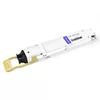
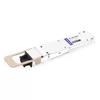
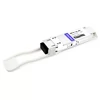
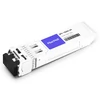
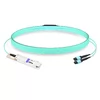
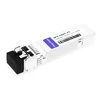
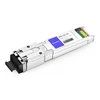
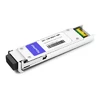
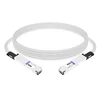
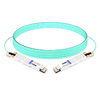
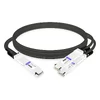
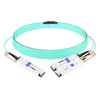
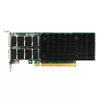
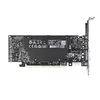
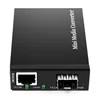
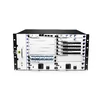
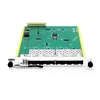
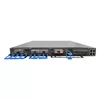
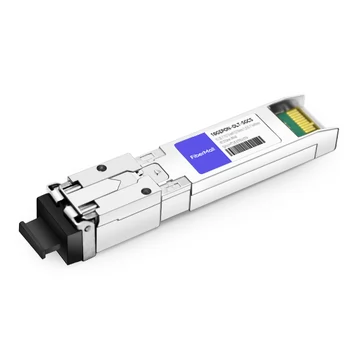
10G EPON ONU Transceiver Module
The 10G EPON ONU transceiver module leads optical network technology, offering a powerful and efficient solution for high-speed internet connectivity. This module serves as the primary interface between the optical access network and user equipment while meeting the growing demands of modern communication networks.
Overview of 10G EPON ONU Technology
In optical networking, 10G EPON ONU technology represents the future of high-speed networks, enabling rapid data flow and continued network growth. The technology operates at 10 Gbps both downstream and upstream, which meets the needs of today’s bandwidth-intensive applications such as high-definition video streaming, cloud services, and the Internet of Things. It uses a point-to-multipoint architecture that connects multiple users to a single fiber without scalability or cost issues. Its reliable performance delivers low latency and stable connections while integrating seamlessly with existing infrastructure, playing a key role in next-generation telecommunication networks.
Introduction to EPON and its evolution to 10G technology
A passive optical network (PON) is a point-to-multipoint networking technology that transmits Ethernet over passive optical fiber to deliver high-speed internet, voice, and video services to end users. Standardized in 2004 under IEEE 802.3ah, the original EPON provided 1.25 Gbps downstream and upstream. This met many needs at the time. However, the rise of cloud computing, high-definition video on demand, and large-scale IoT deployments created demand for far greater bandwidth, requiring EPON to evolve.
The introduction of 10G-EPON marked a major advance, standardized as IEEE 802.3av in 2009. It increased capacity tenfold to 10 Gbps with flexible downstream and upstream options of 1 Gbps or 10 Gbps depending on the deployment. These capabilities improve network scalability and resource efficiency, making 10G-EPON ideal for today’s high-speed, low-latency connectivity demands.
Benefits of Deploying 10G EPON ONU in Modern Networks
- Enhanced Bandwidth. The 10G EPON ONU increases channel capacity to support high-speed internet, video, and other bandwidth-intensive applications.
- Reduced Latency. It enables real-time applications such as VoIP, cloud computing, and online gaming.
- Flexibility. It scales easily to accommodate growing numbers of users without network limits.
- Energy Efficiency. Built-in power-saving mechanisms reduce energy consumption and operating costs.
- Upgradability. The architecture supports new technologies and applications while remaining compatible with existing EPON systems.
Enhanced speed and bandwidth capabilities
The 10G EPON ONU significantly boosts speeds and bandwidth by delivering up to 10 Gbps downstream and upstream in a single system. This supports high-bandwidth applications such as 4K and 8K video streaming as well as cloud and IoT services. It employs multiple wavelengths of light to maximize fiber utilization and data throughput. It also features dynamic bandwidth allocation (DBA), which adjusts resources according to traffic changes, ensuring low latency and smooth performance even during peak hours. These features make the 10G EPON ONU highly effective for meeting rising data demands.
Selection Criteria for 10G EPON ONU Transceivers
When selecting 10G EPON ONU transceivers, focus on compatibility, reach, and power consumption. The transceiver must match the deployed network architecture for seamless integration with other equipment. Reach should suit the required transmission distance. Power consumption should be low to support sustainable operation and lower costs. These factors ensure maximum performance in 10G EPON networks.
Factors to consider when choosing the right module
Module compatibility is essential for integration with existing network infrastructure. Verify that wavelength, form factor, and connector specifications match the hardware and software environment. Performance requirements—including bandwidth, modulation, and speed—must align with the intended application. Environmental and operational conditions, such as operating temperature range and device robustness, must also be considered. These factors ensure the module delivers effective, efficient, and sustainable network service.
10G EPON ONU vs. GPON ONU – A Technical Comparison
Key comparison points between 10G EPON ONU and GPON ONU include speed, capacity, and scalability. The 10G EPON ONU supports up to 10 Gbps downstream and upstream, making it suitable for bandwidth-intensive services such as video content delivery, cloud services, and large enterprise systems. In contrast, GPON ONU provides 2.488 Gbps downstream and 1.244 Gbps upstream, which is sufficient for most home and small-office use cases.
10G EPON offers superior scalability and handles growing demand without constraints. GPON is widely used for its lower cost and simpler deployment in residential settings. Selection should consider specific network requirements, desired performance, and budget.
Key differences in architecture and performance
The primary architectural difference between GPON and 10G EPON lies in their standards and data rates. GPON is based on ITU-T G.984 with 2.488 Gbps downstream and 1.244 Gbps upstream. In contrast, 10G EPON follows the IEEE 802.3av standard and delivers 10 Gbps symmetrical bandwidth downstream and upstream, making it better suited for bandwidth-demanding applications.
10G EPON excels in throughput for large-scale networks and services such as 4K/8K video, cloud computing, and IoT. GPON, while lower in bandwidth, is more cost-effective and power-efficient for small to medium networks. Another key difference is scalability: 10G EPON incorporates advanced QoS mechanisms and supports longer transmission distances, enabling growth with increasing user numbers. GPON offers more limited scalability but works well where traffic is moderate. Ultimately, the choice between GPON and 10G EPON depends on required network performance, future expansion needs, and available budget.
Applications of 10G EPON ONU in FTTH and Enterprise Environments
The 10G EPON ONU is widely used in fiber-to-the-home (FTTH) and enterprise settings because of its high-speed transmission and reliability.
FTTH Usage – The 10G EPON ONU delivers fast, reliable internet to homes, supporting 4K/8K video streaming, gaming, cloud services, and other high-bandwidth applications. Its high capacity makes it ideal for densely populated areas with heavy traffic.
Corporate Environments – Enterprises deploy the 10G EPON ONU to support smooth business operations, data-driven tasks, secure video conferencing, collaboration, and cloud access. Its high efficiency minimizes downtime and enables easy network expansion.
The 10G EPON ONU adapts well to modern connectivity challenges in both residential and business environments.
Role of 10G EPON ONU in Fiber-to-the-Home (FTTH) deployments
The 10G EPON ONU plays a critical role in new fiber networks by removing speed limitations at the subscriber side. As information technology advances rapidly, FTTH requires high-speed connections for both downstream and upstream traffic. With up to 10 Gbps capacity, the 10G EPON ONU supports high-bitrate services such as 4K/8K video, online gaming, and virtual reality while meeting rising bandwidth needs of individuals and businesses alike.
Frequently Asked Questions (FAQs)
How would you define a 10G EPON ONU transceiver module?
A 10G EPON ONU transceiver module is a component used in Optical Network Units (ONUs) that enables data transmission in 10 Gigabit Ethernet Passive Optical Networks (10G EPONs). It provides broadband access services to end users over an optical network at 10 Gbps downstream and upstream speeds.
For what purposes is a 10G EPON ONU transceiver module used in general?
The 10G EPON ONU transceiver module is commonly used in FTTH deployments, enterprise access networks, and other areas requiring high-speed data communication. Typical applications include high-speed internet, IPTV, and VoIP services for homes and businesses.
Does the design of the 10G EPON ONU transceiver module support the use of older EPON wavelengths?
Yes. Most 10G EPON ONU transceiver modules are backward compatible with previous EPON generations, such as 1G EPON. This allows service providers to upgrade networks incrementally without disrupting existing services and reduces the cost of migration to higher speeds.
How does low power consumption benefit the 10G EPON ONU transceiver?
Low power consumption reduces operating costs and improves overall system energy efficiency. It also lowers heat generation, which is especially useful for dense or compact ONU deployments while maintaining reliable performance.