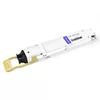
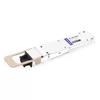
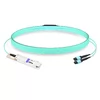
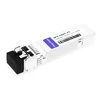
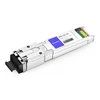
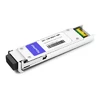
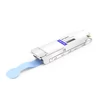
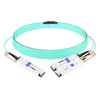
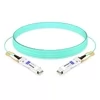
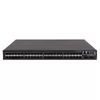
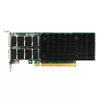
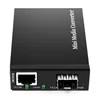
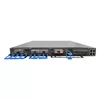
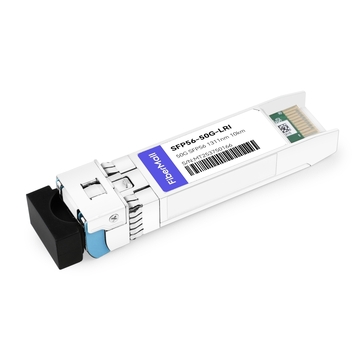
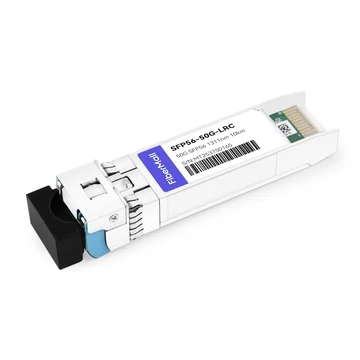
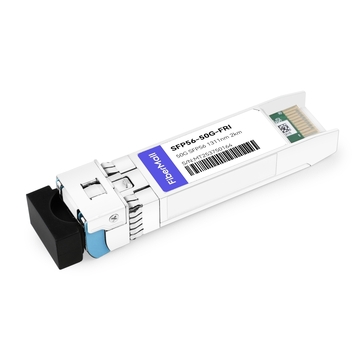
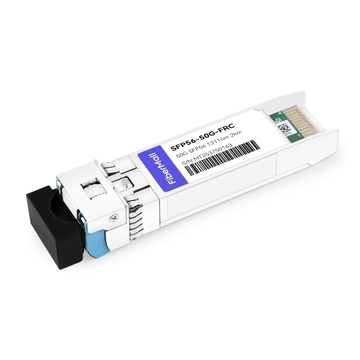
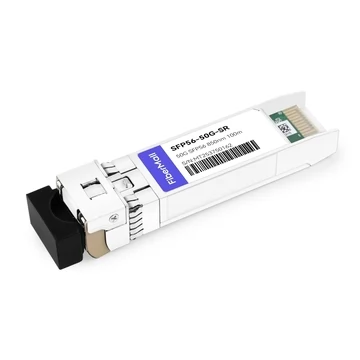
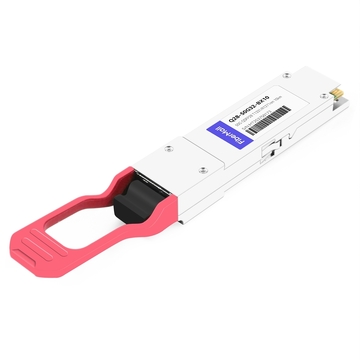
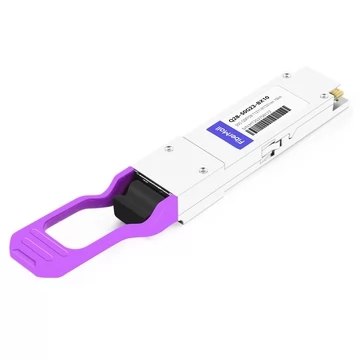
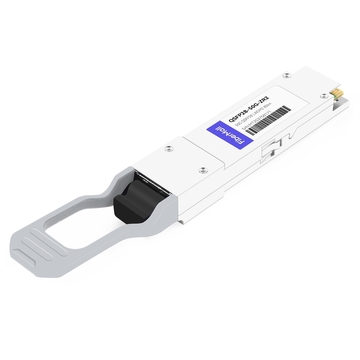
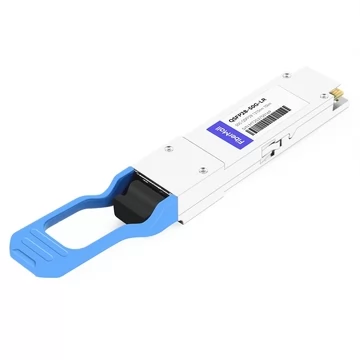
50G SFP56 optical transceiver module
The 50G SFP56 optical transceiver module—a masterpiece of advanced engineering—is revolutionizing high-speed data communications. Its core features, intended uses, and real-world applications highlight the significant improvements the 50G SFP56 module brings to today's networks. Whether optimizing data centers or considering upgrades to network infrastructure, understanding this information years in advance is crucial.
Introduction to 50G SFP56 Optical Transceiver Modules
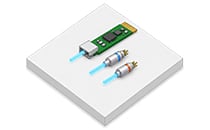
The 50g SFP56 module, known as an Optical Transceiving (OTM), is a plug-and-play hot-pluggable small form-factor module that supports 50G Ethernet standards. Pulse modulation uses such as four-level modulation, where signals are transmitted at varying amplitudes in packets, making a short training period easy to penetrate in high bandwidth environments. The modules can be found in the data centers, enterprise networks, and in the telecommunication industry, irrespective of the organization's competitors' structure. The need for breaking barriers also increased with the small form factors and plug-and-play devices, which complemented the design, making it a stable solution on any platform.
Overview of high-speed data transmission needs
The possibility for rapid data transfers represents a fundamental challenge to the evolution of existing networks, which is characterized by revolutionary processes in cloud storage, the Internet of Things, unthinkable without the data in real time. These demands result from the incessant rise of the level of data contribution, which makes it imperative to have networks that can support stable, quick, and extendible technologies. Primary factors include bandwidth, distance covered by transmission, and consumed energy. Current practices employ dense wavelength division multiplexing (DWDM), utilize modern modulation techniques such as PAM4, as well as advances in the fiber turn technology to meet the capacity demands of data centers, telecommunications networks, or enterprises. The evolution of the application of 4K video streaming in AI and 5G technology enhances the continuous evolution of powerful ways of transmitting numerous components. Here is the edited text with all changes highlighted:
Key role of 50G SFP56 in modern networking
The 50g sfp56 has an important role to play in the modern networking environment facing surging bandwidth requirements. designed for high performance with cost efficiency, it utilizes PAM4 modulation for achieving a data rate of 50 Gbps on a single lane, maintaining a sweet balance between speed and power. This is very important for 5 G networks, data center interconnect, and high-density cloud computing implementations, as it allows scaling of the configuration.
The adoption of 50G Ethernet creates an opportunity for network operators to maximize their fiber use, minimize their infrastructure cost, and enhance scale-up to 100G or 200G networks by adding several 50G lanes. The existence of a 25G architecture, which is compatible with the new technology, speeds up the conversion process and makes it easier to integrate into already existing systems. The 50G SFP56 is of paramount importance and is irreplaceable in the access infrastructure as well as the aggregation within telecommunication and corporate networks due to its great energy-saving potential, as well as a long reach attained due to advances in optical engineering.
Technical Specifications of 50G SFP56 Optical Transceiver Modules
Structure: Small Form-factor Pluggable (SFP56)
Data Transfer: Maximum possible is 53.125 Gbps
Maximum length: Distance may vary from 100 meters (with multimode fiber) up to 10 kilometers (with single-mode fiber); however, it depends on the type of module.
Wavelength: It operates mostly at 1310 nm or 1550 nm for single-mode and 850 nm for multimode.
Type of Interface: LC-type connectors are used for this purpose.
Power Consumption: As a rule, the consumption does not exceed 3.5 W.
Network Support: 25G Ethernet is known to work in such devices.
Areas of application: ISPs, Data centers, and enterprises that are handling 5G, amongst other high-capacity networks.
The specifications of the 50 G SFP56 modules facilitate speedy transmission with minimal delay and guarantee interoperability of different networking solutions.
Compatibility with Ethernet, data centers, and 5G infrastructure
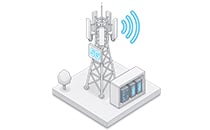
The 50G SFP56 transceiver is mostly used for different networking purposes. This is because it provides connectivity through 50 Gb Ethernet, while the underlying infrastructure utilizes 25G Ethernet, thus simplifying the transition process. In a data center environment, it facilitates heavy traffic and increased speeds, which is useful in cloud computing, data storage, and other such capacity-intensive business processes, thereby bringing the costs down too. In addition to that, for the 5G networks, the 50G SFP56 supports the low latencies and high throughput necessary for enhanced mobile broadband and ultra-reliable and low latency applications, and therefore, can be termed as a supportive solution for such networks in the future. Therefore, such features are what make it an appropriate and quite adaptive tool tailored to the changing network needs.
Understanding Direct Attach Copper (DAC) Cables for 50G Networks
Direct Attach Copper (DAC) cables are a low-cost and less power-intensive option for short-range, high-speed communications transfusing 50g sfp56 networks. They have a copper cable with a shield, carrying out the required connections already in the factory, allowing the cables to provide uncompromised performance with minimal signal loss for a distance of up to 5 meters. The biggest advantage of DAC cabling is avoiding the use of any optical transceivers, which means less complex infrastructure, along with reduced power and network installation expenses. Such features make them very suitable for areas of high density like data centres, where there is a high need for connections with minimum latency.
What are DAC cables, and how do they work?
With superior performance, wire-interconnects known as Direct Attach Copper (DAC) are fundamental in networking systems. These wires are solution-made to reduce the transceivers' cost since they combine both the transceiver and the cable as one single unit. In general, such solutions are made of twinax copper wires, which guarantee a high speed, minimizing signal interference and delay of data transmission.
50G SFP56 vs. Direct Attach Copper Cables: A Comparison
In quite a few scenarios, Direct Attach Copper cables (DAC) are used as 50G SFP56 modules substitutes; there are, however, a few things to consider when looking at both the cables and the modules; those few things count greatly, as the attack and the cable in this specific case are for different purposes.
If you look at the 50 Gbps SFP56 specifications for the modules, they tend to be suited more to use over long distances due to the high speed offered over optics without much data loss. The deployment of these types of modules is based on the principles of scalability and flexibility, which means that they will be useful in such cases as: large datacenter interconnects and/or systems that demand the maximum number of ports.
On the contrary, Direct Attach Copper cables allow for economic cabling in short distances, like intra-rack or rack-to-rack connections in most cases. This is particularly advantageous in point-to-point connections that need to be efficient and reliable at the same time, and the distance between the connection points is reasonably short.
Finally, there is a need for 50G SFP56 modules for enhanced care for networks with extended distances, considering the future, whereas DAC cables are cost-effective and easier to use for the short range. Organizations have to assess their use case to decide the best applicable option.
Performance differences over short and long distances
Performance studies across different distances, including DAC (Direct Attach Copper) cables and 50G SFP56 transceivers, depict a different picture. For short-range connections, usually out to 5-7 m, DAC cables offer a cutting-edge solution as they have negligible latency, optimal signal quality, and ease of installation. The passive component makes it eco-friendly by cutting down on energy and cost, as it doesn’t have any power or components. Unfortunately, they cannot be used for long-range applications because of attenuation and also because they are too short.
Applications of 50G SFP56 Transceivers in Modern Networks
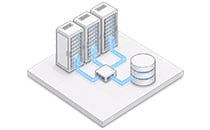
High-performance connectivity in the data center, enterprise network, and telecom infrastructure is dependent on the technology of these 50G SFP56 transceivers. One of the primary functions of these modules is to connect servers and switches, as well as storage devices, ensuring effective data transfer within high-capacity computer systems. This equipment is also used for edge computing and 5G infrastructure, with the demand for bandwidth and low latency increasing in these applications. Therefore, 50g SFP56 transceivers are designed to enhance the performance of networks through improved scalability and efficient power utilization while also enabling traffic growth.
Their role in data center interconnections
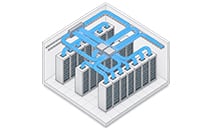
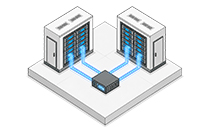
The utilization of 50G SFP56 transceivers in high-speed connections in current data centers is essential. This is due to their ability to ensure expedient data flows across key locations. These transceivers are able to withstand the high densities of these environments by providing connections between serving devices, disks, and routers. Instead, load balancing, virtualization, and distributed computing are technologies that are possible only due to these transceivers. Moreover, the existing network architecture ensures that they are able to scale without incurring high costs, in addition to ensuring that power costs are minimized. It is undeniable that 50G SFP56 transceivers, in seeking to address this challenge, are indispensable in the construction of data centers that can satisfactorily handle all the activities that exist today and in the future.
Frequently Asked Questions (FAQs)
What do we mean when we say ‘an optical transceiver module known as a 50G SFP56’?
An optical transceiver module called a 50G SFP56 module is a device that is used in high-speed networking applications, which is small in size and supports hot-plugging. It is capable of transmitting data with a bandwidth of up to 50Gbps employing sophisticated optical solutions to achieve a smooth connection and be dependable to the user.
How relevant are 50g SFP56 for general purposes?
The above mentioned transceivers are mainly associated with corporations, data centers, or the telcos. They are indispensable in providing high-bandwidth solutions like in cloud services, virtualization, and 5G rollout.
What are the features of 50 G SFP56 transceivers?
Features include adherence to the standards set by IEEE and MSA, consumption of modest amounts of power to achieve energy saving, reliable high-speed transmission with good signal integrity, and support of current network systems for easy migration.
How do 50G SFP56 Modules differentially advantage the older counterparts?
The late model 50 G SFP56 transceiver modules present a more advanced data rate coupled with enhanced energy efficiency and minimal propagation delay compared to their earlier counterparts. The said properties are increasingly resonant with present and future data networks that require heavy workloads.