CWDM Mux/Demux: Expand Fiber Capacity Without Pulling New Fiber
Running out of available fiber strands but still need to add new services? A FiberMall CWDM mux/demux allows you to carry 4, 8, 16, or up to 18 independent wavelengths over a single fiber pair. This expands the capacity of existing fiber infrastructure without new trenching, additional dark-fiber leases, or active multiplexing equipment that requires power and management.
FiberMall passive CWDM mux/demux modules are designed around the ITU-T G.694.2 wavelength grid. The standard nominal center wavelengths extend from 1271 nm to 1611 nm in 20 nm increments, although these channels are commonly labeled in the industry as 1270 nm to 1610 nm.
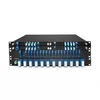
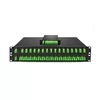
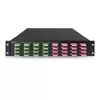
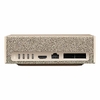
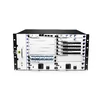
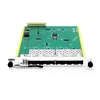
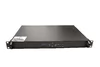
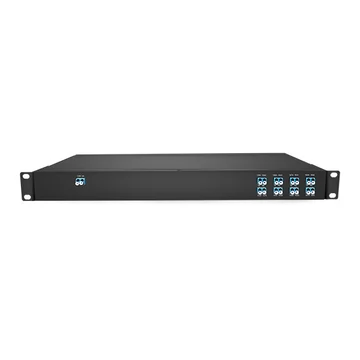
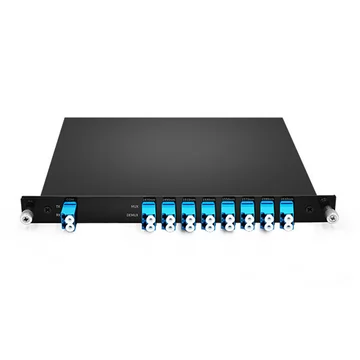
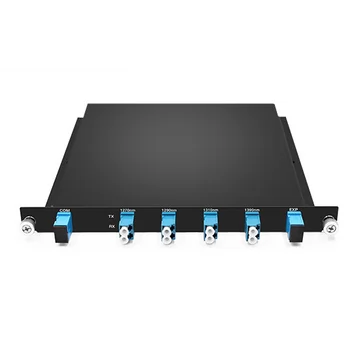
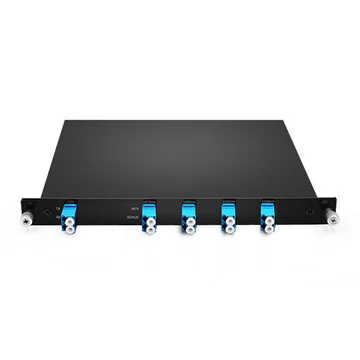
Selected industrial-grade configurations support operating temperatures from −40°C to +85°C. Available package options include ABS boxes, LGX cassettes, and 1U 19-inch rack-mount chassis. Optional monitor, expansion, 1310 nm pass-through, and 1550 nm pass-through ports can also be provided according to the wavelength plan.
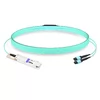
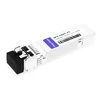
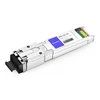
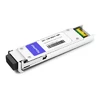
The modules can be paired with compatible CWDM SFP, SFP+, XFP, or other wavelength-specific optical transceivers, provided that the transceiver wavelengths, data rates, optical power budgets, and host-equipment requirements are properly matched.
Fiber Exhaust Is the Silent Capacity Killer
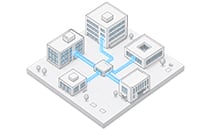
Network traffic rarely grows in a straight line. One quarter, you may be adding a new 5G fronthaul connection. The next, you may need to connect a remote data hall, a broadcast encoder, a surveillance network, or another campus building.
Each new service requires fiber capacity until the available conduit is full.
At that point, operators usually face three unattractive options:
• Pull new fiber. This is expensive, slow, and sometimes impossible in leased ducts, congested conduits, or metropolitan rights-of-way.
• Upgrade to higher-rate optics. This can increase the capacity of a point-to-point link, but it does not always solve the need to carry multiple independent services between different endpoints.
• Lease additional dark fiber. This can be reliable, but it is often costly and may require long-term contracts that commit operating budgets for years.
CWDM mux/demux technology provides another option: increase the capacity of the fiber you already own.
Each wavelength functions as an independent optical channel and can carry its own service, protocol, data rate, and endpoint. The passive mux/demux itself requires no electrical power, cooling fans, operating system, or software license.
What a CWDM Mux/Demux Does
A CWDM mux/demux is a passive optical device that combines and separates multiple wavelengths of light.
A mux, or multiplexer, combines several wavelength-specific optical inputs—for example, 1471 nm, 1491 nm, 1511 nm, and 1531 nm—into one composite optical signal for transmission over a common fiber.
A demux, or demultiplexer, separates that composite signal at the far end and directs each wavelength to the corresponding optical receiver.
CWDM uses nominal 20 nm channel spacing across the ITU-T G.694.2 grid. A complete grid can support up to 18 wavelength channels from 1271 nm to 1611 nm.
CWDM transmitters generally allow wider wavelength tolerances than DWDM transmitters, which can reduce optical-module cost and system complexity. However, maximum transmission distance is not determined by the mux/demux alone.
Actual reach depends on:
• Transmitter output power
• Receiver sensitivity
• Mux/demux insertion loss
• Fiber attenuation at each wavelength
• Connector and splice losses
• Chromatic dispersion
• System margin
• Data rate and transceiver design
Depending on the selected optics and complete optical link budget, CWDM links may range from a few kilometers to approximately 70–80 km without optical amplification.
FiberMall CWDM Mux/Demux Benefits
Multiply Fiber Capacity
Carry 4 to 18 wavelength channels over one fiber pair without installing additional fiber cable.
Fully Passive Optical Operation
The mux/demux requires no electrical power, cooling fan, management software, or operating license. This can improve reliability and reduce operating costs compared with active wavelength-conversion or transport platforms.
Passive DWDM mux/demux devices are also unpowered. The main difference is that complete DWDM systems more commonly add amplifiers, transponders, dispersion-management equipment, or coherent optics for longer and higher-capacity links.
Protocol-Transparent Transmission
A passive CWDM mux/demux can carry Ethernet, Fibre Channel, SONET/SDH, CPRI, eCPRI, video, RF-over-fiber, and other optical services.
Compatibility still depends on the selected transceivers, center wavelengths, optical spectrum, filter passbands, dispersion limits, data rates, and end-to-end link budget.
Industrial-Grade Options
Selected configurations support operation from −40°C to +85°C and are available with designs tested in accordance with applicable portions of Telcordia GR-1209-CORE and GR-1221-CORE.
The exact temperature rating and qualification scope should be confirmed for each model, package, connector type, and customized configuration.
Flexible Form Factors
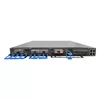
Available mechanical formats include compact ABS boxes, LGX-compatible cassettes, and 1U 19-inch rack-mount modules. This allows the CWDM device to match different enclosure, rack, splice-tray, and cable-management requirements.
Product Configurations
FiberMall CWDM mux/demux modules are available in standard and customized configurations to match the required wavelength plan, fiber count, connector type, insertion-loss target, and mechanical package.
Channel Counts
2-Channel Configuration
A 2-channel CWDM mux/demux uses two selected ITU-T G.694.2 wavelengths. The exact wavelength pair depends on the network design.
A 1310/1550 nm dual-window WDM device may also be used for simple legacy wavelength separation, but it is more accurately described as a wideband WDM filter rather than a standard multi-channel CWDM system.
Typical applications include simple point-to-point expansion and legacy optical links.
4-Channel Configuration
A 4-channel device may use a wavelength group such as 1271–1331 nm or 1471–1531 nm, depending on the transceivers and fiber characteristics.
Typical applications include small-cell networks, enterprise campuses, surveillance systems, utility networks, and short metro links.
8-Channel Configuration
A common 8-channel plan uses the higher CWDM wavelengths from 1471 nm to 1611 nm.
This configuration is widely used in metro access, campus networks, data-center interconnection, mobile transport, and fiber-capacity expansion.
9-Channel Configuration
A 9-channel design may combine a standard 8-channel group with an additional wavelength or pass-through service.
Because there is no single universal 9-channel wavelength plan, the exact channel combination should be specified during system design.
16-Channel Configuration
A 16-channel configuration uses 16 selected wavelengths from the CWDM grid.
The two omitted wavelengths depend on the product design, fiber type, attenuation requirements, legacy service bands, and wavelength plan.
This configuration is suitable for higher-capacity metro aggregation and fiber-constrained networks.
18-Channel Configuration
An 18-channel mux/demux uses the complete ITU-T G.694.2 grid from 1271 nm to 1611 nm.
It provides the maximum channel count available on the standard CWDM grid. However, attenuation in the lower wavelength region and the characteristics of the installed fiber must be considered during link-budget design.
Fiber Type
Dual-Fiber CWDM
A dual-fiber configuration uses one fiber for transmission in one direction and a second fiber for transmission in the opposite direction.
The same wavelength plan can normally be used at both ends. This is the simplest and most common CWDM configuration.
Single-Fiber CWDM
A single-fiber, or BiDi, CWDM configuration carries both transmission directions over one fiber.
Each endpoint uses paired, non-overlapping transmit and receive wavelengths to prevent interference. The wavelength assignments at Side A and Side B are therefore different.
Single-fiber CWDM conserves the greatest number of fiber strands but requires more careful wavelength planning and correct installation of the paired modules.
Package Options
ABS Box
The ABS-box version uses a compact enclosure, usually with fiber pigtails.
It is suitable for splice trays, distribution boxes, handholes, wall-mounted enclosures, and protected indoor or outdoor installations, depending on the enclosure rating.
LGX Cassette
An LGX cassette uses a modular metal enclosure that installs in an LGX-compatible rack, shelf, or fiber-distribution chassis.
It provides convenient installation, replacement, port identification, and cable management.
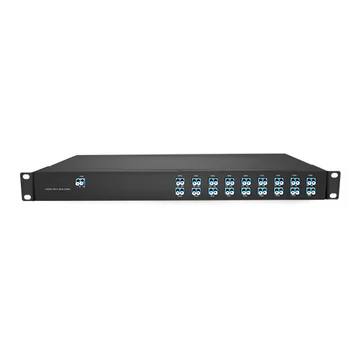
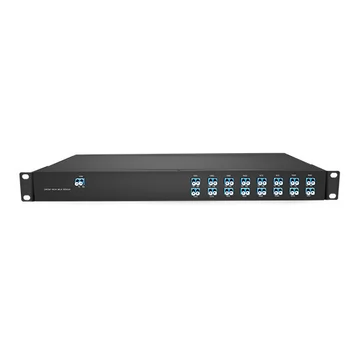
1U 19-Inch Rack-Mount Module
The rack-mount version installs in a standard 19-inch EIA rack.
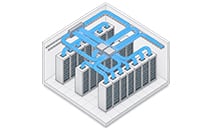
It is suitable for data centers, telecom rooms, metro aggregation sites, and installations requiring organized front-panel access and scalable fiber management.
Optional Ports
Monitor Port
A monitor port taps a small percentage of the composite optical signal for measurement and troubleshooting.
It allows engineers to connect a power meter, optical spectrum analyzer, or monitoring device without disconnecting the live line. The monitor tap introduces additional insertion loss, which must be included in the link budget.
Expansion or Upgrade Port
An expansion port allows another compatible CWDM or WDM device to be connected later.
This can add additional wavelength groups without replacing the original mux/demux. The expansion-port passband, added insertion loss, and wavelength compatibility must be considered during planning.
1310 nm Pass-Through Port
A 1310 nm pass-through port carries a broad legacy 1310 nm service band alongside a compatible CWDM wavelength group.
Because the pass-through band may overlap lower CWDM channels, some wavelengths—such as 1271 nm, 1291 nm, 1311 nm, or 1331 nm—may not be available in that design.
The exact passband and excluded channels must be confirmed from the product specification.
1550 nm Pass-Through Port
A 1550 nm pass-through port can preserve a designated legacy 1550 nm service, such as CATV or another optical signal.
Because 1551 nm is itself a standard CWDM center wavelength, the filter must be specifically designed to prevent overlap between the wideband pass-through service and adjacent CWDM channels.
OTDR compatibility also depends on the test wavelength, filter passband, and network design.
Features That Deliver
ITU-T G.694.2-Compliant Wavelength Grid
FiberMall CWDM mux/demux modules are designed around the standardized ITU-T G.694.2 grid, which uses nominal center wavelengths from 1271 nm to 1611 nm at 20 nm spacing.
In commercial product names, these wavelengths are often rounded and labeled as 1270 nm, 1290 nm, 1310 nm, and so forth through 1610 nm.
This standardized grid supports optical interoperability with compatible CWDM SFP, SFP+, XFP, and other wavelength-specific transceivers.
The passive mux/demux is generally independent of the switch or router brand. However, complete system compatibility still depends on:
• Host support for the selected transceiver
• Third-party optic restrictions
• Matching center wavelengths
• Correct fiber direction
• Required FEC and data rate
• Optical power budget
• Connector type and polish
Low Insertion Loss and High Isolation
Optical performance is especially important on long links and high-channel-count systems.
FiberMall CWDM mux/demux modules are designed for low insertion loss and high adjacent-channel and non-adjacent-channel isolation. These characteristics help preserve the optical link budget and reduce inter-channel crosstalk.
Actual insertion-loss and isolation values depend on the channel count, optional ports, connector configuration, package, and wavelength plan.
Industrial Temperature Range
Selected industrial-grade CWDM mux/demux models support operation from −40°C to +85°C.
These configurations are suitable for protected outdoor cabinets, cellular sites, utility networks, transportation systems, and other environments with wider temperature variations.
The operating-temperature rating should be verified for the exact product and connectorized assembly.
Custom Wavelengths and Connectors
FiberMall supports customized channel combinations, connector types, fiber lengths, packaging, labeling, and optional ports.
Available connector options may include LC/UPC, LC/APC, SC/UPC, SC/APC, FC, ST, and E2000, depending on the product design.
Non-standard configurations should undergo engineering review to confirm filter passbands, insertion loss, return loss, connector compatibility, and system performance.
OEM and ODM Support
FiberMall supports OEM and ODM programs for integrators, distributors, equipment manufacturers, and network solution providers.
Available services may include private labeling, customized part numbers, product labels, packaging, documentation, fiber lengths, connector configurations, and customer-specific wavelength plans.
Specifications
FiberMall CWDM mux/demux products use passive thin-film-filter or equivalent optical-filter technology and are designed around 20 nm ITU-T G.694.2 channel spacing.
Standard nominal CWDM center wavelengths range from 1271 nm to 1611 nm, commonly marketed as 1270 nm to 1610 nm.
Common channel-count options include 2, 4, 8, 9, 16, and 18 channels. Customized wavelength plans are also available.
The devices are designed for single-mode fiber, including common G.652.D and G.657.A1 fiber types, depending on the cable assembly. Both dual-fiber and single-fiber configurations are available.
Connector options may include LC/UPC, LC/APC, SC/UPC, SC/APC, FC, ST, and E2000. Availability depends on the package and customized product requirements.
Selected industrial models support an operating temperature range of −40°C to +85°C. Storage-temperature limits depend on the specific materials, enclosure, cable, and connector configuration and should be confirmed from the relevant datasheet.
Available package types include ABS boxes, LGX cassettes, and 1U 19-inch rack-mount modules.
Optional interfaces include monitor ports, expansion ports, 1310 nm pass-through ports, and specially designed 1550 nm pass-through ports.
The wavelength plan is based on ITU-T G.694.2. Applicable models may be tested in accordance with relevant sections of Telcordia GR-1209-CORE and GR-1221-CORE.
RoHS status should be confirmed through the applicable material-compliance declaration. Products may be manufactured under an ISO 9001-certified quality management system; ISO 9001 applies to the quality-management system rather than serving as a product certification.
CE or FCC claims should be included only when they are applicable to the exact product and supported by the required declaration or test documentation.
CWDM vs. DWDM: Which Should You Choose?
Not sure whether CWDM or DWDM is the better fit for your network? The choice depends on channel count, distance, wavelength stability, expansion requirements, and total system cost.
Channel Grid
CWDM uses the ITU-T G.694.2 grid with 20 nm channel spacing.
DWDM generally uses the ITU-T G.694.1 frequency grid. Common fixed-grid spacing includes 100 GHz, 50 GHz, and 25 GHz. Flexible-grid DWDM systems are also available.
Near 1550 nm, these fixed-grid spacings correspond approximately to 0.8 nm, 0.4 nm, and 0.2 nm, but DWDM spacing is correctly defined in frequency rather than wavelength.
Channel Count
CWDM supports up to 18 channels on the complete standard grid.
DWDM can support 40, 80, 96, or more channels, depending on the wavelength band, channel spacing, filter design, and transport platform.
Transmission Distance
Neither a passive CWDM nor a passive DWDM mux/demux has a fixed transmission distance.
CWDM is commonly used for access, campus, metro, and regional links. With appropriate optics and sufficient link budget, unamplified CWDM links may reach approximately 70–80 km.
DWDM is often selected for longer links and higher channel counts. Passive DWDM can be used for shorter point-to-point connections, while amplified or coherent DWDM systems can support hundreds or thousands of kilometers.
Optical Amplification
CWDM amplification is less common because standard broadband EDFAs do not uniformly amplify the complete 1271–1611 nm CWDM range. Specialized amplifiers may be used for selected bands.
DWDM systems operating in the C-band or L-band can use EDFAs more easily. However, amplification is optional and is not required for every DWDM link.
Laser Technology
CWDM optics commonly use wider wavelength tolerances and may use uncooled lasers, particularly for shorter reaches and lower data rates.
DWDM optics require tighter wavelength control. Many DWDM modules use temperature stabilization, wavelength lockers, tunable lasers, or coherent digital signal processing, depending on the transmission format and distance.
Cost
CWDM generally offers a lower-cost solution for moderate channel counts and short-to-medium distances.
DWDM equipment can cost more because of tighter optical tolerances and the possible use of amplifiers, transponders, tunable optics, coherent modules, and active transport systems.
However, passive DWDM mux/demux devices themselves require no power and may be cost-effective for specific data-center and metro applications.
Power Consumption
Passive CWDM and passive DWDM mux/demux devices consume no electrical power.
Power consumption increases only when the system includes active equipment such as optical amplifiers, transponders, coherent modules, regenerators, or managed transport platforms.
Typical Applications
CWDM is commonly used for metro access, enterprise campuses, cellular transport, utility networks, video distribution, data-center interconnection, and fiber-relief applications.
DWDM is commonly used for high-channel-count metro networks, data-center interconnection, carrier backbones, regional transport, and long-haul optical systems.
FAQ
What Is a CWDM Mux/Demux and How Does It Work?
A CWDM mux/demux is a passive optical device that combines multiple wavelength-specific optical signals onto a common fiber and separates them again at the receiving end.
CWDM uses nominal 20 nm channel spacing on the ITU-T G.694.2 grid and can support up to 18 channels from 1271 nm to 1611 nm.
How Many Channels Does a CWDM Multiplexer Support?
Standard FiberMall CWDM mux/demux configurations are available with 2, 4, 8, 9, 16, or 18 channels.
Eight-channel configurations are widely used in metro, campus, access, and data-center links. The best channel count depends on current service requirements, expansion plans, fiber characteristics, and the optical link budget.
What Is the Difference Between Single-Fiber and Dual-Fiber CWDM?
Dual-fiber CWDM uses one fiber for each transmission direction. The same wavelengths can normally be used in both directions.
Single-fiber CWDM carries both directions over one strand. Each endpoint uses a different transmit and receive wavelength pair, so Side A and Side B modules must be correctly matched.
Single-fiber operation saves more fiber but requires careful wavelength planning and correct endpoint installation.
What Are Monitor and Expansion Ports Used For?
A monitor port taps a small percentage of optical power for measurement or monitoring. It allows test equipment to observe the composite signal without disconnecting the live traffic.
An expansion port connects another compatible WDM device so that additional wavelength groups can be introduced later.
Both options add insertion loss and must be included in the optical link budget.
Is a CWDM Mux/Demux Active or Passive?
FiberMall CWDM mux/demux modules are passive optical devices.
They require no electrical power, cooling fan, operating software, or network-management interface. The optical transceivers and host equipment at each endpoint remain active devices.
What Connectors and Polish Types Are Available?
LC/UPC is one of the most common connector options.
Depending on the package and application, FiberMall can also provide LC/APC, SC/UPC, SC/APC, FC, ST, or E2000 connectors.
APC connectors are recommended when optical back-reflection must be minimized. UPC and APC connectors must never be directly mated because their end-face geometries are different.
Are CWDM Mux/Demux Devices Compatible with Existing Switches and Transceivers?
The passive CWDM mux/demux is generally independent of the switch or router manufacturer.
End-to-end compatibility requires:
• A host platform that supports the selected transceiver
• Matching CWDM center wavelengths
• Correct transmit and receive directions
• Compatible connector types
• Sufficient transmitter and receiver power budget
• Appropriate data rate, modulation, and FEC support
• Correct single-fiber or dual-fiber configuration
Switches from Cisco, Juniper, Arista, Huawei, Nokia, and other vendors may be used, provided that their transceiver requirements and third-party optic policies are satisfied.
What Is the Maximum Transmission Distance for CWDM?
A CWDM mux/demux does not have a fixed maximum distance.
The achievable distance depends on transmitter power, receiver sensitivity, mux/demux insertion loss, fiber attenuation, chromatic dispersion, connector losses, splice losses, and the required engineering margin.
Depending on the selected optics and complete link design, CWDM systems may support distances from a few kilometers to approximately 70–80 km without amplification.
When Should I Choose CWDM Over DWDM?
Choose CWDM when you need up to 18 channels, moderate transmission distances, passive operation, relatively simple wavelength planning, and lower system cost.
Choose DWDM when you need more channels, tighter spectral efficiency, amplification, tunable wavelengths, coherent transmission, or greater long-term capacity.
What Customization Options Does FiberMall Offer?
FiberMall supports customized channel counts, wavelength combinations, connector types, polish types, package styles, optional ports, fiber lengths, labels, part numbers, documentation, and private branding.
Engineering review is recommended for non-standard wavelength plans, pass-through ports, single-fiber systems, and projects with strict insertion-loss requirements.
How Much Does a CWDM Mux/Demux Cost?
Pricing depends on the number of channels, fiber configuration, connector type, package, insertion-loss requirements, optional ports, customization level, and order volume.
Generic 8-channel devices may be available in the market for approximately US$130–350, while 16-channel configurations may range from approximately US$170–570. Integrated, branded, or highly customized systems may cost considerably more.
These figures are indicative and can change based on product specifications and market conditions. Contact FiberMall for a current quotation based on the exact configuration.