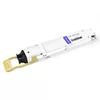
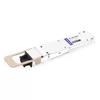
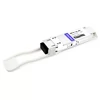
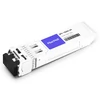
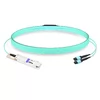
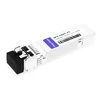
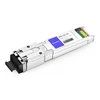
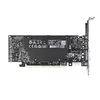
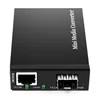
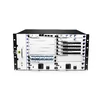
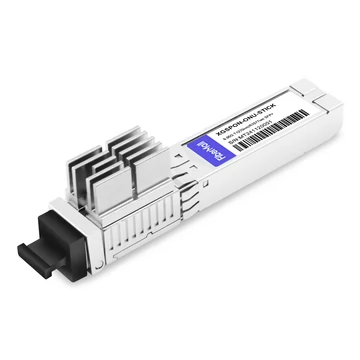
XGSPON ONU Transceivers
Innovative technologies have driven new developments in fiber-optic solutions, resulting in the emergence of XGSPON (10-Gigabit Symmetrical Passive Optical Network) ONU transceivers. These advanced devices play a key role in modern broadband technologies, delivering faster and more reliable internet to homes and businesses.
What Are XGSPON ONU Transceivers?
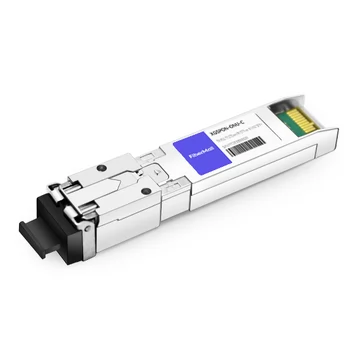
In high-speed data connections, the optical network unit (ONU) uses XGS-PON (XGSPON) technology to deliver wavelength division multiplexing (WDM) over a fiber-optic network. These links convert electrical signals to optical signals for transmission to the central office and convert optical signals back to electrical signals upon reception. XGSPON ONU transceivers support 10 Gbps symmetrical transmission, enhancing Fiber-to-the-Home (FTTH) services. Their design complies with passive optical network standards, allowing seamless deployment without disrupting existing infrastructure.
Definition and Purpose of XGSPON ONU Transceivers
XGS-PON ONU transceivers are optical devices designed for passive optical networks. They connect customer premises equipment to the optical line terminal, enabling ultra-fast broadband. Downstream traffic converts optical signals to electrical signals, while upstream traffic converts electrical signals to optical signals.
XGSPON ONU modules deliver up to 10 Gbps in both upstream and downstream directions, supporting demanding applications such as gaming, video-on-demand, and business services. They adhere to ITU-T G.9807.1 recommendations, ensuring easy integration with existing networks and future scalability.
How XGSPON ONU Technology Enhances High-Speed Internet Connectivity
XGS-PON ONU technology improves connectivity by providing symmetrical 10 Gbps speeds in both directions. This meets growing demands for video calls, cloud services, and online gaming with minimal jitter and low latency. The system allows network upgrades without major infrastructure changes, expanding bandwidth capacity efficiently.
Key Features of XGSPON Technology
10 Gbps Symmetrical Speeds
Passive optical networks such as XGSPON provide up to 10 Gbps upload and download speeds, ideal for 4K/8K video streaming, cloud computing, telehealth, and other high-bandwidth applications.
Improved Network Efficiency
The technology supports more users and devices while maintaining high performance during peak usage.
Reduced Latency
XGSPON delivers low-latency performance essential for gaming, video conferencing, and industrial IoT applications.
Upgrade-Friendly
Designed for coexistence with GPON systems, XGSPON enables smooth upgrades without replacing existing GPON infrastructure.
Cost Savings
Advanced modulation and energy-efficient designs reduce operational costs and power consumption compared to older equipment.
Large-Scale Scalability
XGSPON networks flexibly accommodate future capacity needs, ensuring long-term sustainability.
XGSPON ONU Design and Architecture
The design of an XGSPON ONU transceiver prioritizes efficiency, flexibility, and high performance. As a core component of the XGS-PON network, the ONU converts optical signals to electrical signals for user devices. It supports dynamic bandwidth allocation, low-latency processing, and power-efficient components. Its modular architecture allows easy adaptation to evolving network standards.
Structural Components of an XGSPON ONU Transceiver
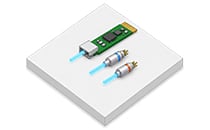
XGSPON ONU transceivers feature a highly integrated optical subassembly with a transmitter and receiver for downstream and upstream signals. The design includes advanced digital signal processing (DSP) chips, error correction, laser diodes, photodiodes, and WDM filters for efficient data handling. All components are housed in a compact, energy-efficient module that complies with ITU-T G.9807.1 standards for next-generation passive optical networks.
Applications of XGSPON ONU Transceivers in Modern Networks
XGSPON ONU modules enable high-speed broadband in fiber-to-the-home (FTTH) networks for residential and enterprise customers. They support bandwidth-intensive applications such as 4K video, online gaming, cloud computing, and remote work while integrating seamlessly into existing passive optical networks.
Use Cases in Residential, Enterprise, and Industrial Settings
Residential: XGSPON ONU devices deliver ultra-high-definition video streaming, online gaming, and video conferencing for modern households.
Enterprise: Businesses benefit from high-speed, low-latency connectivity for data centers, cloud services, virtual meetings, and large-scale data processing, with easy scalability.
Industrial: The transceivers support automation, IoT, and smart factories by providing reliable, low-latency data transmission for real-time monitoring and control in demanding environments.
How to Choose the Right XGSPON ONU Transceiver for Your Network
Several key factors must be evaluated when selecting an XGSPON ONU transceiver. Compatibility with existing optical line terminals and fiber infrastructure is essential. Data rate capacity and wavelength compatibility must match application requirements. Operating temperature range and durability should also be considered to ensure reliable long-term performance.
Factors to Consider When Selecting an XGSPON ONU Transceiver
Evaluate compliance with XGSPON standards and compatibility with existing OLTs and high-bandwidth PON services. Check wavelengths—typically 1577 nm downstream and 1270 nm upstream—and optical output power to ensure sufficient link budget. Also consider power consumption, temperature tolerance, and environmental ruggedness for sustained efficiency across various deployment scenarios.
Frequently Asked Questions (FAQs)
What is the function of an XGSPON ONU transceiver as part of an engineered system?
The XGSPON ONU transceiver performs bidirectional signal conversion between the fiber-optic line and user equipment using optical-to-electrical and electrical-to-optical mechanisms, enabling ultra-high-speed data transmission in both directions.
What are the wavelength values deployed in XGSPON ONU equipment?
XGSPON ONU transceivers use 1270 nm for upstream and 1577 nm for downstream. These wavelengths optimize bandwidth and prevent interference in the optical network.
What considerations must be made when choosing an XGSPON ONU transceiver?
Key parameters include compliance with XGSPON specifications, optical output power, power consumption, operating temperature range, and durability to ensure robust, scalable, and reliable performance across different applications.
Can GPON systems connect seamlessly with transceivers designed for XGSPON ONU?
XGSPON ONU transceivers cannot be directly used in GPON systems due to different wavelengths and data rates. They are intended for XGSPON networks only.